Photography Tips
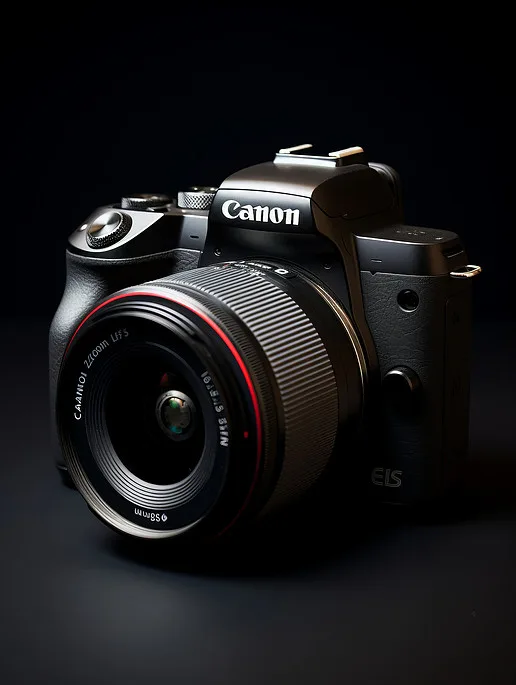
The Evolution of Photography: Why DSLR Cameras Are Fading Away
Why DSLRs are fading from professional use — mirror box limits, autofocus gaps, and why Photography Shark shoots exclusively Sony mirrorless.
Chris McCarthy
Professional Photographer, Photography Shark · November 25, 2025 · Updated December 15, 2025
The End of an Era: Why DSLRs Are Disappearing From Professional Bags
For the better part of three decades, the DSLR was the unquestioned standard in professional photography. Canon's 5D series, Nikon's D800 line — these were the cameras that defined commercial portraiture, wedding photography, editorial work, and everything in between. If you picked up a photography magazine anytime between 1995 and 2015, the gear reviews were almost entirely about DSLRs.
In my experience working with clients across Boston and the South Shore, the biggest gains come from the simplest adjustments.
That era is ending. Not suddenly — Canon and Nikon still sell DSLR bodies, and there are photographers who will use them until the bodies die — but the transition is clearly underway. Canon officially stopped developing new DSLR bodies in 2022 and redirected all R&D toward its mirrorless RF system. Nikon has made similar moves. Sony, which never made a professional DSLR, built its entire professional lineup around mirrorless from the start — and has been the market leader in full-frame mirrorless for years.
At Photography Shark, Chris McCarthy shoots exclusively on Sony mirrorless. This isn't a marketing choice or a trend-chasing decision. It's the result of years of professional use across headshots, family portraits, senior portraits, events, and boudoir work — and the conclusion that mirrorless delivers better results for the kind of photography this studio does. Here's a technical breakdown of why.
What a DSLR Actually Is — and Why the Design Has Limits
A DSLR — Digital Single-Lens Reflex — works by using a physical mirror to redirect light from the lens up into an optical viewfinder. When you press the shutter, the mirror flips up, exposes the sensor, and flips back down. This mechanism is elegant, reliable, and was the best available technology for decades.
But it creates constraints:
Physical size. The mirror box requires significant space between the lens mount and the sensor. This forces the camera body to be larger and heavier than it needs to be for the imaging task at hand.
Autofocus location. In a DSLR, phase-detection autofocus sensors sit on a separate module below the mirror — not on the imaging sensor itself. This creates a potential for focus calibration drift over time, and it limits where AF points can be placed (typically concentrated in the center of the frame).
Live view limitations. When you use a DSLR in live view mode (shooting while looking at the screen rather than through the viewfinder), the mirror has to stay up, which disables the phase-detection AF system. You're left using slower, less accurate contrast-detection AF — a meaningful degradation in performance.
Mechanical shutter only. DSLRs are almost entirely dependent on their mechanical shutters, which wear out over time (typically rated to 150,000–300,000 actuations) and limit continuous shooting speeds.
None of these are fatal flaws — professional photographers worked around them for years with skill and experience. But they are real limitations, and modern mirrorless cameras have eliminated most of them.
Why Mirrorless Cameras Changed the Equation
Removing the mirror does more than reduce size and weight, though both matter. It fundamentally changes what's possible in the camera's design.
Autofocus on the Imaging Sensor Itself
Sony's mirrorless cameras — particularly the A7 series that Photography Shark shoots on — embed phase-detection autofocus points directly on the imaging sensor. The A7 IV, for example, has 759 phase-detection AF points covering approximately 94% of the frame. This means the camera can achieve fast, accurate focus anywhere in the image, not just in the center cluster.
More importantly, Sony's Real-Time Eye AF uses machine learning to detect and track subjects' eyes continuously. In portrait work — headshots, senior portraits, boudoir — this is transformative. The camera locks onto an eye and tracks it as the subject moves, as they turn their head, as they shift position. The photographer doesn't have to hunt for focus manually or recompose to put the subject in the center. This frees up mental bandwidth during a session that can go directly into directing the subject, adjusting lighting, and making compositional decisions.
For Boston headshots specifically, where subjects are often slightly nervous and moving more than they realize, this matters enormously. Missed focus on a headshot session is not recoverable in post-production.
Electronic Viewfinder: Seeing the Exposure Before You Shoot
A DSLR's optical viewfinder shows you what the lens sees — not what the sensor will record. You're estimating your exposure settings based on experience and the histogram, then checking after the fact.
A mirrorless camera's electronic viewfinder shows you a real-time preview of what the final image will look like. If you're overexposing by a stop, you see the blown-out highlights before you press the shutter. If your white balance is wrong, you see it in real time. This accelerates the feedback loop dramatically and reduces the number of test shots required to nail a setup.
In studio work — the controlled environment used for studio photo shoots at Photography Shark — this means faster setup and more time actually shooting.
Silent Shooting and Social Sensitivities
Sony mirrorless bodies can shoot completely silently using the electronic shutter. This sounds like a minor feature until you use it at a corporate event where noise matters, during an intimate boudoir session where the mechanical shutter interrupts the mood, or at a ceremony or formal event where silence is expected.
The ability to shoot 10 frames per second with zero audible sound changes what's possible at event photography engagements. Candid shots that would have been disrupted by the click-clunk of a DSLR shutter can be captured without anyone knowing it happened.
Video Performance
The demand for video from photographers has grown substantially. Many clients booking headshots now want short video clips for LinkedIn or social media alongside their still images. Event clients increasingly ask about same-day video deliverables.
Mirrorless cameras, particularly Sony's, are significantly more capable on video than DSLRs ever were. The A7 IV shoots 4K video with full-frame readout, excellent rolling shutter performance, and the same Real-Time Eye AF used for stills. DSLRs were largely afterthoughts in the video space — most used heavy crop factors and limited autofocus in live view mode.
The Ecosystem Question: Lenses and Third-Party Options
One legitimate concern about switching systems is lens compatibility. A photographer who has invested in Canon EF glass or Nikon F glass has real money tied up in that ecosystem.
Sony addressed this early by building excellent native G Master lenses and by working with Sigma and Tamron to ensure their lenses supported full AF functionality on Sony bodies. The Sony E-mount ecosystem is now one of the most complete in professional photography — with native options at virtually every focal length from wide-angle to telephoto, and third-party alternatives at competitive prices.
For a portrait-focused studio like Photography Shark, the Sony 85mm f/1.4 G Master is the primary portrait lens — sharp wide open, beautiful background separation, and reliable tracking performance. The 24-70mm f/2.8 G Master handles flexibility for family sessions and events. Both lenses would be difficult to match in any other system at the same price point.
What This Means If You're Hiring a Photographer
Understanding your photographer's equipment isn't about gear snobbery. It's about understanding what they're capable of technically and what that means for your images.
A photographer still shooting on a DSLR from 2016 is working with autofocus performance that was state-of-the-art eight years ago. That gap matters most in challenging conditions: low light at an event, fast-moving subjects at a family session with young kids, the subtle focus demands of a close-up headshot where an inch of soft focus on the eyes is the difference between a usable image and a throwaway.
For graduation portrait sessions on location — shooting at golden hour at Duxbury Beach, or in the woods near Norris Reservation in Norwell — the ability to track a subject who is walking, turning, and constantly in motion determines how many keepers come out of a session. Mirrorless with phase-detection sensor AF produces more keepers.
For family photos with young children who won't hold still, Eye AF that works at 10 frames per second means you're far more likely to capture the one perfect expression in a burst of five shots.
The technology serves the clients. That's the reason the switch happened — and the reason it's not going back.
The DSLR's Likely Future
DSLRs will continue to exist as working tools for years. The bodies are robust, the lenses are excellent, and a skilled photographer can produce great work with a DSLR. Many of the most iconic images in the history of photography were shot on film cameras — equipment is never the limiting factor when skill is high enough.
But as a development platform, the DSLR is finished. No major manufacturer is investing R&D resources into new DSLR bodies. The innovation is entirely in mirrorless — better sensors, better autofocus systems, better video capabilities, better in-body stabilization. The gap between current mirrorless and current DSLR will only widen from here.
For a studio that wants to deliver the best technical results available to clients on the South Shore and in Boston, that's a straightforward calculation. Mirrorless wins.
---
Ready to Book Your Session?
Photography Shark serves clients across the South Shore — from Rockland and Hingham to Plymouth and Quincy. Chris shoots all sessions on Sony mirrorless, bringing current professional-level equipment to every booking.
Get in touch to schedule your session today.
Whichever Body You Shoot
Mirrorless or DSLR, the lighting does more for the photograph than the sensor. If you want to work on that side of it, the Rockland studio is available hourly at $55 — strobes, modifiers and backdrops included.
Frequently Asked Questions
What camera does Photography Shark use for portrait sessions?
Chris McCarthy shoots exclusively on Sony mirrorless — the A7 series — chosen for its autofocus precision, eye-detection tracking, and image quality across headshots, senior portraits, family sessions, boudoir, and events.
Does the type of camera affect the quality of my headshots?
Yes, especially for eye-detection autofocus. Sony's real-time eye AF is more reliable and faster than DSLR phase-detection systems, which means more consistently sharp eyes across a headshot session — critical for professional results.
What is the advantage of mirrorless for studio headshots at Photography Shark?
Mirrorless gives Chris a live exposure preview through the electronic viewfinder, silent electronic shutter, and on-sensor phase detection across the full frame. This translates to faster, quieter sessions and sharper results — particularly at 83 E Water Street, Rockland MA.
Does Photography Shark offer headshots for corporate teams or individual professionals?
Yes. Individual and team headshot sessions are available. Packages start at $395 for a 30-minute session with 10 edited images. For team bookings, contact Photography Shark to discuss volume and on-site options.
How does camera technology affect turnaround time for edited images?
Modern mirrorless AF reduces the number of out-of-focus rejects at the selection stage, which makes the editing process more efficient. Photography Shark's standard turnaround is one to two weeks after your session.
Related Posts



You Might Also Like
About the Author
Chris McCarthy
Chris McCarthy has run Photography Shark Studios in Rockland, MA for over 10 years and 500+ sessions, with executive headshot work for Rockland Trust, Clean Harbors, M&T Bank, and McCarthy Planning; founder portraits for AI startups including Lowtouch.ai; product photography for South Shore brands like Lauren's Swim; and headshots across South Shore legal, medical, financial, and academic practices. Every session is personally shot and edited by Chris on Sony mirrorless and Godox strobe systems — no assistants, no outsourcing, no batch retouching. Galleries deliver in 3–5 business days. About Chris McCarthy →
Photography Shark · Boston & South Shore MA
Ready to Book a Session?
Professional headshots, senior portraits, boudoir, and model portfolios. Studio in Rockland, MA — 25 miles south of Boston. Sessions from $395.