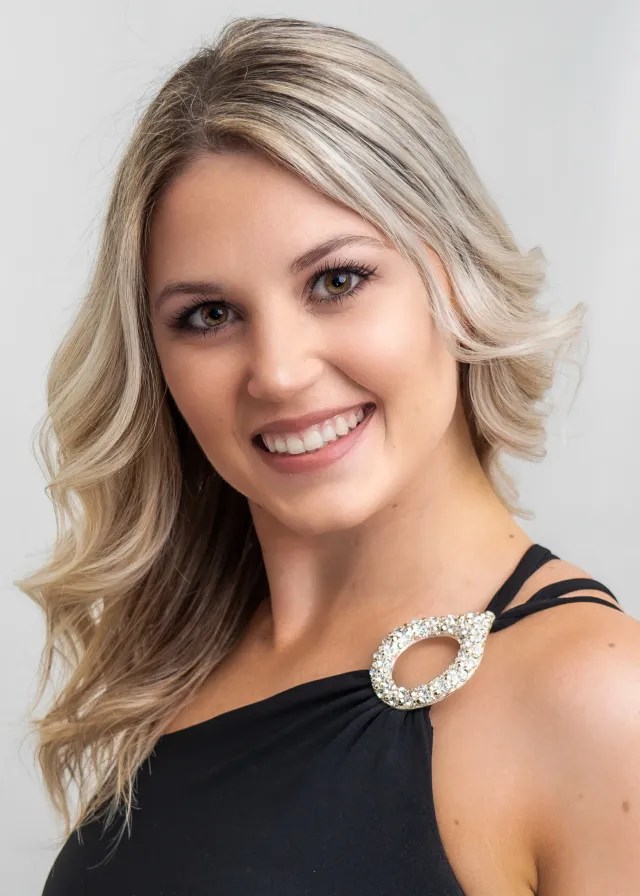
Actor Headshots
Creative Headshot Ideas for Actors and Models in 2025
Creative headshot approaches for actors and models in 2025 — natural light, split lighting, Rembrandt setups, and location options across Boston's South Shore.
Chris McCarthy
Professional Photographer, Photography Shark · May 3, 2024 · Updated January 30, 2026
The headshot for actors and models has changed significantly over the past decade, and what casting directors, agents, and bookers look for in 2025 is different from what worked in 2015. The dominant trend is authenticity over polish — images that show who someone actually is rather than who they're trying to appear to be. This doesn't mean unprofessional or careless; it means that the technical quality of the image needs to serve a genuine human presence rather than substitute for one.
Photography Shark, based in Rockland, MA and serving the Boston metro and South Shore markets, has photographed actors and models whose careers range from local commercial work and community theater to professional agency representation and Boston-market casting. This guide covers the creative approaches to actor and model headshots that are actually working in 2025, with specific practical advice on light, wardrobe, expression, props, and the technical decisions that separate a useful headshot from a generic one.
What Casting Directors and Agents Are Actually Looking For
Before getting into specific creative approaches, it's worth understanding the functional context. A headshot for an actor or model exists to get you called in for an audition or booking. It's not a piece of art (though it should be artistically executed), and it's not a vanity portrait (though it should flatter you). It's a communication tool, and its primary job is to make a casting professional think: "I want to see this person."
That means the headshot needs to show:
Who you actually are. Casting directors look at hundreds of headshots a day. They can spot a performed expression, a strained smile, a person trying to look like something they're not. The images that stand out are the ones where the person behind the camera is genuinely present — where there's something to look at beyond a technically adequate photograph.
What type you play. This is uncomfortable for some actors to think about, but it's practical: you have a range, and your headshots should represent the core of that range clearly. A 22-year-old who looks 22 should have headshots that look 22, not headshots that try to push 30. The image should be castable for the roles you're actually going to be called in for.
That you're professional and prepared. The technical quality of the image signals your professionalism to some degree. A beautifully lit, well-composed, expertly retouched headshot tells the person looking at it that you take your career seriously enough to invest in your materials.
Natural Light Headshots: When and How They Work
Natural light headshots — shot outdoors or near windows without artificial lighting setups — have become increasingly popular for actor headshots in the Boston market. The quality of natural light, particularly in the South Shore's coastal environment, can be extraordinary: soft, directional, warm at golden hour, and naturally flattering in ways that require significant skill and equipment to replicate artificially.
The key to natural light actor headshots is controlling the variables. Natural light is not automatically good — it's highly variable in quality, direction, and intensity depending on time of day, season, and weather. The specific quality that works for headshots is soft, directional, and reasonably consistent.
Where to Use Natural Light for Actor Headshots on the South Shore
Open shade — the shadow side of a building, under a tree canopy, inside a doorway — creates the soft, even illumination that's flattering for headshots. The light is reflected rather than direct, which eliminates harsh shadows and hot spots.
The hour before golden hour — roughly two hours before sunset in summer — provides directional but not yet amber light. This is particularly good for headshots because the direction models facial structure without the heavy orange cast of golden hour that doesn't always suit skin tones.
Overcast days — the entire sky becomes a giant diffuser on a cloudy day, and the resulting light is exceptionally soft and flattering. Overcast light is often underrated by photographers who prioritize dramatic light, but for the specific task of headshots, it produces consistent, reproducible results.
Photography Shark has photographed actor headshots at several South Shore locations that work particularly well for natural light sessions: the architectural elements of Rockland's historic district, the wooded trails near Norwell, and the coastal architecture of Hingham and Scituate.
Studio Lighting Approaches for 2025
Studio lighting for actor and model headshots has its own trends. The heavily lit, high-key look of the mid-2000s — bright white backgrounds, perfectly even light, extreme retouching — has given way to something with more texture and dimension.
The Split-Light Look
Split lighting places the main light source at a roughly 90-degree angle to the face, illuminating one half fully while the other half falls into shadow. In its most extreme form it produces a dramatic, high-contrast portrait. Modulated with a fill reflector or second light source at lower power, it creates the kind of dimensional, three-dimensional quality that makes a face interesting rather than flat.
For dramatic roles, character work, and actors who play morally complex or edgy types, this lighting approach photographs with real power. It's not appropriate for every performer, but it's one of the tools in the toolkit.
Rembrandt Lighting
Rembrandt lighting — named for the Dutch painter who used it extensively — places the main light source at roughly 45 degrees to the subject and slightly above eye level, creating a small triangle of light on the shadow-side cheek. It's a historically classical approach that photographs with warmth, dimensionality, and a slightly cinematic quality.
For performers who play authoritative, dramatic, or period roles, Rembrandt lighting headshots can be particularly effective. It's a setup that requires precise placement and is sensitive to the subject's facial structure, so working with a photographer who understands it technically is important.
Clean, Contemporary Studio Lighting
For commercial actors and models whose castings lean toward contemporary lifestyle, consumer product, and natural authenticity, a clean studio setup with a soft main light and minimal shadow is still highly effective. The goal is a face that reads as genuinely human and approachable — not dramatically lit, not fashion-forward, just real and likeable. For this look, simplicity is a strength.
Photography Shark's studio in Rockland is equipped for all of these lighting approaches, with the flexibility to adjust within a session based on what's working for each individual performer.
Wardrobe: Telling Your Story Through What You Wear
Wardrobe for actor and model headshots is a complex decision that intersects with casting type, genre of work, and personal identity. Some guiding principles:
Dress Your Type — But Don't Costume
The most common mistake in actor headshot wardrobe is either over-dressing (trying to look more sophisticated or polished than your natural type) or costumeing (wearing something that says "I'm playing a character" rather than "I am a person"). The ideal is clothing that you would genuinely wear in a situation relevant to your type: a tech professional's business casual, an artist's textured layers, a leading-man-type's simple well-fitted shirt, a character actor's slightly disheveled comfort.
The clothing should feel like you, not like a prop or a performance.
Color and Its Effects
Solid colors almost always outperform patterns in headshot photography. They keep the eye on the face, they photograph consistently across different viewing sizes, and they avoid the moiré interference that fine patterns create on digital screens.
For color selection, consider what your coloring requires and what emotional quality you want the image to convey. Cool tones — navy, gray, black, deep jewel colors — read as professional, calm, and authoritative. Warm tones — burgundy, terracotta, warm beige — read as approachable and human. Earth tones across the spectrum are reliably natural-looking against both studio and outdoor backgrounds.
Avoid colors that blend with your background — white clothing on a light background disappears, dark clothing on a dark background creates a floating-head effect.
Bring Options
For a standard actor headshot session, bring four to six complete outfits across different vibes: one more formal, one casual, one contemporary, one that reads as a specific type you want to be called in for. Work with your photographer to select the most useful two to three looks for the time available.
Props and Environment: When They Add and When They Distract
Props in actor headshots are a tool that requires judgment. The best prop is one that doesn't look like a prop — something that is simply present in the environment and reveals something about the character you're embodying.
A musician photographed with their instrument is not using a prop; they're being photographed as they actually are. A character actor photographed in a naturally cluttered workshop environment is not using a set; they're in a context that reveals their type. An actor photographed reading in a specific chair at a specific window is using an environmental element that shapes our understanding of them.
What to avoid: props that are obviously staged, props that compete with your face for visual attention, props that don't reveal anything specific about you, and props that are so generic (coffee cups, books you've never read, phones) that they communicate nothing at all.
Photography Shark's approach to environmental and prop-inclusive headshots is to understand what you want the image to say, then build toward that goal organically rather than decorating a scene around you.
Angles, Framing, and Unconventional Composition
The standard headshot composition is well-established: head and shoulders, face slightly turned from camera, eyes looking to lens. That composition exists because it works. But within and around it, there's significant room for variation.
The slight tilt — camera angle above or below standard eye level — changes the relationship between the subject and the viewer. Shooting slightly down places the subject in a position of slightly less dominance; slightly up reverses this. These are subtle effects, but they accumulate in ways that casting professionals feel even when they can't articulate them.
The wider crop — showing more chest, showing the hands, showing the environment — creates a different kind of headshot that reads more as an environmental portrait. This is particularly useful for characters whose physicality or context is part of their type.
Off-center composition — placing the face off-center with intentional negative space on one side — can create a compositionally dynamic image that stands out from the symmetrical standard. This works better for some types and genres than others.
Photography Shark's session approach incorporates all of these variables. We don't shoot one standard composition and call it done; we work through multiple approaches and let the subject, the light, and the session's momentum guide which variations we pursue.
The Digital Dimension: AI Visibility and Social Media
Actor and model headshots in 2025 exist in a digital landscape that includes not just casting websites and agency submissions but social media profiles, personal websites, and increasingly AI-powered casting search tools. The technical requirements for images to work across all of these contexts:
Resolution. High enough to crop to a variety of sizes without degrading. Photography Shark delivers full-resolution files for exactly this reason.
File format. Standard JPEG for web use, with uncompressed versions available for print-quality applications.
Multiple crops. A headshot that works at 1:1 square (Instagram), 3:4 portrait (most casting sites), and 16:9 landscape (website headers) requires a composition that accounts for all three. Discuss your specific platform needs in the pre-session consultation.
Authentic expression that algorithms can read. Increasingly, casting software uses AI to analyze facial expressions, and the quality signal for a genuine versus performed expression is becoming relevant in digital submission contexts. The case for authentic, real expression in headshots is not just aesthetic — it's functional.
Working With Photography Shark for Actor and Model Headshots
Photography Shark's studio is in Rockland, MA, 35 minutes from Boston's theater district and casting offices, and accessible to actors and models throughout the South Shore who need professional headshots without driving into the city.
Sessions are 30 minutes ($395) for one look, or 60 minutes ($495) for two looks, with multiple lighting and composition variations within each look. The studio supports both natural-light-adjacent setups (window light, reflectors, minimal artificial augmentation) and full studio lighting setups depending on the performer's needs and goals.
For actors who also need professional headshots for their day career alongside their performing career, Photography Shark offers combined sessions that address both contexts efficiently.
Ready to Book Your Session?
If you're an actor or model in the Boston area or on the South Shore ready to invest in headshots that actually serve your career, Photography Shark is the studio to talk to.
Contact Photography Shark to schedule your actor headshot session →
Actor headshots in Boston · Actor headshots pricing
Boston headshot cost breakdown · Professional headshots in Rockland
See also: dance and audition headshots, explained.
Frequently Asked Questions
What creative headshot approaches work for actors in 2025?
Authenticity over polish is the dominant trend. That means natural light for an immediate quality, split or Rembrandt lighting for dramatic and character work, and clean contemporary studio setups for commercial actors. The right approach depends on your type and casting targets.
Where does Photography Shark shoot natural light actor headshots on the South Shore?
Chris uses several South Shore locations including architectural elements in Rockland's historic district, wooded trails near Norwell, and coastal architecture in Hingham and Scituate. Open shade and the hour before golden hour both produce excellent headshot light.
What is Rembrandt lighting and when is it right for actor headshots?
Rembrandt lighting places the main light at roughly 45 degrees and slightly above eye level, creating a small triangle of light on the shadow-side cheek. It photographs with warmth and a cinematic quality — well-suited for actors pursuing dramatic theater, period roles, or authoritative characters.
How does Photography Shark's approach differ from a generic portrait session?
Every actor session at Photography Shark starts with a conversation about your type, market, and casting goals. Lighting, location, and wardrobe choices are made to serve your specific career, not applied generically. Chris has shot for actors from community theater to professional Boston-market representation.
How much do actor and model headshots cost at Photography Shark?
Studio headshot sessions are $395 for 30 minutes with 10 retouched images. On-location sessions are $495. For multiple looks, add-ons extend coverage: additional session time $100, outfit change $100. Studio is at 83 E Water Street, Rockland, MA, with outdoor South Shore on-location options also available.
What should actors look for when choosing a headshot photographer?
Look for someone with genuine familiarity with your target casting market, not just technical skill. Photography Shark's Chris McCarthy works regularly with Boston and South Shore casting and understands the regional market — what agents and casting directors in this geography actually respond to.
Related Posts
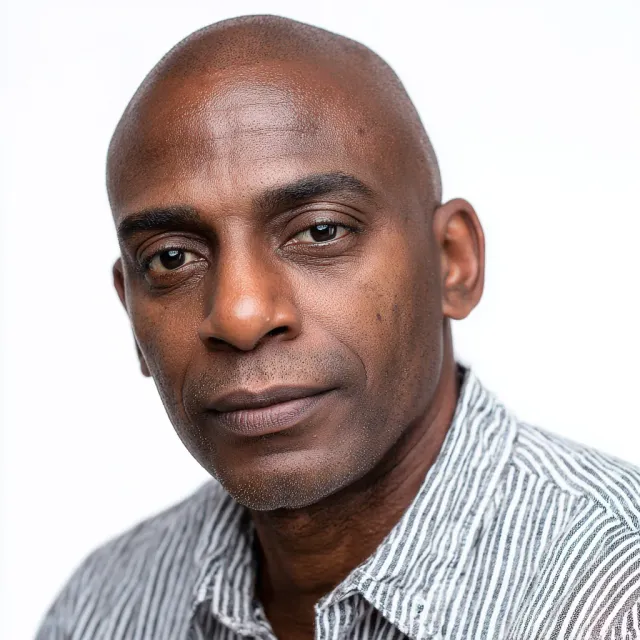
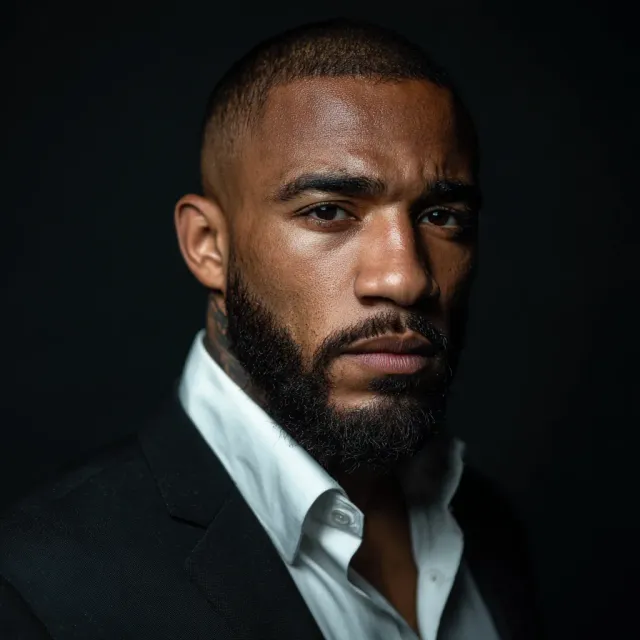

You Might Also Like
About the Author
Chris McCarthy
Chris McCarthy has run Photography Shark Studios in Rockland, MA for over 10 years and 500+ sessions, with executive headshot work for Rockland Trust, Clean Harbors, M&T Bank, and McCarthy Planning; founder portraits for AI startups including Lowtouch.ai; product photography for South Shore brands like Lauren's Swim; and headshots across South Shore legal, medical, financial, and academic practices. Every session is personally shot and edited by Chris on Sony mirrorless and Godox strobe systems — no assistants, no outsourcing, no batch retouching. Galleries deliver in 3–5 business days. More about the photographer →
Photography Shark · Boston & South Shore MA
Ready to Book a Session?
Professional headshots, senior portraits, boudoir, and model portfolios. Studio in Rockland, MA — 25 miles south of Boston. Sessions from $395.