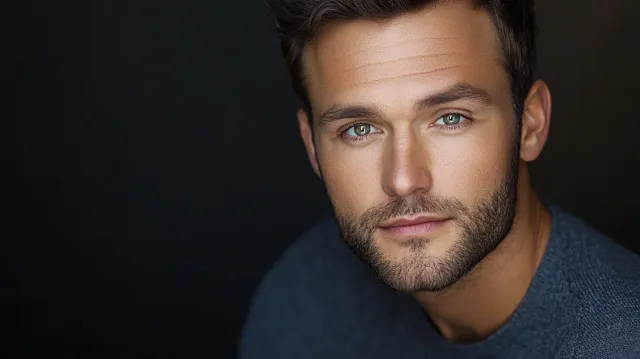
Actor Headshots
Actor Headshots and Your Resume: Sizing, Formatting, and What Casting Expects
How actor headshots and resumes pair together — the 8x10 standard, trimming and attaching the resume, digital submission on Actors Access and Casting Networks, theatrical vs commercial, and the formatting mistakes that get you passed over.
Chris McCarthy
Professional Photographer, Photography Shark · June 10, 2026
For an actor, the headshot and resume are not two separate things — they're a single submission package, and casting reads them as a unit. The photo gets you noticed; the resume backs it up. Get the pairing right and you look like a working professional who knows the business. Get it wrong — mismatched sizes, a stale photo, a sloppy file name — and you signal "new at this" before anyone reads a credit.
I'm Chris McCarthy, and I shoot actor headshots at my studio in Rockland, just south of Boston. I've photographed enough actors heading into Boston, New York, and regional markets to know that the questions about sizing and formatting come up constantly, and the answers genuinely matter. This guide covers the 8x10 standard, how the headshot and resume physically and digitally pair, submitting through Actors Access and Casting Networks, what a casting director actually reads, theatrical versus commercial looks, and the formatting mistakes that quietly cost actors auditions. (If you're not an actor and you just need a photo for a corporate job application, this isn't your guide — see the job application photo guide instead, because the conventions are completely different.)
The 8x10 Headshot Standard
In North America, the actor headshot standard is 8x10 inches, vertical (portrait orientation). This has been the convention for decades and it hasn't budged, because the entire physical infrastructure of casting — the way photos are handled, filed, and paired with resumes — is built around that size.
When you order prints from a reproduction lab, you order 8x10s. When you walk into an in-person audition or general, you bring printed 8x10s. And critically, your resume is formatted and trimmed to the same 8x10 footprint so the two pieces stack perfectly. This is why a session needs to deliver files at full resolution: an image that looks fine on a phone screen can fall apart when blown up to an 8x10 print, where every bit of detail and sharpness shows. I cover the full breakdown of dimensions and where each is used in headshot sizes explained, but for actors the short version is: 8x10 vertical, high resolution, no exceptions.
Orientation matters too. Actor headshots are vertical, framed from roughly the chest or shoulders up, with the face filling a generous portion of the frame. A horizontal crop, or a wide environmental shot with lots of background, is a corporate or LinkedIn convention — not an acting one. Casting expects to see your face, your eyes, and a clear read on your type, with nothing competing for attention.
How the Headshot and Resume Pair Together
The headshot and resume function as a matched set, and the physical convention is precise.
Print the resume on its own sheet, then trim it to exactly 8x10 inches so it matches the headshot's footprint. The resume is then attached to the back of the printed headshot — double-sided tape in the corners, a staple in all four corners, or printed directly onto the reverse of the photo by your repro lab (many actors do exactly this, ordering "headshot with resume on back" as a single product). The photo faces out; the resume rides on the back; both are the same size with nothing hanging over the edges.
Why so particular? Because a casting office handles stacks of these. A resume that's printed on standard 8.5x11 paper and left untrimmed sticks out past the headshot, gets dog-eared, and broadcasts that the actor didn't bother to learn the format. A loose resume that isn't attached gets separated from the photo entirely and lost. The trimmed, attached pairing keeps you intact as one unit through the entire pile.
When you submit in person, you hand over the paired 8x10. When a packet is requested by mail or left at a callback, same thing. The discipline of the pairing is part of how the industry reads professionalism.
Submitting Digitally: Actors Access and Casting Networks
These days most submissions happen online, primarily through Actors Access and Casting Networks (and Backstage). The physical 8x10 logic carries over, but the mechanics change.
Sizing and resolution. You upload a high-resolution JPEG — these platforms generally want images in the neighborhood of 600x800 pixels or larger, and you should always upload the largest, sharpest version the site accepts. The image stays in the vertical actor orientation. The platform handles thumbnail generation, but it can't add detail you didn't upload, so start high.
File naming. This is where a lot of actors give themselves away. Name your files clearly and professionally: `Jane-Smith-Commercial.jpg`, `Jane-Smith-Theatrical.jpg`. Never upload `IMG_4821.jpg` or `photoshoot-final-FINAL-2.jpg`. A clean file name is trivially easy and signals that you treat your materials like a professional does. Keep your photographer's attribution intact wherever the platform supports a credit field — it's both courtesy and a quality signal.
The resume online. On these platforms, your resume lives as its own attached document or as fields you fill in directly, rather than being stapled to anything. You upload multiple looks (your theatrical shot, your commercial shot, often a few more) and the casting side sees them alongside your stats and credits. The pairing is still there conceptually — photo plus credits — it's just digital. Many actors carry several looks precisely so they can submit the most role-appropriate image for each project; I dig into how many you actually need in how many headshots actors need.
Self-tapes and slates are a separate topic, but the headshot is still the first thing a casting director sees in the breakdown before they ever open a tape — so it does the heavy lifting of the first impression.
What a Casting Director Actually Reads
When a casting director scans your submission, they're making a fast judgment about a single question: can I picture this person in this role? Your headshot answers that in under a second.
They read your type — your apparent age range, your energy, whether you read as the lead, the best friend, the authority figure, the everyman. They read your eyes, because a headshot with dead or disengaged eyes gets skipped no matter how technically clean it is. And they read whether the photo looks like a real, current human being or an over-retouched, over-styled fantasy version of one. The photo has to look like the person who will walk through the door. I went deep on this in what casting directors look for in a great headshot, and the throughline is authenticity over polish: they're casting a person, not a glamour shot.
Only after the photo does the job does the resume get read. The resume confirms and contextualizes — training, credits, special skills, stats. But the resume rarely rescues a photo that didn't earn a second look. That's the order of operations, and it's why the headshot investment matters so much.
Theatrical vs Commercial Headshots on a Resume
Most working actors maintain (at least) two distinct looks, and understanding the difference shapes both your session and how you submit.
Theatrical headshots are more grounded, serious, and dramatic. The expression is often a soft, neutral, or contemplative read rather than a smile — something with depth and interiority. Lighting tends to be a touch more dimensional. These suit film, television, and stage breakdowns, where casting is looking for emotional range and character.
Commercial headshots are brighter, warmer, and friendlier — typically an open, genuine smile, lighter and more even lighting, an approachable energy. These suit advertising, spokesperson, industrial, and product work, where the read is "likeable, relatable, trustworthy."
You submit the look that matches the breakdown: theatrical photo for the indie drama, commercial photo for the toothpaste spot. On Actors Access and Casting Networks you keep both (and possibly more) on your profile and choose per submission. This is exactly why a good actor session is structured to capture a range of looks and expressions in one sitting rather than chasing a single "perfect" frame — you walk away with the tools to answer multiple kinds of breakdowns.
Keeping Headshot and Resume Current and Consistent
The single most important rule in actor headshots: you must look like your headshot when you walk into the room. A photo that's flattering but no longer accurate is worse than a plain one that's true to life, because the mismatch wastes the casting director's time and undercuts your credibility the instant you arrive.
Update your headshots whenever your look changes meaningfully — new hair color or cut, a beard, weight change, visible aging — and at a minimum every one to two years for adults. For child and teen actors the cycle is much faster, since they change appearance quickly; their headshots can go stale in months.
Consistency applies to the resume too. Keep your credits current, your training accurate, your stats truthful, and your contact and representation info up to date. A headshot that says "booking now" paired with a resume that hasn't been touched in three years sends a mixed signal. The package should look like it belongs to an actor who's actively working today.
Common Formatting Mistakes That Cost Actors Auditions
After years of shooting actors, here are the avoidable errors I see and hear about most:
- Untrimmed resume on 8.5x11 paper. It overhangs the 8x10 headshot, gets battered in the stack, and immediately reads as amateur. Trim it to 8x10.
- Resume not attached. A loose resume gets separated from the photo and lost. Tape or staple all four corners, or print on the back.
- Horizontal or environmental crop. Actor headshots are vertical and tight on the face. A wide corporate-style shot signals you don't know the format.
- Camera-default file names online. `IMG_4821.jpg` looks careless. Use `FirstName-LastName-Look.jpg`.
- Low-resolution uploads. A small file looks soft at print size and pixelated when enlarged. Always upload the highest resolution the platform allows.
- A stale photo. Looking nothing like your headshot is the cardinal sin. Keep it current.
- Over-retouched, over-stylized images. Heavy editing creates a person who doesn't exist and can't show up to the callback. Casting wants the real you.
- Submitting the wrong look for the breakdown. A serious theatrical shot for a peppy commercial (or vice versa) tells casting you didn't read the room.
Most of these — wrong crop, bad lighting, over-retouching, an unflattering or inaccurate read — are decided in the studio, not at the printer. That's exactly why the choice of photographer and the structure of the session matter so much. If you want the broader list of pitfalls specific to performers, I keep a running breakdown in the headshot mistakes actors should avoid.
Book an Actor Session That Gets the Whole Package Right
Your headshot and resume work as a team, and the headshot is what opens the door. A session built around the actor standard — vertical 8x10, full resolution, theatrical and commercial looks, authentic and current — gives you materials that hold up the moment a casting director opens your submission and, later, the moment you walk into the room.
Get in touch to book a session at Photography Shark in Rockland, MA, just south of Boston. See the actor headshots service page for what's included, or the actor headshots Boston page for details on theatrical and commercial looks and turnaround.
Free download: the free Actor Headshot Guide — theatrical vs commercial looks, wardrobe, posing and casting site sizes in one PDF.
Related reading: Studio or outdoor for a Boston actor headshot · Headshot sizes explained · What casting directors look for in a great headshot · How many headshots actors need · Headshot mistakes actors should avoid · headshots for dance auditions.
Frequently Asked Questions
What size should an actor headshot be?
The North American industry standard is 8x10 inches, oriented vertically (portrait) for theatrical and commercial submissions. Your acting resume is also formatted to 8x10 — printed and trimmed to match — so it can be attached cleanly to the back of the printed headshot. For digital submissions on Actors Access and Casting Networks, you upload a high-resolution file (typically a 600x800-or-larger JPEG) and the resume is attached separately as its own document.
How do you attach a resume to a headshot?
Print the resume on its own sheet, trim it to exactly 8x10 inches so it matches the headshot, and attach it to the back of the printed photo with double-sided tape or a staple in all four corners (or print it directly on the reverse). It should never hang over the edges or be folded. The pairing is read as one unit: headshot facing out, resume on the back, both trimmed to the same size.
What's the difference between a theatrical and a commercial headshot?
A theatrical headshot is more serious, grounded, and dramatic — it suits film, television, and stage casting where they're looking for depth and character. A commercial headshot is brighter and friendlier, with an open, approachable smile that suits advertising, spokesperson, and product-driven work. Most working actors maintain both looks and submit the one that matches the role type, which is why a session is built to capture a range rather than a single expression.
What file name should I use when I submit a headshot online?
Use a clear, professional file name with your full name and the look, such as "Jane-Smith-Commercial.jpg" or "Jane-Smith-Theatrical.jpg." Avoid camera default names like "IMG_4821.jpg," which look careless and are impossible for a casting office to track. Keep the photographer's attribution intact where the platform allows it, and upload the highest-resolution version the site accepts.
How often should an actor update their headshots?
Whenever your appearance changes enough that you no longer match the photo — new hair color or cut, weight change, beard, age — and at minimum every one to two years for adults, more often for children and teens who change fast. The cardinal rule is that you must look like your headshot the moment you walk into the audition room. A headshot that flatters but doesn't match wastes everyone's time and works against you.
Related Posts




You Might Also Like
About the Author
Chris McCarthy
Chris McCarthy has run Photography Shark Studios in Rockland, MA for over 10 years and 500+ sessions, with executive headshot work for Rockland Trust, Clean Harbors, M&T Bank, and McCarthy Planning; founder portraits for AI startups including Lowtouch.ai; product photography for South Shore brands like Lauren's Swim; and headshots across South Shore legal, medical, financial, and academic practices. Every session is personally shot and edited by Chris on Sony mirrorless and Godox strobe systems — no assistants, no outsourcing, no batch retouching. Galleries deliver in 3–5 business days. About photographer Chris McCarthy →
Photography Shark · Boston & South Shore MA
Ready to Book a Session?
Professional headshots, senior portraits, boudoir, and model portfolios. Studio in Rockland, MA — 25 miles south of Boston. Sessions from $395.