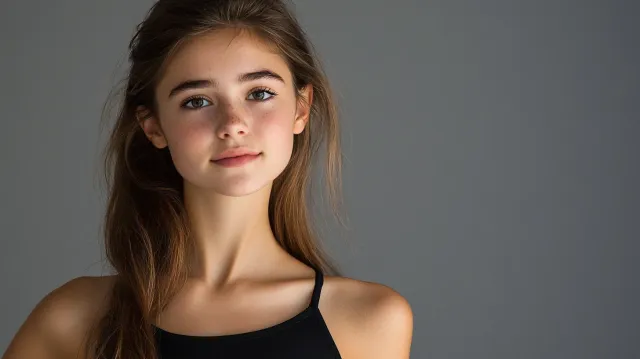
Headshots
Dance Headshots: What Dancers Need for Auditions and Companies
What a dance headshot is, how it differs from an acting headshot, what to wear and how to pose, and what companies and agencies look for — a studio guide for dancers.
Chris McCarthy
Professional Photographer, Photography Shark · May 28, 2026 · Updated October 5, 2026
A dance headshot is a clean, current, professional portrait of a dancer's face and shoulders — used for company auditions, agency representation, college dance program applications, competitions, and teaching profiles. It lives alongside your movement and performance photos but does a distinct job: it shows the panel exactly what you look like, honestly and clearly, so they can recognize you in the studio and remember you on the roster. This guide covers what a dance headshot actually needs to be, how it differs from an acting headshot, what to wear, how it's posed, and what companies and agencies are looking for.
Dancers are one of the most camera-aware groups I photograph — you spend your career in front of mirrors and audiences — but the audition headshot has its own rules, separate from performance photography.
If you already know what you need and want session details, dance headshots and audition photos in Boston has the formats and pricing — including the full-length frame most auditions ask for alongside the headshot, and studio and competition team days. Otherwise, read on.
Why Dancers Need a Headshot (Not Just Dance Photos)
It's a fair question: if your body is your instrument, why does the panel care about a head-and-shoulders portrait? Because the headshot and the dance photos answer different questions.
Your dance and movement photos show line, extension, technique, and artistry — what you can do. Your headshot shows who you are and what you currently look like. Audition panels, agencies, college programs, and conventions use the headshot to:
- Match your face to your application during and after a cattle-call audition with dozens or hundreds of dancers.
- Remember you when they sit down afterward to make decisions.
- Confirm you look like your photos — a current, honest headshot builds trust; an outdated one creates doubt.
- Represent you on company rosters, programs, and websites once you're cast.
A strong submission almost always pairs a professional headshot with separate full-body dance shots and a resume. The headshot is the anchor.
Dance Headshot vs. Acting Headshot
Dancers often ask whether their actor friend's headshot photographer is the right call, or whether they need something different. The genres overlap but aren't identical — and understanding the difference helps you brief any photographer well.
An actor headshot is engineered around casting "type" and theatrical or commercial range: the industry expects a very specific tight crop, neutral-to-expressive looks, and an image that helps a casting director imagine you in roles.
A dance headshot shares the fundamentals — clean light, neutral background, current and recognizable, sharp on the eyes — but shifts the emphasis:
- Athletic, poised presentation. Dancers carry themselves differently; a good dance headshot captures that natural carriage and length in the neck and shoulders.
- Confident, coachable expression. Panels respond to dancers who read as both assured and easy to direct.
- Always part of a set. Where an actor may submit a single headshot, a dancer submits the headshot plus dance photos — so the headshot doesn't have to carry the artistry alone. It can be cleaner and more straightforward.
The technical posing foundation is the same one in the professional headshot posing guides, adapted to a dancer's frame.
What a Strong Dance Headshot Example Looks Like
When dancers search for dance headshot examples, they're usually trying to calibrate against a standard before they book. Here's what separates a strong example from a weak one — use it as a checklist when you review your own gallery:
- Eyes sharp and lit. The single most important technical marker. A strong example has crisp focus on the eyes and a catchlight that makes them read as present and engaged.
- Even, soft studio light. No harsh shadows under the brow or nose, no blown-out highlights. The face is modeled gently so the jaw and cheekbones have shape without drama.
- Clean, neutral background. White, gray, or a muted tone — nothing that competes with the face or dates the image.
- Fitted, simple wardrobe. A clean leotard or fitted top in a solid color, hair off the face. The clothing frames the face instead of pulling focus.
- Current and honest. The dancer in the example looks exactly like they would walking into the audition room — minimal retouching, no stylization, no performance makeup carried over from a stage shoot.
- Confident, approachable carriage. A long neck, open chest, grounded shoulders, and an expression that reads as both assured and easy to direct.
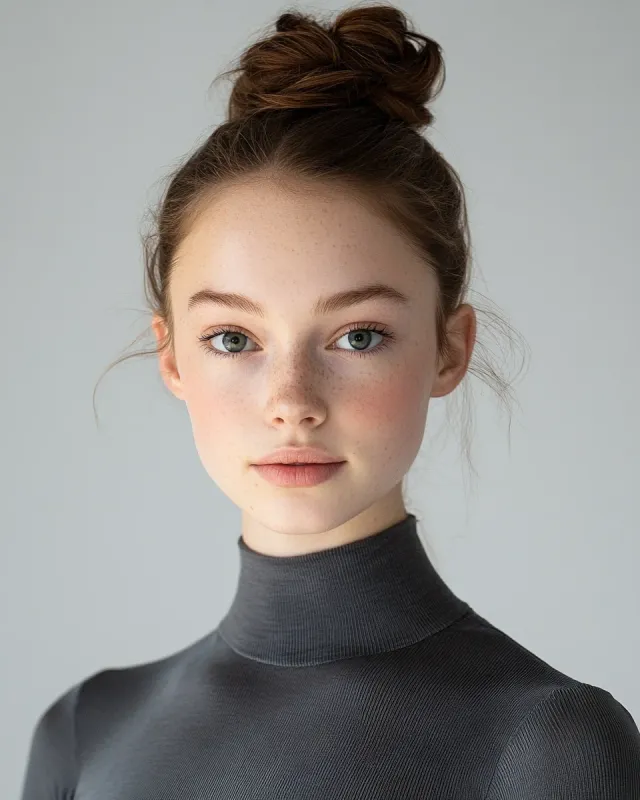
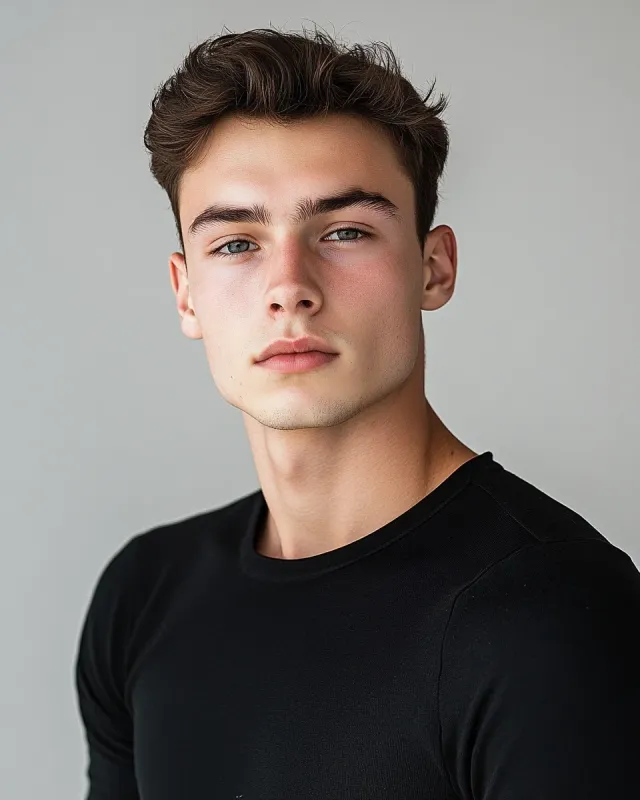
Both examples above share the same fundamentals — sharp eyes, even light, clean backgrounds, fitted wardrobe, and an honest, current likeness — even though the dancers, genres, and looks differ. That's the through-line of every strong dance headshot: the styling can change, but the recognition and image quality stay constant.
For four frames broken down element by element — including the failure patterns that make an otherwise good photo unusable — see the dance headshot examples breakdown.
A useful test: if you put the headshot next to the dancer's full-body audition photos, the face should be instantly recognizable as the same person on the same week. For a broader set of portrait references across genres, see the professional headshot examples gallery.
What to Wear for a Dance Headshot
Wardrobe for the headshot itself is about framing your face, not showcasing technique (your dance photos handle that). The reliable rules:
- Fitted and simple. A clean leotard, a fitted top, or a simple scoop or V-neck. Fitted clothing keeps the focus on your face and your line; baggy clothing reads sloppy in a portrait.
- Solid, flattering colors. Jewel tones and clean neutrals photograph well. Avoid loud patterns, large logos, and anything trendy that will date the photo.
- Minimal jewelry. Small or none — it distracts at thumbnail size and dates quickly.
- Hair that reveals the face. A clean bun, a sleek style, or hair worn the way you present at auditions. Panels want to see your face and the shape of your head and neck.
- Bring options. Many dancers shoot one classic, clean look and one that reflects their genre or personality — contemporary, ballet, commercial, hip-hop. Two looks gives you range for different submissions.
If you'll also shoot full-body dance photos in the same session, bring dancewear appropriate to your style and any pointe shoes or props you use.
Dance Headshots by Genre
The fundamentals — sharp eyes, clean light, honest likeness — don't change between genres. What changes is styling, expression, and how much personality the image is expected to carry. Panels in different corners of the industry are calibrated to different looks, and sending a classical headshot to a commercial call (or the reverse) reads as a dancer who hasn't done their homework.
Commercial Dance Headshots
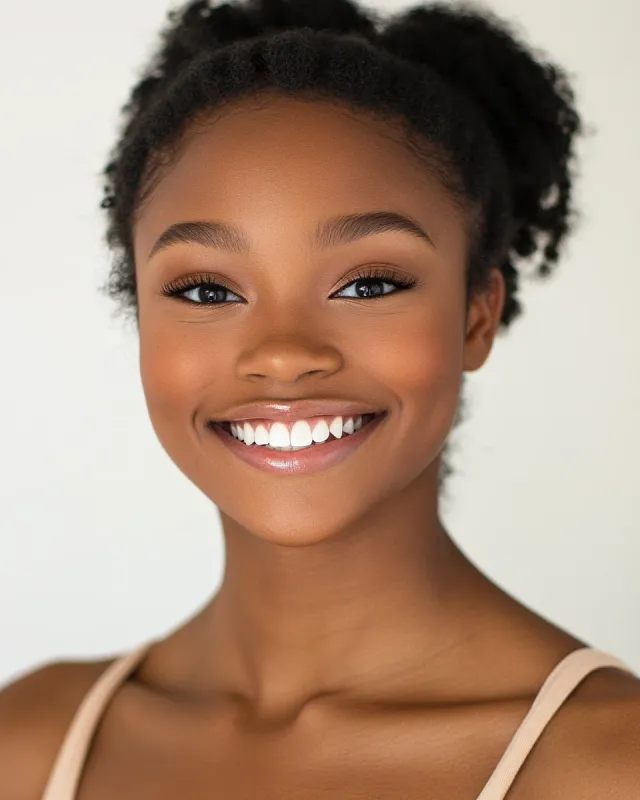
Commercial work — music videos, industrials, cruise and theme-park contracts, agency representation, convention faculty — expects the most personality of any dance genre. Commercial dance headshots sit closest to commercial acting headshots: brighter, warmer, more expressive, and more marketable.
- Expression carries the image. A genuine, energetic smile with teeth is standard. Agents are selling you as someone a brand wants on camera, so warmth and approachability outrank poise.
- Styling reads current and polished. Contemporary hair and makeup, a fitted top in a clean color, light styling that looks like you on a good day rather than a stage look.
- Color over austerity. Where a ballet submission favors restraint, commercial work tolerates a brighter background and warmer grade.
- Agents often want two. A smiling commercial look and a stronger, more neutral "theatrical" or editorial look, so they can submit you across categories.
If commercial representation is your goal, it's worth shooting this look alongside your classical one — the two images do genuinely different jobs, and the commercial one is usually what gets you the audition. The commercial dance headshots guide covers type, agency submission packages, and what casting is reading in a grid of thumbnails.
Ballet and Classical
Classical companies and conservatories expect restraint. Hair in a clean, secure bun exactly as you'd wear it in class, minimal makeup, a simple fitted leotard or plain top, and an expression that's composed and open rather than broadly smiling. The image should communicate discipline and line. Company directors are looking for a face they can place in a corps and a carriage that already reads trained.
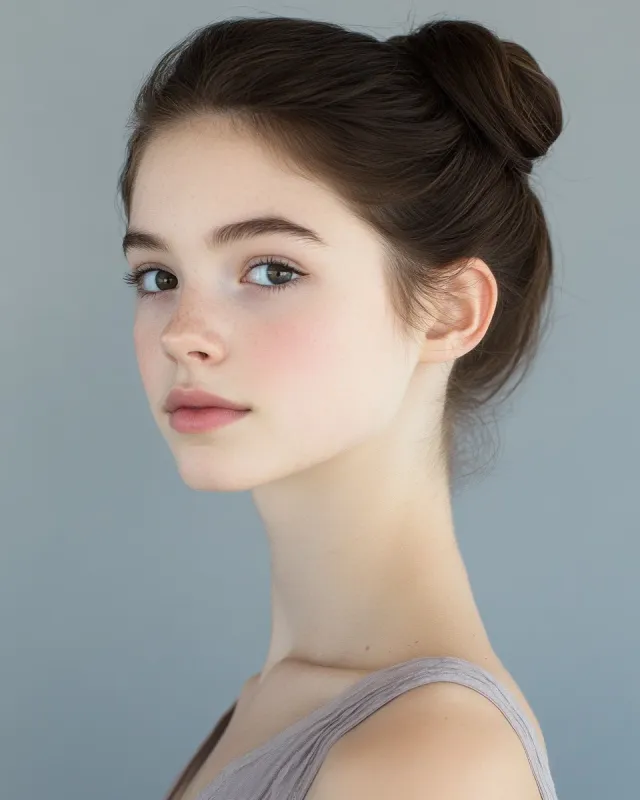
The ballet headshots guide covers classical conventions in full, including the technical photographs — first arabesque, tendu, passé — that almost every classical submission requires alongside the headshot.
Put the two side by side and the difference is obvious: same technical standard, completely different message. The commercial image sells warmth and marketability; the classical image sells discipline and line. Sending one where the other belongs is the most common genre mistake dancers make.
Contemporary and Modern
The most flexible category, and the one where dancers most often overthink styling. Contemporary panels accept a wider expressive range — a soft, grounded neutral or a quiet half-smile both work — and hair can be down or loosely back if that's how you present. Keep the wardrobe simple and the styling honest; the expression should read thoughtful and present rather than performative.
Musical Theatre
Musical theatre dancers are auditioning as triple threats, so the headshot leans toward the acting standard: expressive, warm, clearly "typed," and paired with a resume. If you sing and act as well as dance, follow the actor headshot conventions closely — theatrical casting directors read these images with an actor's eye, and a purely classical dance portrait will undersell your range.
Hip-Hop, Street, and Commercial Crossover
Personality and authenticity matter most here. Styling that reflects how you actually present — including hair, hats, and wardrobe that read true to the style — is an asset, not a distraction, provided the face stays clearly lit and unobstructed. The rule is unchanged: the panel has to recognize you instantly in the room.
If you're auditioning across more than one of these categories — and most working dancers are — shoot two looks in a single session rather than booking twice. It costs less and keeps your likeness consistent across submissions, which matters more than most dancers expect.
Expression and Carriage
The expression that works for dancers is confident, warm, and present — not the performance face you'd give from a stage, and not a stiff ID expression either.
Panels are reading two things at once: are you someone audiences will watch, and are you someone the company will enjoy working with? The strongest dance headshots answer both with an expression that's assured but approachable — engaged eyes, a relaxed jaw, a genuine half-smile or a poised neutral depending on the look.
Carriage matters too. Trained dancers have a natural length and lift; a photographer who works with performers will draw that out — long neck, open chest, grounded shoulders — without letting it harden into a posed, breath-held stillness. The trick is keeping the poise while staying loose enough for real expression to come through.
Studio Setup and Image Quality
Dance headshots are studio work. The setup that produces clean, professional results:
- Soft, controlled lighting that flatters skin and defines the jaw and cheekbones without harsh shadows.
- A neutral, non-distracting background — white, gray, or a muted tone — so nothing competes with your face.
- A portrait lens and correct camera height to render your features honestly (no phone-lens distortion).
- Conservative retouching that keeps your skin and features true — companies want to recognize you, so the image must be honest.
At my Rockland studio, about 35 minutes south of Boston, I light and direct each dancer individually — there's no single template that flatters every face, so camera height, light position, and posing are calibrated to you. If your audition also needs full-length dance images, those can be built into a longer studio session.
Dance Audition Headshot Requirements
Most of what goes wrong with a headshot for a dance audition isn't the photograph — it's the submission. The dance audition headshots guide covers the whole submission side in detail — file specs, print versus digital, and what the panel is physically doing with your photo during a long audition day. Dancers lose time and occasionally get screened out because the file was the wrong size, the crop was wrong, or the physical print didn't match what the panel asked for. What each type of audition expects:
Company and Cattle-Call Auditions
Bring physical prints, even when you've submitted digitally. The standard is an 8×10 headshot with your dance resume trimmed to size and attached to the back — most panels want it stapled at all four corners, not taped or glued. Bring more copies than you think you need; large open calls often collect a headshot at registration and again at each cut.
Write your name and phone number on the back of the print. Photos and resumes separate constantly in a room handling three hundred dancers.
Agency and Representation Submissions
Agencies almost always want digital files plus two looks — a warm commercial image and a stronger theatrical or classical one. Send high-resolution JPEGs unless told otherwise, named clearly (`firstname-lastname-headshot.jpg`, not `IMG_4471.jpg`), and expect the agency to want a set of dance photos and often unretouched digitals alongside them.
College Programs, BFA Auditions, and Summer Intensives
These have the most specific and most enforced requirements, and they vary by school. Expect a headshot plus prescribed dance photos — commonly first arabesque, tendu or a specified position, and sometimes a full-body in a leotard with hair back. Portals frequently cap upload size, so keep a web-sized export (roughly 1000–2000px on the long edge, under 2 MB) ready alongside your print-resolution master.
Read each school's requirements individually. Applying to eight programs usually means eight slightly different file sets, and "I sent what I had" is a bad look on an application that costs money to submit.
Conventions, Competitions, and Teaching Profiles
Conventions and competitions typically want a digital headshot for the program or app; teaching and faculty profiles want something warmer and more approachable than an audition image. Both are usually forgiving on specs — but both are public-facing, so this is where an outdated photo is most visible.
File Specs That Cover Almost Everything
Prepare these once and you'll satisfy nearly every submission:
- Print master: 8×10 at 300 dpi, high-quality JPEG, minimal compression.
- Web/portal version: ~1500px long edge, under 2 MB, sRGB color.
- Crops: a tight headshot crop and a slightly wider three-quarter, since some portals expect a squarer frame and some expect the classic 8×10 ratio.
- Full-body dance photos as separate files — never composite them into the headshot.
- Consistent, professional filenames across every file you send.
A good photographer should deliver most of this without being asked. If you know where you're auditioning, say so before the session — the crops and exports can be built to spec.
For a full breakdown of portrait dimensions, aspect ratios, and the crops different platforms expect, see the headshot sizes and dimensions guide.
When to Update Your Dance Headshots
A dancer's headshot has a short shelf life, and you'll hit update triggers more often than most professionals:
- Pre-professional and pre-college auditions — a current headshot is essential the year you audition for programs and summer intensives, because appearance changes quickly at this stage.
- Signing with or switching agencies — agencies often want a fresh set that matches their roster style.
- A significant change in appearance — new hair color or length, a different stage look, or simply a year of growth.
- Moving between genres or adding roles — a dancer pivoting from ballet to commercial work, or adding teaching and choreography, benefits from images that reflect the new direction.
A good rule: refresh your headshot every one to two years while you're actively auditioning, and immediately whenever you no longer look like your current photo. Because the headshot's entire purpose is honest, current recognition, an outdated one quietly undermines an otherwise strong package.
Common Dance Headshot Mistakes
The recurring problems that weaken a dancer's submission:
- Using a cropped performance photo as a "headshot." Stage lighting and distance make for a poor portrait; panels can tell instantly.
- An outdated photo. If you've changed your hair, grown, or shifted your look, update it. The headshot's whole job is current recognition.
- Baggy or busy wardrobe that hides your line and pulls focus from your face.
- Over-retouching that makes you unrecognizable in the room.
- Selfies or phone photos with wide-lens distortion and uneven light.
- No clear headshot at all — submitting only dance photos when the program explicitly asks for a headshot.
How a Dance Headshot Session Works at Photography Shark
A dance audition headshot session at the Rockland studio is efficient and dancer-aware. We start with a clean, classic headshot look, then move to a second look that reflects your genre or personality. I direct expression and carriage in real time, set the lighting and camera height to your face, and capture a confident range so you can match the image to ballet, contemporary, commercial, or teaching submissions. If you need full-body dance images, we build a longer studio session so you leave with both the headshot and movement photos in one visit. Galleries deliver quickly with conservative, honest retouching and multiple crops sized for audition platforms.
Ready to Book?
Compare dance headshot packages, formats and team days, then get in touch to schedule a session. Photography Shark is in Rockland, MA — an easy drive from Boston and the South Shore. Sessions start at $395 with fully retouched images, multiple crops, and full personal use included.
Free download: the free Dance Headshot Guide — what auditions ask for, dancewear, hair and makeup, and submission sizes in one PDF.
Related reading: Book a dance headshot session in Boston · Cheer and gymnastics headshots · Dance audition headshots: what to submit · Dance headshot examples · Ballet headshots · Commercial dance headshots · Actor headshots in Boston · Best modeling headshot poses · Headshot sizes and dimensions · Model portfolio photography
See also: press photos and headshots for musicians.
Frequently Asked Questions
What is a dance headshot?
A dance headshot is a clean, current, professional portrait of a dancer's face and shoulders, used for company auditions, agency representation, college dance program applications, competitions, and teaching profiles. It sits alongside a dancer's movement and performance photos but does a different job: it shows the panel exactly what you look like, clearly and honestly, so they can recognize you in the room and on the roster.
What should you wear for a dance headshot?
Wear something fitted, solid-colored, and simple that frames your face without distraction — a clean leotard, a fitted top, or a simple scoop/V-neck. Avoid loud patterns, large logos, busy jewelry, and anything that competes with your face at small sizes. Many dancers shoot one classic look and one that reflects their style or genre. Hair should be in a clean, face-revealing style that matches how you present at auditions.
What is the difference between a dance headshot and an acting headshot?
Both are clean, current, recognizable portraits, but the emphasis differs. Acting headshots are calibrated for casting "type" and theatrical or commercial range. Dance headshots prioritize a clear, honest, athletic presentation of the face and an expression that reads as confident and coachable — and they're almost always paired with separate full-body movement or performance photos that an acting submission doesn't require.
Do dancers need headshots?
Yes. Most company auditions, dance agencies, college programs, conventions, and competitions ask for a headshot in addition to dance photos and a resume. The headshot is how a panel matches your face to your application and remembers you afterward. A current, professional headshot signals that you take your career seriously and removes any doubt about what you currently look like.
What do dance companies look for in audition photos?
Companies want photos that are honest and current — they should look like you on the day you walk in. For the headshot specifically, they want a clear view of your face, a confident and approachable expression, clean grooming, and professional image quality. For accompanying dance photos they look at line, extension, and technique, but the headshot's job is recognition and a sense of who you are.
How should you pose for a dance headshot?
For the headshot itself, the posing is the same foundation as any strong portrait: body angled slightly off-camera, face returned to the lens, a long neck, chin extended forward and down, shoulders relaxed but engaged, and a confident, present expression. A photographer who understands dancers will also capture the poise and carriage that distinguish trained performers without tipping into a stiff "posed" look.
What headshot do you need for a dance audition?
For a dance audition you need a current, clean head-and-shoulders portrait with even studio lighting, a neutral background, sharp focus on the eyes, and an honest, recognizable likeness — submitted alongside separate full-body dance photos and a resume. Most company auditions, summer intensives, and college dance programs ask for the headshot specifically so the panel can match your face to your application and remember you after a crowded call. Avoid cropping a stage or performance photo into a headshot; auditioners can tell instantly, and the lighting and distance never read as cleanly as a proper studio portrait.
What does a good dance headshot example look like?
A strong dance headshot example is sharply focused on the eyes, evenly lit with soft studio light, shot on a clean neutral background, and cropped head-and-shoulders so your face fills the frame. The dancer looks current and recognizable, wears fitted solid-colored clothing with hair off the face, and holds a confident, approachable expression with the natural length and carriage of a trained performer. It looks like you on the day you walk into the room — not over-retouched, not stylized, not pulled from a performance shot.
How much do professional dance headshots cost?
At Photography Shark, dance headshot sessions start at $395 and include fully retouched images, multiple audition-ready crops, and full personal use. Pricing scales with the number of looks and whether you add full-body dance images to the same studio session. Because a dancer's headshot has a short shelf life and is refreshed every one to two years while actively auditioning, it's worth treating as a recurring, career-essential expense rather than a one-time purchase.
What is a commercial dance headshot?
A commercial dance headshot is the brighter, warmer, more expressive image used for music videos, industrials, cruise and theme-park contracts, and agency representation. It sits closer to a commercial acting headshot than to a classical dance portrait: a genuine smile with teeth is standard, styling reads current and polished, and the background and grade can be warmer than a ballet submission would allow. Agents typically want it paired with a stronger, more neutral theatrical look so they can submit you across categories.
Do you need prints for a dance audition?
Yes, for company and cattle-call auditions. The standard is an 8x10 print with your dance resume trimmed to size and stapled to the back at all four corners, with your name and phone number written on the back in case the two separate. Bring more copies than you expect to need, since large open calls often collect a headshot at registration and again at each cut. Agency submissions, college portals, and conventions are usually digital only, but check each one — requirements vary and are enforced.
What size should a dance audition headshot be?
Prepare two versions. A print master at 8x10 and 300 dpi covers company auditions and anything physical. A web version around 1500px on the long edge and under 2 MB in sRGB covers college portals and agency uploads, which frequently cap file size. Keep both a tight headshot crop and a slightly wider three-quarter crop, since some platforms expect a squarer frame and others expect the classic 8x10 ratio, and always send full-body dance photos as separate files rather than compositing them in.
Related Posts
You Might Also Like
About the Author
Chris McCarthy
Chris McCarthy has run Photography Shark Studios in Rockland, MA for over 10 years and 500+ sessions, with executive headshot work for Rockland Trust, Clean Harbors, M&T Bank, and McCarthy Planning; founder portraits for AI startups including Lowtouch.ai; product photography for South Shore brands like Lauren's Swim; and headshots across South Shore legal, medical, financial, and academic practices. Every session is personally shot and edited by Chris on Sony mirrorless and Godox strobe systems — no assistants, no outsourcing, no batch retouching. Galleries deliver in 3–5 business days. About photographer Chris McCarthy →
Photography Shark · Boston & South Shore MA
Ready to Book a Session?
Professional headshots, senior portraits, boudoir, and model portfolios. Studio in Rockland, MA — 25 miles south of Boston. Sessions from $395.