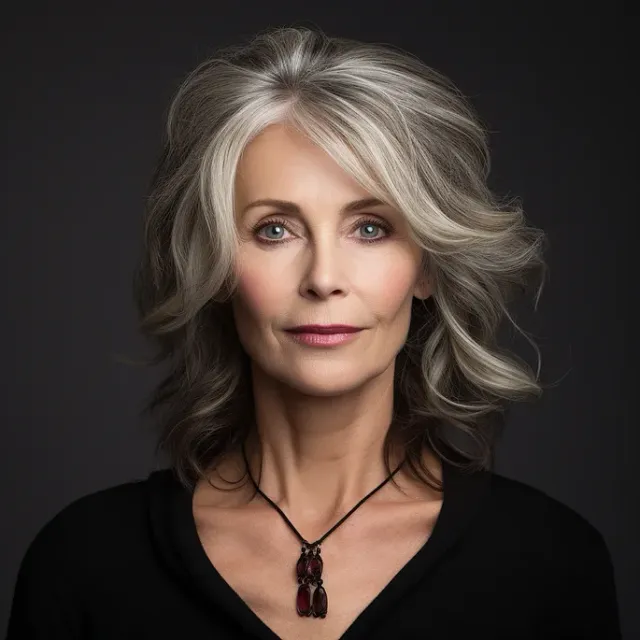
Actor Headshots
Actor Headshots Boston
Boston actor headshots that serve casting directors at the ART, Huntington, and commercial markets.
Chris McCarthy
Professional Photographer, Photography Shark · October 1, 2023 · Updated April 13, 2026
Boston is a serious acting market. Between the established theater scene — from the American Repertory Theater in Cambridge to the smaller storefront companies scattered across the metro area — the active commercial and industrial film market, and the consistent presence of student and independent film production at the city's many universities, there are real opportunities for actors who take their craft seriously and present themselves professionally.
A professional headshot is the price of entry. Not a good-enough headshot, not a headshot that flatters you but doesn't capture your type, not a headshot that was excellent two years ago but no longer looks like you. A current, honest, technically excellent headshot that communicates clearly to Boston casting directors and agents what you bring to the table.
I'm Chris McCarthy at Photography Shark, based in Rockland, MA — about 25 miles south of Boston on the South Shore. I've been shooting actor headshots for the Boston market for over a decade, and I want to share what I've learned about what actually makes this work.
What the Boston Market Wants to See
Boston is not New York or Los Angeles, but it's not a small regional market either. The ART, Huntington, SpeakEasy, Lyric, New Rep, and the many smaller companies that collectively make up the Boston theater scene maintain professional standards around casting submissions. Commercial clients — the consistent broadcast, print, and digital advertising work that Boston generates — have their own expectations. Student and independent film productions have yet another set of needs.
The common thread: Boston casting professionals are sophisticated. They look at a lot of headshots. They can identify a technically weak image, an over-retouched face, a photo that's flattering but inaccurate. What they're looking for in a headshot is an image that accurately represents a specific type and range, presented with technical quality that doesn't create distractions.
What this means practically: your headshot needs to look like you. Not an aspirational version of you — you, specifically, as you'll look when you walk into the audition room. It needs to communicate your type quickly and clearly. And it needs to be technically clean — sharp on the eyes, well-lit, with a background that keeps attention on your face.
The Headshot as a Type Communication Tool
The concept of "type" in acting is sometimes treated as a limiting label, but it's more useful to think of it as a starting point for a conversation. Your type is not a ceiling — it's the most natural, immediate read a casting professional has when they look at you. It's where you'll book first, and it's what your headshots should communicate clearly.
Boston casting directors are thinking in terms of types constantly: who plays the young professional with ambition problems, who plays the working-class father, who plays the elegant older woman with secrets, who plays the affable middle-aged neighbor. When they look at your headshot, they're placing you quickly in a mental category that informs whether they call you in.
Your headshot's job is to help with that placement. This means knowing your own type honestly — not who you'd like to be cast as, but where you'd actually, most naturally, most convincingly fit. The actors who book work are usually the ones who've made peace with this and present themselves honestly rather than aspirationally.
Multiple headshots can expand the conversation. Your primary headshot establishes your most natural type. Secondary headshots can suggest the range beyond that center — the more dramatic register, the more character-driven direction, the specific niche that might be worth communicating to certain casting directors.
Choosing a Boston-Area Actor Headshot Photographer
Boston has many photographers who advertise actor headshots, and the quality range is significant. Here's what to actually evaluate when you're making this decision.
Look at the portfolio with a critical eye. Are the subjects looking directly at the camera with genuine engagement, or are they performing a pose? Is the focus sharp consistently — particularly on the eyes? Does the lighting reveal the face in a way that feels natural and three-dimensional, or does it flatten or dramatize in ways that feel artificial? Are the images recent, or has the portfolio not been updated in years?
Ask about their experience with actors specifically. Photographers who primarily shoot corporate headshots, weddings, or commercial products may produce technically excellent images that don't function the way actor headshots need to function. The direction required to get natural, present expressions from actors is a specific skill. Ask how many actor headshot sessions they shoot per month.
Ask about retouching philosophy. This is a direct tell. A photographer who says "we'll make you look your best" without clarifying what "best" means may optimize for flattery over accuracy. A photographer who says "we remove temporary imperfections but don't alter permanent features" understands the actual professional requirement. The retouching scope we publish openly is written precisely so this question has a public answer before you book.
Ask about the session structure. A headshot session for actors should have enough time for multiple looks and enough variation in expression to give you real options. A 30-minute session covers one look well; covering both theatrical and commercial takes about an hour.
Our Boston headshots sessions are built around these principles. I'm based in Rockland, which is easily accessible from the South Shore and a straightforward drive or commuter rail ride from Boston.
What a Strong Actor Headshot Session Looks Like
The session itself should feel collaborative rather than mechanical. Here's what I walk through with actors:
Pre-session consultation. Before any cameras come out, we talk. What are you pursuing — theater, commercial, film, some combination? What types do you get called in for? What do you think casting directors see when they look at you, versus what you see when you look in the mirror? What's not working with your current headshots, if you have them?
These questions produce information I need to direct the session well. They also get the actor thinking concretely about what they're trying to accomplish, which produces better results than walking in cold.
Wardrobe review. We look at what you brought and make decisions together about sequencing and what each look is communicating. I'll often suggest small adjustments — a collar opened or closed, a layer removed or added — based on how the garments are actually photographing in the light we're working with.
The shooting itself. I shoot a lot of frames. I keep the session moving. I give direction but I also leave space for the unexpected — the frame that happens between the set pieces is often the strongest one. I'll talk to you throughout the session, ask you questions, respond to what you're doing. The goal is genuine engagement rather than performed poses.
Expression range. Within each look, we work through a range of expression: warm and accessible, more contained and thoughtful, something with edge or conflict, something open and direct. These different registers give you options in the final selection that go beyond a single mood.
Wardrobe for Boston Actor Headshots
The practical wardrobe guidance for Boston actors aligns with general industry standards, but I'll give you the reasoning behind the rules so you can make intelligent decisions rather than just following a formula.
Solid colors work better than patterns. A bold stripe or geometric pattern creates visual noise that the eye is drawn to before it reaches your face. The casting director should be thinking about you, not your shirt. Solid colors keep the visual emphasis on your face.
Test your colors in natural light before the session. What reads well in your bathroom mirror may look completely different under studio lights. Bring multiple options — three or four distinct looks — so we have flexibility.
Fit and condition matter. Well-fitting clothing reads as intentional and professional. Clothing that pulls, gaps, or looks worn creates subtle negative signals. Check the condition of everything you bring — seams, collars, hems — because photography amplifies what casual observation misses.
Consider your type when selecting wardrobe. An actor pursuing corporate and professional roles should include at least one look in a tailored jacket or blazer. An actor pursuing more accessible, everyman roles should have something that reads as genuinely casual rather than dressed-down formal. Someone pursuing character roles has more latitude to be specific and distinctive.
The Boston Commercial Market: Different Needs
The commercial and industrial film market in Boston — the advertising campaigns, corporate videos, product demonstrations, and broadcast spots that are a consistent source of work for Boston actors — has somewhat different headshot needs than the theater and dramatic market.
Commercial headshots prioritize approachability and relatability. The viewer needs to immediately find you trustworthy, friendly, and like someone they know. The "look" is often cleaner and brighter than theatrical headshots. Expressions tend to be warmer and more directly engaging.
If commercial work is a significant part of your career goal, your headshot package should include at least one image specifically calibrated for commercial submissions — warm, direct, technically clean, with the kind of accessible energy that reads well in advertising contexts.
Some actors maintain separate theatrical and commercial headshots for exactly this reason. The two markets are looking for somewhat different things in the initial submission image.
Keeping Your Headshots Current
A headshot that no longer looks like you is not useful — it's actively counterproductive, because it creates a moment of confusion and potential awkwardness when a casting director compares the photo to the person who walks into the room.
The standard advice is to update your headshots every one to two years. That's a reasonable baseline, but there are specific triggers that should prompt an earlier update: a significant change in your hair (length, color, style), meaningful weight change, substantial aging, a shift in the types of roles you're pursuing, or changes in industry style standards that make your current headshots look dated.
The Boston market moves. What read as a current, industry-appropriate headshot five years ago may feel slightly anachronistic now. Stay observant about what current headshots in your competitive set look like, and don't let inertia keep you working with images that are past their useful life.
Ready to Book Your Session?
If you're a Boston-area actor looking for headshots that serve your career — honest, technically excellent, calibrated for the specific market you're working in — reach out through the contact page and let's talk about what you need. I work with actors at every level, from first headshots to established performers refreshing their portfolios, and I'd be glad to help you build something genuinely useful. See full session details on the actor headshots service page.
Corporate headshot studio · Session pricing & packages · Studio headshots near Rockland, MA
Frequently Asked Questions
How much do actor headshots cost at Photography Shark?
Actor headshot sessions start at $395 at Photography Shark's Rockland, MA studio for a 30-minute session, or both theatrical and commercial looks in a 60-minute session for $495. Sessions include expression range and fully retouched final images — enough variety for both theatrical and commercial submissions.
How far is the Photography Shark studio from Boston for actor headshots?
The studio is at 83 E Water Street, Rockland, MA — about 25 miles south of Boston and accessible via Route 3 or the commuter rail. Most South Shore actors find it significantly easier than shooting in the city.
Should I bring separate looks for theatrical and commercial headshots?
Yes. Theatrical headshots and commercial headshots serve different markets and often require different expressions and wardrobe. Chris recommends bringing at least two distinct looks so your session can cover both, giving you images that work for both Boston theater submissions and commercial casting calls.
How often should Boston actors update their headshots?
Every one to two years is a reasonable baseline, but update sooner if you've had a significant change in hair, weight, or the types of roles you're pursuing. An outdated headshot that no longer looks like you creates confusion in the audition room — which is actively counterproductive.
What does Chris look for when directing actor expressions?
Chris shoots a high volume of frames and keeps the session conversational, asking questions and giving specific behavioral directions rather than asking you to 'look confident.' The frames that happen between set pieces are often the strongest, which is why the session is structured to capture those natural moments.
Can I book a session if I'm just starting out as an actor in Boston?
Absolutely. Photography Shark works with actors at every level — from first headshots to established performers refreshing their portfolios. The pre-session consultation covers your type, your target market, and what you're trying to communicate, regardless of where you are in your career.
Related Posts
You Might Also Like
About the Author
Chris McCarthy
Chris McCarthy has run Photography Shark Studios in Rockland, MA for over 10 years and 500+ sessions, with executive headshot work for Rockland Trust, Clean Harbors, M&T Bank, and McCarthy Planning; founder portraits for AI startups including Lowtouch.ai; product photography for South Shore brands like Lauren's Swim; and headshots across South Shore legal, medical, financial, and academic practices. Every session is personally shot and edited by Chris on Sony mirrorless and Godox strobe systems — no assistants, no outsourcing, no batch retouching. Galleries deliver in 3–5 business days. About Chris McCarthy →
Photography Shark · Boston & South Shore MA
Ready to Book a Session?
Professional headshots, senior portraits, boudoir, and model portfolios. Studio in Rockland, MA — 25 miles south of Boston. Sessions from $395.