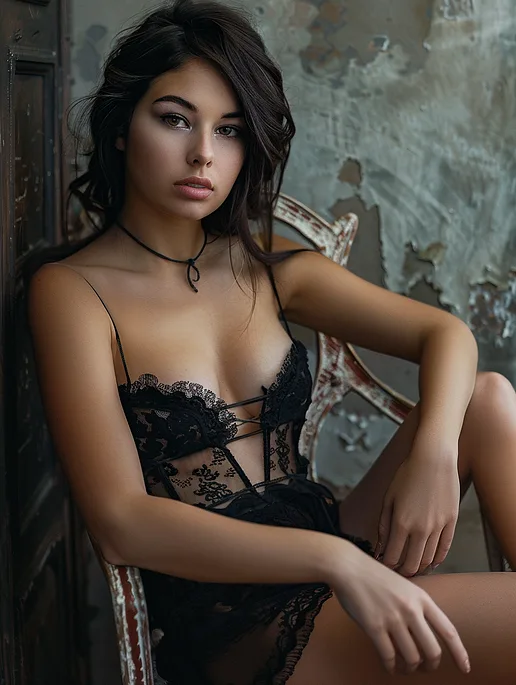
Boudoir Photography
Boudoir Photography in Boston and the South Shore: How to Choose a Photographer
Private boudoir studio 35 minutes south of Boston. What the studio and equipment actually are, how Rockland compares to a downtown Boston session on privacy, parking and price, and the 7 questions to ask before you book.
Chris McCarthy
Professional Photographer, Photography Shark · November 4, 2023 · Updated September 17, 2026
This is the Boston and South Shore boudoir guide — the studio, the equipment, how a Rockland session compares to a downtown Boston one, and the seven questions worth asking any photographer before you book. If you're earlier in the process and still learning what the genre involves, start with the definition and working overview of boudoir photography for the fundamentals: wardrobe, session structure, privacy, and how boudoir differs from glamour and fine art nude. If you already know you want a session and just need the numbers, the package comparison has them.
Boudoir photography is one of the most personal types of portrait work, and it requires a specific combination of technical skill, interpersonal sensitivity, and genuine professionalism to do well. When someone books a boudoir session, they're extending a significant level of trust. The questions below come from 10+ years of conversations with first-time clients who, in retrospect, wished they'd asked them earlier in their photographer-evaluation process.
The 7-Question Decision Framework
Before booking any Boston boudoir photographer, get answers to these seven questions. Note that the answer itself matters less than whether the photographer will give you a clear, direct, comfortable response — evasiveness on any of these is itself the signal.
- What does your pre-session consultation look like? (Real conversation or just intake form?)
- Can I see examples of your boudoir work specifically? (Not headshots or general portraiture — actual boudoir work that demonstrates lighting skill for this genre.)
- What's your retouching philosophy? (Will my body be digitally reshaped, or just lit and styled well?)
- Who else uses your studio while I'm there? (Shared commercial space or fully private?)
- What's your image-usage policy? (Will my photos be shared publicly without permission? Can I keep all of them entirely private?) The Photography Shark boudoir package comparison lays out exactly what's included at each tier so you can ask other studios about the same line items.
- How long have you specialized in boudoir specifically? (Generalist who also shoots boudoir vs. specialist who has refined this work over years.)
- What happens if I'm nervous on session day? (How is the session structured to work with anxiety rather than against it?)
The rest of this guide is the detail behind each of these questions — what good answers look like, what red flags to watch for, and what the photographer's response actually reveals about their process.
Boston or the South Shore: What the Drive Actually Buys You
Most people searching for boudoir photography in Boston are weighing two geographic options: a downtown studio (Seaport, South End, Back Bay) or a dedicated studio outside the city. The Photography Shark studio is at 83 E Water Street in Rockland, about 25 miles south of Boston. The practical differences are worth knowing before you book either one.
Privacy. Downtown boudoir studios are typically inside shared commercial buildings — other tenants, a shared lobby, a parking garage where you pass strangers on the way in. The Rockland studio has none of that. You park on site, walk directly in through a private side entrance, and encounter no one.
Parking. Free, on site, and directly outside. A Boston garage runs $30–$50, plus the work of finding it and navigating traffic while you are already psychologically preparing for an intimate session.
Drive time. Hingham to Rockland is about 15 minutes; Hingham to the Seaport is 30–45 in traffic. For anyone coming from Scituate, Norwell, Duxbury, Marshfield, Cohasset, or Plymouth, Rockland is closer than any Boston option. Coming from Boston, it is a straight run down Route 3 — and the reason people make it is the privacy, not the mileage.
Pricing. South Shore studio rates generally run 15–25% below comparable downtown Boston studios for equivalent service and quality. The package comparison shows exactly what is included at each tier, and there are payment plans if you would rather spread it.
The honest version: if you want a boudoir session inside city limits because the location itself matters to you, book a Boston studio. If what you actually want is privacy, unhurried time, and no one else in the building, the drive south is the thing that buys it.
What Makes a Boudoir Photographer Worth Trusting
The technical requirements of boudoir photography are real — lighting that flatters, posing guidance that creates genuinely beautiful shapes, editing that enhances rather than alters — but they're not actually the most important criteria for choosing a photographer. The most important criterion is how safe and comfortable they make you feel from the first point of contact through the delivery of your final images.
A skilled boudoir photographer understands that many clients come in with significant nervousness, and sometimes significant self-critical internal dialogue. The job isn't just to take photographs — it's to create the conditions in which someone can genuinely relax and feel comfortable, because that's when the best images happen. Tense, self-conscious subjects don't look beautiful regardless of how technically excellent the lighting is.
This means a good boudoir photographer communicates clearly and honestly before the session. They explain exactly what the process involves. They answer questions without making anyone feel foolish for asking. They establish boundaries explicitly and respect them absolutely. They maintain a professional, focused energy during the shoot that makes it clear this is skilled craft work, not something else.
The Consultation: Non-Negotiable
Any boudoir photographer worth booking offers a real consultation before the session — not just an intake form, but an actual conversation about your vision, comfort level, preferences, and any concerns. This conversation serves multiple purposes simultaneously.
It helps the photographer understand what you're hoping for: whether this session is a gift, a personal milestone, a confidence project, or some combination. It helps establish what level of reveal you're comfortable with — boudoir exists on a spectrum from fully clothed but intimate to explicitly nude, and every point on that spectrum is valid, but the photographer needs to understand where you're starting and what your limits are. It gives you information about how this specific photographer works, thinks, and communicates.
If a photographer skips the consultation or treats it as a formality to get through quickly, that's a meaningful data point. The consultation is where trust begins to be established, and a photographer who doesn't invest in it is signaling something about how they approach the work.
Lighting Expertise in Boudoir Photography
Lighting is where technical skill becomes directly visible in boudoir images. The difference between lighting that flatters and lighting that doesn't isn't subtle — it's the difference between images that look like professional photography and images that look like better-than-average snapshots.
Good boudoir lighting creates dimension by illuminating the subject from an angle rather than directly head-on. It wraps around curves rather than blowing out highlights. It creates shadows that define shape and form without becoming harsh or unflattering. It produces a quality of light that looks like it's coming from somewhere natural — a large window, a soft overhead source — even when it's carefully constructed from studio equipment.
The studio at Photography Shark is set up specifically for this work. Shooting on Sony full-frame equipment with purpose-built lighting setups, I can create the quality of light that makes boudoir images look genuinely beautiful rather than just adequately exposed.
For clients who prefer a more natural-light aesthetic, I also work with window light and other ambient sources that produce a softer, more documentary quality. The choice of lighting style should match the tone you're hoping for in the final images — and that's part of what the pre-session consultation establishes.
Posing: Guidance Without Direction Overload
Posing guidance is one of the most significant things a boudoir photographer provides, and it's an area where the difference between experienced and inexperienced photographers is immediately visible.
Most people don't inherently know how to position their bodies in ways that photograph flatteringly. This isn't a reflection of how they look — it's a technical fact about the relationship between three-dimensional form and two-dimensional image capture. Angles, depth of field, the distance between the camera and the subject, the direction of light: all of these affect which positions look natural and flattering and which don't. An experienced boudoir photographer knows this and guides clients into positions that work, rather than leaving them to guess.
The best posing direction is invisible to the final viewer of the image. It produces images where the subject looks entirely natural and at ease — not positioned. Getting to that point requires a photographer who can communicate direction in a way that doesn't feel clinical or awkward, and a session environment where the subject is relaxed enough to actually implement the direction naturally.
I give a lot of posing guidance at the start of a session and less as the session progresses, because people usually find their footing fairly quickly once they've seen a few images and understood what works. By midway through a session, most clients are suggesting their own variations on positions, and those are often the strongest frames.
What Editing Should and Shouldn't Do
Editing is a topic worth being explicit about in the context of boudoir photography, because there are genuinely different philosophies and they produce categorically different results.
One approach is heavy retouching: smoothing skin to a plastic texture, removing every visible blemish and line, digitally reshaping body proportions. This approach produces images that look like advertising photography — technically flawless, but disconnected from the actual appearance of the person being photographed.
The approach I take is different: enhancing what's actually there. Adjusting exposure, color, and contrast to make the image feel polished. Reducing (not eliminating) transient marks that wouldn't be present on another day — the red line from a waistband, a fresh pimple, temporary skin irritation. Preserving the features that actually define someone's appearance and that they'd recognize as themselves.
The goal is images that look like you on an excellent day, in excellent light, wearing something that makes you feel good — not images of a digitally constructed approximation of a person. Clients who receive over-retouched images often describe a strange disappointment, even if the images are technically impressive, because they can tell they're looking at something that isn't quite them.
What to Wear (and What You Don't Have to Decide in Advance)
The wardrobe question is one that creates a lot of pre-session anxiety, and it doesn't have to. Here's what actually matters:
Wear what makes you feel most like yourself, in a version of yourself you want to document. That might be elaborate lingerie. It might be an oversized button-down shirt and nothing else. It might be athletic wear that reflects how you actually spend your time. All of these are legitimate directions for a boudoir session, and the right choice is the one that feels authentic to you.
A few practical considerations: fabrics with texture (lace, silk, velvet) photograph differently than smooth fabrics, and texture is generally an asset in boudoir images — it gives the eye something to rest on and adds dimension. Ill-fitting garments that create pressure lines or bunching rarely photograph well regardless of how attractive they look in person. Simple, well-fitted pieces often perform better than elaborate ones.
Bring more options than you think you'll need. Wardrobe choices that look good in a mirror can read differently on camera, and having alternatives available means you're not locked in if something isn't working. We'll figure out what's working together as the session progresses.
Image Usage: Who Ever Sees Your Photos
Physical privacy is covered below; this is the separate question of what happens to the files afterwards, and professional boudoir photographers take it seriously. Before booking any boudoir session, clarify exactly what will and won't be done with your images.
At Photography Shark, client images are never shared publicly without explicit written consent, and that consent can be selective — a client might be comfortable with one or two images being used in a portfolio context but want the rest kept completely private. If you want to ensure your images remain entirely private, that's absolutely your right and it doesn't affect anything about the quality of the session.
The question of image ownership and usage rights should be discussed during the consultation, not after the session when you're already invested in the process.
The Studio: Space, Equipment, and Privacy Architecture
Question four on the list above — who else uses your studio while I'm there — is the one most worth asking, and the one most studios answer vaguely. Here is the specific answer for this one.
The space
83 E Water Street, Rockland is a 1,200-square-foot dedicated portrait studio — not a converted apartment, not a shared commercial photography building, not a multi-purpose creative space. Single purpose, owned by Chris McCarthy, used only for Photography Shark work.
You arrive through a private side entrance. There is no public-facing storefront and no signage indicating what kind of work happens inside. The waiting and changing area sits at the front, separated from the shooting area, with a full-length mirror, hanging space for wardrobe, and a private changing room with a door that locks.
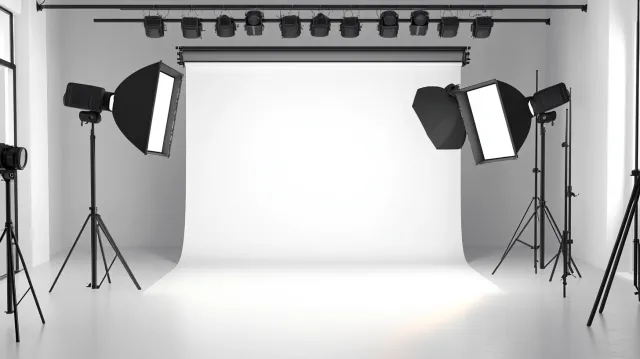
The shooting space has 12-foot ceilings, which matters for lighting setups that need height. The floor is finished concrete with area rugs to warm the room visually. There is a deliberately styled set wall — bedroom-adjacent without being literal — and three professional seamless backdrops (white, light gray, charcoal) on a motorized rolling system. Nothing is left visibly piled in the room when you arrive; the space is staged before every session.
The equipment
Soft, even, dimensional light is the whole difference between flattering boudoir and merely-exposed boudoir, so the kit is chosen for that:
- Cameras — Sony A7-series full-frame mirrorless. The dynamic range gives retouching latitude on skin tones; the resolution allows print-quality output at any reasonable wall size.
- Lenses — primes only: 35mm, 50mm, 85mm. Shallower depth of field and sharper edge-to-edge than zooms, which is what gives boudoir images their characteristic intimacy.
- Lighting — Godox professional strobes with multiple modifiers. Octaboxes for soft wraparound light, beauty dishes for sculpted facial light, strip lights for edge separation, gridded modifiers for directional control.
- Tethering — real-time tethered shooting to a large monitor, so you see images during the session. This single thing reduces session anxiety more than anything else in the room.
- Editing — a color-calibrated monitor and a retouching workflow built specifically for skin, not generic presets.
Privacy architecture
Privacy is the most-discussed subject in pre-session consultations, so it is worth being precise about:
- One client at a time. When you book, the studio is yours for the duration. No overlapping photographer, no client turnover, no staff walking through. During your session the building contains only people you have consented to.
- No exterior signage. From the street the building does not identify itself as a portrait studio — no sign, no window display of client work.
- No public foot traffic. It is a small commercial building; the other tenants are professional services with their own scheduled clients, not retail with walk-ins.
- Encrypted delivery. Images arrive in a password-protected private gallery. Source files are retained studio-side under the same encryption.
Who Books, and Why
The client base skews 35–55 but runs from early twenties to seventies, and comes from every South Shore town as well as Greater Boston. The occasions vary — milestone birthdays, anniversary and partner gifts, post-divorce reclamation, documenting a fitness or weight-loss milestone, and a great many sessions with no external occasion at all. Boudoir is not only shot for women, either; male boudoir is a real and growing part of the studio's work.
The throughline is consistent: people come because they want to see themselves the way someone paying close attention would see them.
The most telling number is the repeat rate. A meaningful share of boudoir clients book a second or third session, usually one to two years later — not because they need new images, but because the experience was worth repeating. The photographs are the deliverable. The session is the product.
Is Boudoir Photography Right for You?
None of the reasons listed above is more or less valid than another, and none of them needs to be justified. What matters is that you're doing it for yourself — for your own reasons, on your own terms — rather than because someone else has suggested it or pressured it. Boudoir photography works best when the person being photographed has their own clear motivation for being there.
If you're uncertain whether it's right for you, the consultation is exactly the right place to explore that. A good photographer won't push you toward booking if you're not feeling it — they'll give you honest information and let you decide.
Ready to Book Your Session?
If you're considering a boudoir session in the Boston and South Shore area and want to work with a photographer who takes the craft and the trust involved seriously, get in touch through the contact page and let's start with a conversation about what you're looking for.
Next steps: compare the packages and pricing · what to expect at a Massachusetts boudoir session, start to finish · what to bring · albums and print options
If you're booking from Hingham, Cohasset, Norwell or Scituate, the South Shore boudoir page has the drive times. Adjacent studio work: Boston pin-up photography and the post-divorce rebrand shoot.
Frequently Asked Questions
How do I choose a trustworthy boudoir photographer near Boston?
Look for a photographer who offers a genuine pre-session consultation — not just an intake form, but a real conversation about your vision, comfort level, and privacy preferences. Evaluate their portfolio for soft, wrapping light and natural-looking poses. Ask explicitly about their retouching philosophy and image usage policy before you book.
Where is Photography Shark's boudoir studio located?
The studio is at 83 E Water Street, Rockland, MA — about 25 miles south of Boston. It's a private, professional space with no other photographers working simultaneously. The studio is set up to feel comfortable from the moment you arrive, with a changing area, mirror, and a calm, professional atmosphere.
Will my boudoir photos be shared publicly without my permission?
No. At Photography Shark, client images are never shared publicly without explicit written consent. That consent can also be selective — you can permit one or two images for portfolio use while keeping the rest entirely private. Image ownership and usage rights are discussed during the consultation before you're invested in the process.
What if I'm nervous about a boudoir session?
Almost every client arrives with some degree of nervousness — it's the norm, not the exception. The session is structured to work with that anxiety: a conversational pace, active posing direction so you're never left guessing what to do, and periodic image previews that quickly show clients their photos look far better than their inner critic predicted.
What retouching approach does Photography Shark use for boudoir photography?
The approach is enhancing what's actually there, not constructing a digital approximation of a person. Transient marks that wouldn't be present on another day — a red line from a waistband, a fresh blemish — are reduced. Permanent features that define your appearance are preserved. The goal is images that look like you on an excellent day.
What should I bring to a boudoir session?
Bring more outfit options than you think you'll need — wardrobe that looks good in a mirror can read differently on camera, and having alternatives means you're never locked in. Fabrics with texture (lace, silk, velvet) photograph particularly well. Avoid tight elastic waistbands for several hours before the session, as they leave visible marks in skin.
Related Posts
You Might Also Like
About the Author
Chris McCarthy
Chris McCarthy has run Photography Shark Studios in Rockland, MA for over 10 years and 500+ sessions, with executive headshot work for Rockland Trust, Clean Harbors, M&T Bank, and McCarthy Planning; founder portraits for AI startups including Lowtouch.ai; product photography for South Shore brands like Lauren's Swim; and headshots across South Shore legal, medical, financial, and academic practices. Every session is personally shot and edited by Chris on Sony mirrorless and Godox strobe systems — no assistants, no outsourcing, no batch retouching. Galleries deliver in 3–5 business days. About Chris McCarthy →
Photography Shark · Boston & South Shore MA
Ready to Book a Session?
Professional headshots, senior portraits, boudoir, and model portfolios. Studio in Rockland, MA — 25 miles south of Boston. Sessions from $395.