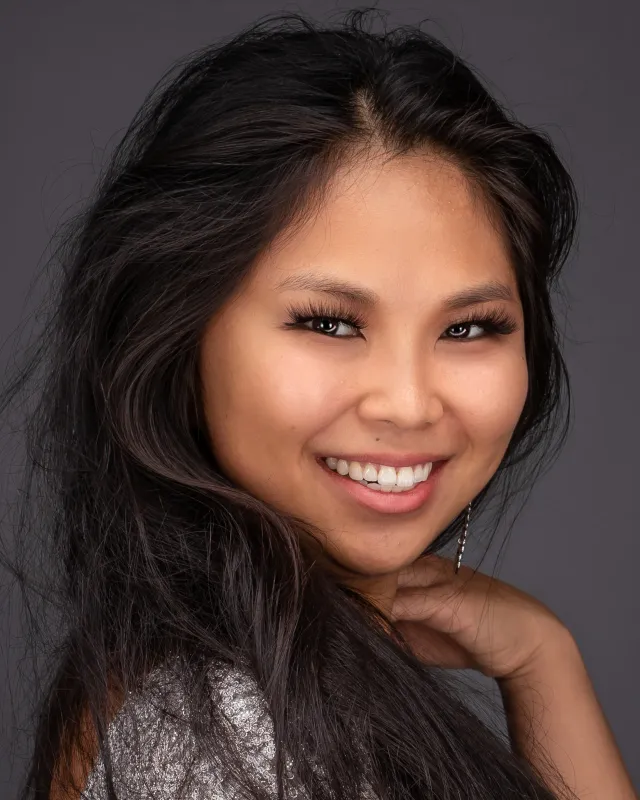
Actor Headshots
How to Prepare for Your Actor Headshot Session
A step-by-step preparation checklist for actors before their headshot session — skin, hair, sleep, wardrobe, and mental prep.
Chris McCarthy
Professional Photographer, Photography Shark · April 2, 2026 · Updated April 16, 2026
Actor headshots are a different category of photography from corporate headshots, personal branding portraits, or social media photos. The stakes are different. The purpose is different. And the preparation required is substantially more demanding if you want shots that actually get you into the room.
At Photography Shark Studios, I've shot actor headshots for performers at every level: local theater in Quincy and Plymouth, students at Emerson College and Suffolk University, working actors in the Boston market, and professionals building materials for New York and Los Angeles submissions. (For background: I'm Chris McCarthy, and I've owned and operated Photography Shark in Rockland since 2019.) The sessions that produce standout headshots share a set of preparation habits that are entirely within your control. Here's what they are.
Understand What a Casting Director Actually Needs
The fundamental thing to understand about actor headshots is that they are not self-portraits. They're communication tools addressed to a specific audience: casting directors, agents, and directors who are making fast decisions about whether you belong in their audition room.
A casting director reviewing submissions spends an average of three to five seconds on each headshot before making a keep-or-pass decision. In those seconds, they're asking one question: does this person look like a viable option for the role I'm trying to fill? They're looking for type clarity, personality, and something that catches their eye enough to keep scrolling rather than move on.
This has practical implications for how you prepare. Your headshot isn't about looking your best in a generic sense. It's about looking unmistakably like you, at your most compelling, in the type range you're genuinely castable for. Trying to look more polished, more glamorous, or more dramatically intense than you actually are in a room doesn't serve you — it creates a gap between the headshot and the person who shows up to audition.
Know Your Type Before You Walk In
Before your session, spend time with the honest question of how you're perceived, not how you see yourself. Ask other actors, directors you've worked with, and your acting teacher or coach: what type do you cast me as? What roles feel obvious for me?
Common actor types — and the wardrobe and expression choices that support them — include:
- The lead/romantic lead: confident, accessible warmth, slightly elevated clothing
- The character actor/best friend: approachable, animated, relatability-forward
- The villain or antagonist: intensity, stillness, a quality of contained energy
- The authority figure: professional clothing, controlled expression, gravitas
- The ingenue or youthful lead: open expression, natural beauty, minimal styling
Your headshots should clearly communicate your primary type. If you're castable in multiple types, discuss with your photographer whether two separate setups — different wardrobe, different expression register, potentially different lighting — might be worth covering in your session.
Wardrobe Strategy for Actor Headshots
Wardrobe for actor headshots follows rules that are more specific than other portrait contexts.
The cardinal rule: your face is the product. Everything else — clothing, hair, makeup — should support your face without competing with it. Busy patterns, bold graphics, high-contrast stripes, and heavily textured fabrics all pull the eye away from your expression, which is the entire point of the image.
What to wear:
- Solid, rich colors that complement your skin tone: deep navy, forest green, burgundy, heather grey, camel
- V-necks and open collars elongate the neck and frame the face better than crew necks and turtlenecks
- Well-fitted clothing in your actual size — nothing too large or too constricting
- For theatrical/film headshots, clothing that matches your castable type: a button-down for the attorney character, a soft sweater for the neighbor, a leather jacket for the edge type
- Layers add dimension without distraction: a blazer over a solid shirt, an open flannel over a t-shirt
What to avoid:
- White tops that can overexpose in studio lighting
- Black tops against dark studio backgrounds (you disappear)
- Clothing with text, logos, or graphics
- Multiple patterns or competing colors in a single look
- Jewelry that catches light or distracts (simple pieces only)
Bring three to four wardrobe options to your session. Changes take ten minutes and give your gallery the variety you need to have multiple looks without booking multiple sessions.
Grooming and Skin Preparation
Your face is being examined closely and frozen in time. Small grooming details that nobody notices in conversation become visible at headshot resolution.
Skin. In the week before your session:
- Drink significantly more water than you normally do — hydration shows in the skin
- Moisturize morning and evening with a lightweight product
- Exfoliate gently two to three days before (not the day before)
- Avoid trying any new skincare products — the risk of a reaction isn't worth it
- Get enough sleep; dark circles under the eyes don't edit out cleanly
Hair. Get a trim or cut two weeks before your session, not the day before. New haircuts have a settling period — a cut done two weeks out will look natural and grown-in rather than freshly altered. Style your hair as you would for an important audition, not as you would for a special occasion. Your headshot should look like you on a great day, not like you at a gala.
Makeup for women. Go slightly heavier than your everyday look but well short of theatrical makeup. Photography lights soften makeup; what looks bold in the mirror often reads as clean and natural on camera. Focus on even skin, defined brows, and eyes that read strongly. Bring your makeup for touch-ups during the session.
Facial hair for men. Come to your session with whatever facial hair state you typically audition in. Casting directors need to see what you actually look like when you walk in the door. If you're unsure, err toward clean-shaven or very neat trim — stubble that reads as intentional rather than unkempt.
Practice Your Expressions Before the Session
This sounds basic, but most actors don't do it, and those who do have noticeably better headshots.
Spend time in front of a mirror practicing expression ranges. Not theater faces — camera-scale subtlety. The difference between your neutral resting face and a genuinely engaged, present expression is small in real life and enormous in a headshot. Practice finding that subtle aliveness: eyes that are engaged rather than glazed, a face that looks like something is happening internally, whether or not there's a smile.
Specifically practice:
- Your neutral/serious expression — eyes alive, jaw slightly relaxed, no forced neutrality
- Your warm accessible smile — genuine rather than performed
- Your full smile, if you have one, and whether it reaches your eyes naturally
- Your "thinking about something interesting" expression — the one that suggests internal life
If you have an acting teacher or coach, ask them to work with you on presence and internal life before your session. The camera reads inner state very clearly. A face with nothing behind it produces a flat headshot regardless of technical quality.
Prepare Yourself Mentally
The best headshots capture someone who is fully present and not thinking about being photographed. This is the core challenge of acting headshots — the photo is asking you to be unselfconscious in a highly observed situation.
Preparation helps. Arrive knowing your type, knowing your wardrobe choices, knowing a few things you can think about to access real presence (a character you love, a memory that produces the right emotional state, a sense of genuine curiosity or ease). Professional actors use the same presence access tools in headshots that they use in auditions.
Arrive 10 to 15 minutes early. Use the buffer time to settle in, breathe, and transition out of whatever you were doing before you walked in the door. A headshot session is not the place to arrive rushed and distracted.
During the Session: Working With Your Photographer
Communicate actively during the session. Tell me when something doesn't feel right — when a pose feels forced, when you feel your expression is not landing, when the energy of a setup isn't working for you.
Review images throughout the session, not just at the end. Looking at your shots every 10–15 minutes gives you real-time information about what's working and what isn't, and allows adjustment before you've spent 45 minutes going in the wrong direction.
Advocate for the range you need. If you've come in for a character look and an ingenue look, make sure we cover both explicitly. Don't assume we'll get there — name it and make it happen.
After the Session: Selecting and Using Your Images
Most actors receive a gallery of proofed images to choose from. Engage the editing-eye of a trusted colleague or director rather than selecting based purely on your own preferences. We're often the worst judges of our own headshots because we're responding to our own self-perception rather than how the image reads to someone who doesn't know us.
For the Boston market, a clean, well-executed commercial headshot and a theatrical headshot are the two essential tools. For submissions beyond Boston toward New York, you typically need additional range.
Our Boston headshots sessions cover both commercial and theatrical setups, and we can discuss how to get the range you need from your session time.
Ready to Book Your Session?
A great actor headshot starts with thorough preparation and continues with a photographer who understands what casting directors are looking for. Photography Shark Studios has the experience and the process to deliver headshots that work.
Contact us to book your actor headshot session and let's talk through what you need.
Frequently Asked Questions
How should I choose wardrobe for my actor headshot session?
Bring three to four distinct looks based on your castable types. Solid, rich colors like deep navy, forest green, or burgundy photograph best. Avoid patterns, logos, and white tops in studio lighting. Sort and photograph options at home two days before — not the morning of.
Should I know my 'type' before a headshot session?
Yes — it's one of the most important things to clarify before you arrive. Ask directors, coaches, or fellow actors: what type do you cast me as? Your primary type shapes wardrobe, expression, and lighting choices throughout the session.
How many wardrobe changes does a Photography Shark actor session include?
Standard sessions include time for two to three wardrobe changes, which is the right number for range without rushing. Changes take about ten minutes and give you distinct looks to submit for different role types.
What actor experience levels does Photography Shark work with?
Chris has photographed actors from local theater in Quincy and Plymouth, students at Emerson College and Suffolk University, working Boston market actors, and professionals building New York and LA submission materials.
What do casting directors actually want to see in a headshot?
They want to see who you are at your most authentic in your castable range — not the most polished version of you, but the real you. A gap between your headshot and how you show up to audition creates a trust problem before you've said a word.
How long does an actor headshot session take at Photography Shark?
Studio sessions are 30 minutes with 10 retouched images ($395). On-location sessions are $495. Add-ons extend coverage: additional session time $100 (extra 30 min), outfit change $100. The studio is at 83 E Water Street, Rockland, MA — easy to reach from across the South Shore.
Related Posts
You Might Also Like
About the Author
Chris McCarthy
Chris McCarthy has run Photography Shark Studios in Rockland, MA for over 10 years and 500+ sessions, with executive headshot work for Rockland Trust, Clean Harbors, M&T Bank, and McCarthy Planning; founder portraits for AI startups including Lowtouch.ai; product photography for South Shore brands like Lauren's Swim; and headshots across South Shore legal, medical, financial, and academic practices. Every session is personally shot and edited by Chris on Sony mirrorless and Godox strobe systems — no assistants, no outsourcing, no batch retouching. Galleries deliver in 3–5 business days. About Chris McCarthy →
Photography Shark · Boston & South Shore MA
Ready to Book a Session?
Professional headshots, senior portraits, boudoir, and model portfolios. Studio in Rockland, MA — 25 miles south of Boston. Sessions from $395.