
Photography Tips
Mastering Photography Composition: A Practical Guide
Portrait composition from 10+ years of South Shore sessions — rule of thirds, leading lines, and framing applied to headshots, seniors, and family.

Chris McCarthy
Professional Photographer, Photography Shark · December 24, 2024 · Updated March 14, 2026
Composition is the decision-making layer that separates technically competent photographs from ones that hold the viewer's attention. You can have the right light, the right subject, and the right camera settings, and still produce an image that feels flat or unfocused — not because anything is wrong technically, but because the arrangement of elements in the frame is working against you rather than for you.
From a decade of professional photography at Photography Shark, I have learned that the advice that actually matters fits on one page.
After more than ten years of professional portrait work across the South Shore and Greater Boston, photographer Chris McCarthy at Photography Shark has developed a practical, internalized understanding of composition that goes well beyond reciting rules. This guide shares that working knowledge — the principles that actually shape how we frame every portrait, from headshots to family sessions to senior portraits on the Massachusetts coastline.
The Fundamentals: Rules Are Starting Points, Not Destinations
Every guide to composition starts with the same set of rules: rule of thirds, leading lines, symmetry, framing. These rules exist because they work consistently, and understanding them is genuinely important. But rules in photography are descriptive rather than prescriptive — they describe patterns that tend to produce visually satisfying results, not laws that must never be broken. The goal is to internalize the principles deeply enough that you can break them intentionally, with a clear understanding of what you are trading away.
Rule of Thirds
Divide your frame with two evenly spaced horizontal lines and two evenly spaced vertical lines, creating a grid of nine equal sections. The four points where those lines intersect — the so-called "power points" — are where the human eye naturally gravitates when scanning an image. Placing your primary subject at or near one of these power points almost always produces a more dynamic, visually interesting result than centering the subject.
For portrait work specifically, the rule of thirds suggests placing the eyes — the most important element in a human portrait — on the upper horizontal grid line. This leaves room below the face for the body, context, and environment, and keeps the image from feeling top-heavy. In practice, this means the subject is positioned slightly above center rather than at the middle of the frame.
At Photography Shark, this principle applies throughout our work — whether it is a Boston headshot in the studio against a clean background or a senior portrait on Minot Beach in Scituate with the ocean horizon running behind the subject.
Leading Lines
Leading lines are compositional elements — roads, fences, shorelines, tree lines, architectural edges — that direct the viewer's eye through the frame toward the subject. They create a sense of depth and movement that flat, perpendicular compositions lack.
On the South Shore, we work with natural leading lines constantly. The waterline at Duxbury Beach draws the eye along the frame toward the subject standing in the surf. A boardwalk receding toward the dunes at Nantasket creates perspective and depth. A stone wall running diagonally through a woodland frame leads the eye toward the senior standing at its far end. These lines are free compositional elements — the only cost is noticing them and positioning yourself and your subject to take advantage of them.
When shooting headshots in an urban environment — say, along the waterfront in Boston or on the brick sidewalks of downtown Hingham — building facades, window frames, and even the seams between sidewalk slabs can serve as leading lines that give a portrait a sense of context and place without the subject needing to do anything differently.
Symmetry and Asymmetry
Perfect bilateral symmetry — where a frame is divided exactly in half and both sides mirror each other — creates a sense of formal calm and visual weight. It works beautifully for architectural photography and has its place in portraiture when you want to convey authority or stillness. A centered subject against a perfectly symmetric background can be commanding.
More often in portrait work, asymmetry serves the image better. An off-center subject, a background element that occupies more of one side than the other, a gaze directed away from center — these create the visual tension and dynamism that make a portrait feel alive rather than posed. The rule of thirds is essentially a guide to productive asymmetry: how to be off-center in a way that feels deliberate and pleasing rather than careless.
Depth and Dimension: Making Flat Sensors Perceive Space
A photograph is inherently two-dimensional. All compositional work involves creating the illusion of three-dimensional space on a flat surface. Understanding the techniques that generate this illusion is central to making compelling images.
Foreground, Middle Ground, Background
The most effective way to create a sense of depth is to establish visual interest at three distances from the camera: near, middle, and far. In landscape photography, this is a well-established principle — you include a rock or a patch of wildflowers in the immediate foreground, the main subject in the middle distance, and a mountain or a coastline in the background.
In portrait photography, this applies somewhat differently but no less powerfully. When Chris shoots family portraits at the edge of the North River in Marshfield, he often incorporates marsh grass in the foreground — slightly out of focus but visibly distinct — the family in the middle distance in sharp focus, and the river and opposite bank in the background. That foreground layer transforms a standard riverside portrait into an image with genuine spatial depth.
Foreground elements can be natural — grass, rocks, foliage — or architectural — a bench, a doorframe, a section of fence. The key is that they are far enough out of focus not to compete with the subject, but sharp enough to read clearly as a separate spatial layer.
Depth of Field as Compositional Tool
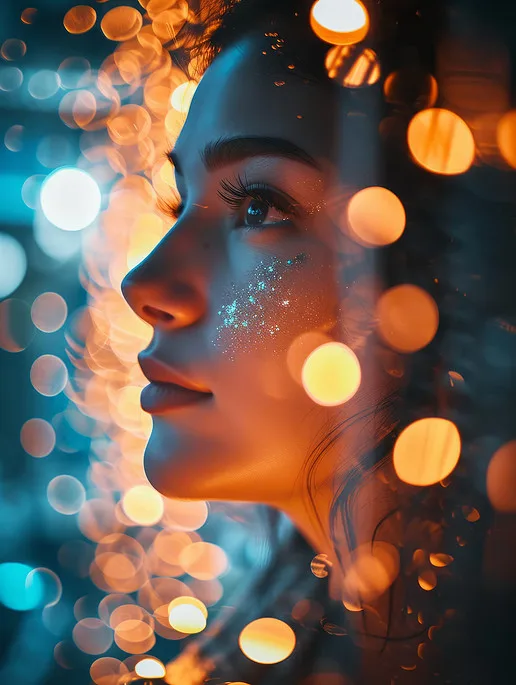
Aperture controls not just exposure but the spatial compression of a scene. A wide aperture (f/1.8 to f/2.8) produces a shallow depth of field that separates the subject sharply from a blurred background — the technique behind the classic "bokeh" portrait where the subject pops against a soft, creamy background. This approach emphasizes the subject by literally eliminating the competition for visual attention.
A narrower aperture (f/8 to f/11) renders more of the scene in focus, which works well when the environment is as important as the subject — when you want the viewer to understand where a person is, not just what they look like.
For studio headshots and graduation portrait sessions, we typically work in the f/1.8 to f/4 range to keep the subject crisp and the background painterly. For family photos where the landscape of a specific South Shore location is part of the story, we may stop down to f/5.6 or f/8 to retain environmental detail.
Light, Shadow, and Color in Composition
Composition and lighting are inseparable. The placement of light shapes how compositional elements read — it creates separation, directs the eye, and establishes emotional tone in ways that arrangement alone cannot.
Directional Light and Shadow
Light that comes from an angle — rather than from directly in front of or behind the subject — creates shadows that define shape and add dimension. Side lighting, where the light source is roughly 90 degrees from the camera axis, reveals texture in skin and fabric, separates the subject from the background, and creates a sculptural quality in portraits.
On the South Shore, the sun's position in the late afternoon creates naturally directional light that does much of this work automatically. At Rexhame Beach in Marshfield at 5 PM in September, the sun is low enough and far enough to the west that it lights subjects from the side and slightly behind, creating a rim of warm light around the hair and shoulders while the face is lit by open sky — the classic combination that portrait photographers seek when working outdoors.
Understanding this principle lets you chase the light rather than fight it. If the light is too flat — coming from directly overhead at noon — you can use a reflector to create artificial direction. If the light is too harsh — bright direct sun at a low angle — you can move the subject into open shade where the sky becomes the light source.
Color Theory and Emotional Temperature
Color in photography does more than record what is actually there — it communicates emotional temperature. The warm amber and orange tones of golden-hour light convey closeness, comfort, and nostalgia. The blue-white of open shade or overcast sky suggests coolness, distance, and a more contemporary aesthetic.
When choosing locations and timing for portrait sessions, these color considerations matter enormously. A family portrait shot at golden hour at Nantasket Beach will have a completely different emotional character than the same family photographed under overcast morning light at the same location. Neither is objectively better — they serve different aesthetic goals — but understanding the difference allows you to make deliberate choices.
Composition in Different Portrait Contexts
The principles above are universal, but their application varies significantly depending on what kind of portrait session you are doing.
Headshot Composition
Professional headshots have different compositional priorities than environmental portraits. The frame is tighter, the background is simpler, and the entire visual weight of the image rests on the face and upper body. In this context, composition is about the relationship between the subject's face and the edges of the frame, the angle of the head relative to the shoulders, and the direction of the gaze.
The most common headshot composition error is placing the subject too close to the center of the frame, which creates a static, ID-photo quality. Shifting the subject slightly off-center — eyes on the upper third line, slight space to the side toward which the subject is turned — immediately adds dynamism without changing anything about the lighting or expression.
Environmental Portrait Composition
When the environment is part of the story — which it almost always is for outdoor sessions on the South Shore — composition expands to include the relationship between the subject and their surroundings. The question is not just where to place the face in the frame, but how much of the environment to include, how to position the horizon line, and what background elements to include or exclude.
A senior portrait at the summit of Great Blue Hill in Milton can be framed to include the Boston skyline in the far background — which places the subject in a specific geographic context and adds visual scale. Or it can be framed to eliminate the background entirely and focus purely on the subject against open sky — which has a completely different emotional character. Both are valid; the choice should be made deliberately, not by default.
Group and Family Composition
Family and group portraits introduce the additional challenge of arranging multiple subjects in a way that creates visual cohesion without looking stiff. The key principles are connection — physical and eye contact between subjects that demonstrates their relationship — and layering, which means staggering heights and positioning subjects at slightly different distances from the camera to avoid everyone lining up at the same depth.
Avoid the classic lineup: five people in a row, all at the same height, all facing the camera. This reads as a police lineup, not a family portrait. Instead, look for triangular groupings, with taller family members as anchor points and shorter members or children filling the spaces between and in front. Physical connection — a hand on a shoulder, a hug, a child carried — does compositional work while simultaneously conveying the emotional relationships that are the whole point of family photography.
Post-Processing and Compositional Refinement
The composition of an image does not end when you press the shutter. Post-processing — specifically cropping — extends the compositional process into editing.
Cropping allows you to refine the relationship between the subject and the frame, eliminate distracting edge elements, change the aspect ratio to suit a specific use, and correct minor framing errors made in the field. Chris regularly uses tight crops to strengthen the compositional focus of a portrait — removing a distracting element at the edge of the frame, or pulling the crop in to emphasize the face at the expense of the environment.
That said, cropping is a corrective tool, not a substitute for strong in-camera composition. Heavy cropping reduces the resolution of the final file, which limits the maximum print size. The best approach is to compose carefully in the field and use post-processing to refine, not reconstruct.
Developing Compositional Instinct
Composition is one of those areas of photography where intellectual understanding and practical instinct are genuinely different things. You can understand every principle in this guide and still struggle to apply them fluidly in the field, because the field moves fast — the light changes, the subject moves, and you do not have time to consciously evaluate each compositional variable.
The path from understanding to instinct runs through volume. Look at a lot of photographs — not just photography you like, but photography you want to understand. Study why specific frames work. Identify the compositional moves being made. Shoot more than you think you need to and review the results critically, not just aesthetically.
Over ten years and thousands of sessions on the South Shore, Chris McCarthy has internalized these principles to the point where the evaluation happens in real time, below conscious attention. That is the goal — not to think about composition, but to feel it.
Ready to Book Your Session?
At Photography Shark in Rockland, MA, we apply these compositional principles to every session we shoot — from headshots to graduation portrait sessions to family photography on the South Shore. If you want portraits that are technically excellent and compositionally thoughtful, reach out to schedule a consultation.
Contact Photography Shark to book your session.
What headshots cost in Boston · Marshfield headshots
Practising Composition Deliberately
Composition is easier to study when the background is a decision rather than whatever was behind the subject. A plain backdrop strips the frame to its geometry. The Rockland studio rents at $55/hour with backdrops, strobes and modifiers included.
Frequently Asked Questions
What South Shore locations does Photography Shark use for portrait sessions?
Chris McCarthy shoots at Minot Beach in Scituate, Duxbury Beach, Nantasket, World's End in Hingham, and other South Shore locations. Location sessions are available for senior portraits from $495 and family photos from $395.
Does Photography Shark shoot portraits indoors or outdoors?
Both. The studio at 83 E Water Street, Rockland MA is used for headshots and studio portraits. Outdoor South Shore locations are popular for senior portraits and family sessions, especially during golden hour.
How does Chris McCarthy decide on framing and composition during a session?
Composition decisions are made in real time based on location, light, and the subject. Chris scouts locations in advance and positions subjects to use available leading lines, framing elements, and natural light specific to each spot.
What is included in a headshot session at Photography Shark?
Studio headshot sessions are $395 for 30 minutes with 10 fully retouched images. On-location sessions are $495. Add-ons: additional session time $100, outfit change $100, additional person $200, group shot $100. Turnaround 3-5 business days. All include a pre-session consultation to align on goals and wardrobe.
Can I bring multiple outfits to my portrait session?
Yes. The 45-minute and 90-minute packages allow time for outfit changes. Discuss wardrobe options during the pre-session consultation so Chris can plan lighting and locations accordingly.
Related Posts

You Might Also Like
About the Author
Chris McCarthy
Chris McCarthy has run Photography Shark Studios in Rockland, MA for over 10 years and 500+ sessions, with executive headshot work for Rockland Trust, Clean Harbors, M&T Bank, and McCarthy Planning; founder portraits for AI startups including Lowtouch.ai; product photography for South Shore brands like Lauren's Swim; and headshots across South Shore legal, medical, financial, and academic practices. Every session is personally shot and edited by Chris on Sony mirrorless and Godox strobe systems — no assistants, no outsourcing, no batch retouching. Galleries deliver in 3–5 business days. About Photography Shark →
Photography Shark · Boston & South Shore MA
Ready to Book a Session?
Professional headshots, senior portraits, boudoir, and model portfolios. Studio in Rockland, MA — 25 miles south of Boston. Sessions from $395.