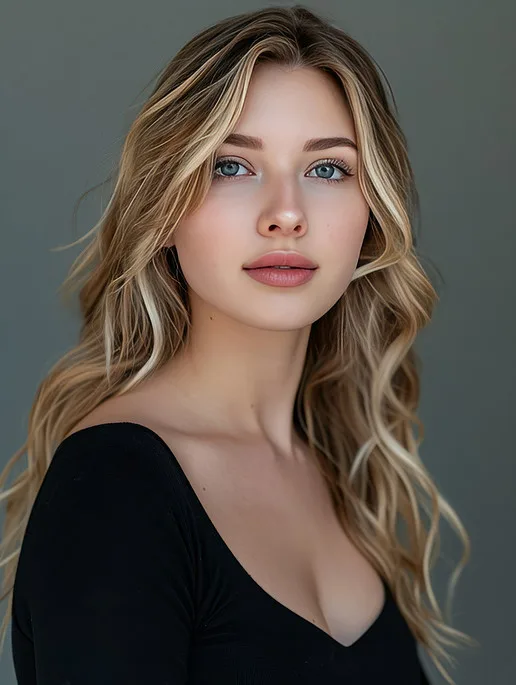
Headshots
Modeling Headshot Technique: Lighting, Angles, and What Separates Pro Work
How a modeling headshot is actually made — Chris McCarthy on lighting setups, camera angle and lens choice, posing direction, and the retouching philosophy behind professional results.
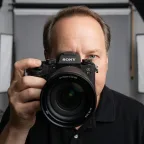
Chris McCarthy
Professional Photographer, Photography Shark · January 11, 2025 · Updated May 28, 2026
A modeling headshot is a calibrated tool, not a beauty photograph — and the difference between an amateur version and a professional one comes down to craft you can name: how the light is built, where the lens sits, how the model is directed, and how the file is finished. This post is about exactly that. If you want the broader picture — what to expect at your first modeling headshot session, what Boston agencies want in a submission, or a pose-by-pose breakdown — those live in their own posts. Here I'm pulling back the curtain on the technique itself, the way I shoot it at Photography Shark Studios in Rockland.
Lighting: the setup is a decision, not a default
Lighting is where most amateur modeling headshots fall apart, and where the professional ones are quietly won. The mistake I see in self-shot or phone-shot attempts is light that's either flat-and-shadowless or harsh-and-uncontrolled — both kill the dimensionality that makes a face read as a face on a casting screen.
For the lead commercial headshot I default to a clamshell: a large soft source (octabox or softbox) angled down over the face as the key, and a second soft source or a white reflector below to lift the shadows under the jaw and eye sockets. The result is even, bright, and flattering across a wide range of expressions — which matters, because the model is moving and I'm shooting continuously, not lighting for one frozen pose. Clamshell forgives the micro-changes I'm directing for.
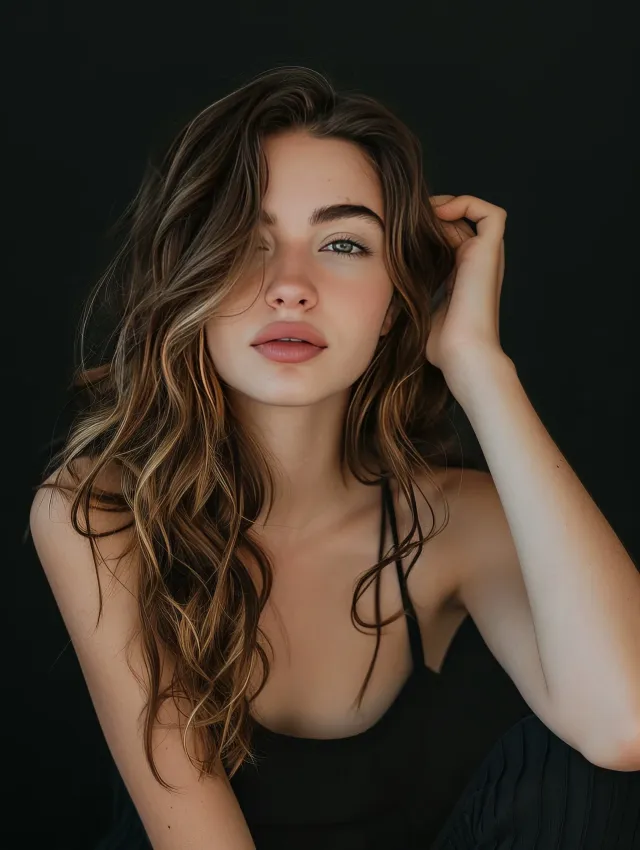
When a look calls for more shape — an editorial-leaning frame, a moody male portfolio shot — I move to broad-short or single-source directional lighting. Keying to the short side of the face slims it and adds dimension; a hard or gridded source carves cheekbones. This is a deliberate switch, not a different room. The technical execution is similar; the choice of setup is what changes by intent. Knowing which setup serves which goal is most of the job.
Two controls do the heavy lifting beyond the setup itself: modifier size and distance (bigger and closer equals softer, more wraparound), and the ratio between key and fill (tight ratio for clean commercial, wider ratio for drama). I'm adjusting those two variables constantly as the looks change.
Camera angle and lens: the geometry that flatters or distorts
A modeling headshot lives or dies on geometry most people never think about.
Lens choice. I shoot the tight lead headshot on an 85mm prime. At that focal length the facial features sit in correct proportion — nose to ears, forehead to chin — with no exaggeration. Phone cameras and wide lenses (24–35mm) enlarge whatever's closest, which is the nose, and push the ears back. That's the instantly-recognizable "amateur" look even when the lighting is decent. For three-quarter and lifestyle frames I open up to a 50mm to pull in environment without the distortion a wider lens would add at that distance.
Camera height. The lens sits at or just above the model's eye line for the lead frame. Eye-level reads neutral and honest. A touch above slims the jaw and opens the eyes slightly — a flattering, agency-friendly default. Shooting from below (the common selfie angle) emphasizes the jaw, nostrils, and underside of the chin, and almost never helps. Once the angle is set I keep it locked so the look stays consistent across the frames in that setup.
Aperture and focus. I work the lead headshot around f/4–f/5.6 so both eyes are sharp and the background separates cleanly, with the Sony Eye AF locked on the near eye every frame. Wide-open f/1.4 looks dreamy and fails a casting brief — an agency needs both eyes crisp.
Posing direction: the photographer's half of the pose
A separate post covers the specific poses a model can practice. My job in the room is different: I'm directing, continuously, so the expression stays alive. A model left to hold a pose will freeze within two seconds, and a frozen face photographs as dead.
The technique is small, stacked cues delivered in rhythm: "chin a little forward and down… now drop the shoulders… little breath… think about someone you're glad to see." Each cue produces a micro-change, and I'm shooting through the changes, not after them. The "thought behind the eyes" is the one that separates a catalog-blank stare from a bookable, engaged look — the eyes have to be doing something.
I also direct the structural mechanics the model can't see from inside the pose: bringing the weight onto the back foot to lengthen the neck, turning the body a few degrees off-axis to the camera so it never reads flat, and watching the near shoulder so it doesn't creep up. Commercial work leans open and accessible; editorial leans more angular. I calibrate the direction to the look we're building, and I confirm the register on the laptop before we change setups.
Retouching philosophy: clean, not rebuilt
This is where a lot of otherwise-good modeling headshots get ruined — over-retouching that erases the actual person. My rule is simple: the headshot has to match the model who walks into the casting room.
So I remove what's temporary — a blemish, a stray hair across the face, a piece of lint, an uneven patch of foundation — and I leave what's permanent: freckles, scars the model keeps, bone structure, and crucially, skin texture. I work with frequency-separation and careful dodge-and-burn to even tone and smooth transitions while keeping pores visible. The eyes get a subtle lift, not a glow. No liquify on the jaw or waist for a headshot. An agency that books a model off a plastic, rebuilt image and then meets a different-looking person stops trusting the photographer — and the model pays for it.
The session structure that supports the craft
Technique only delivers if the session is built around it. A model session at Photography Shark runs: a short consult to confirm the target looks; the clean commercial setup first (clamshell, light seamless, lead headshot, heavy expression direction); a wardrobe-and-lighting reconfigure; then additional looks each shot with their own framing, angle, and direction rather than just more frames of the same setup; and a quick gallery preview on the laptop so we confirm every look hit its register before you leave.
The technical baseline behind all of it: Sony A7-series mirrorless with Eye AF, professional Godox strobes in calibrated clamshell, broad-short, and directional configurations, 85mm and 50mm primes, and seamless paper in white, gray, charcoal, and black. The studio is a converted mill space at 83 E Water Street in Rockland with the ceiling height for full-body framing and room for multi-look wardrobe changes.
What separates amateur from professional, in one line
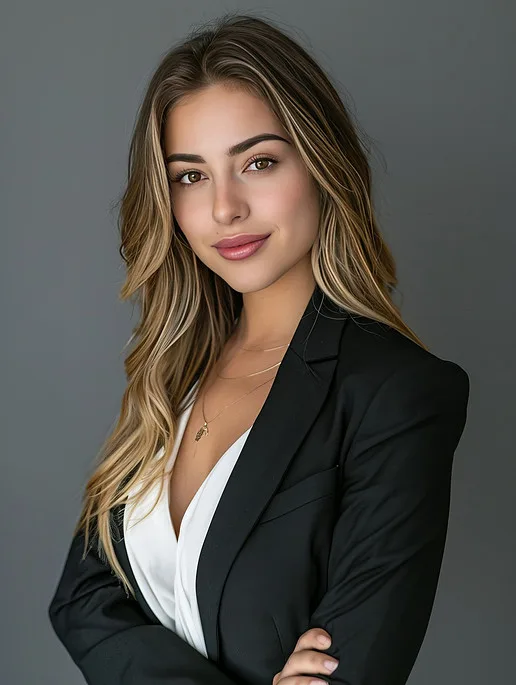
Controlled light, the right lens at the right height, continuous expression direction, and disciplined retouching. Get those four right and the headshot reads clean, dimensional, and true. Miss any one — flat light, wide-lens distortion, a frozen face, or a plastic edit — and a casting director clocks it in under five seconds.
If you want this craft applied to your own book, you can book through the model portfolio session details and pricing or the Boston model headshot studio page. Male models — the session structure is on the male modeling Boston page.
Frequently Asked Questions
What lighting setup is used for a modeling headshot?
Most commercial modeling headshots use a clamshell setup — a soft key above the face with a fill source or reflector below — for flattering, even light across a range of expressions. I switch to broad-short or a single directional source when a look calls for more shape. The setup follows the intent, not a default.
What lens and camera angle work best for modeling headshots?
I shoot the lead headshot on an 85mm prime, with the lens roughly at or just above eye level for a clean, undistorted face. Shorter focal lengths and low angles distort features and rarely flatter. Three-quarter and lifestyle frames open up to 50mm for context without exaggeration.
How does posing direction work during a modeling session?
I direct continuously rather than letting the model freeze. Small, stacked cues — chin forward and down, weight shift, breath, a thought behind the eyes — produce micro-changes that read as natural energy. The goal is an active, engaged expression that holds across the frame, not a held smile.
How much retouching should a modeling headshot have?
Modeling headshots get clean, restrained retouching: even skin tone, removal of temporary blemishes, stray-hair cleanup, subtle dodge and burn. I keep permanent features — freckles, bone structure, skin texture — intact, because agencies need the headshot to match the model who walks into the casting room.
What separates an amateur modeling headshot from a professional one?
Controlled light, correct lens and angle, active expression direction, and disciplined retouching. Amateur results usually show flat or harsh lighting, wide-lens distortion, a frozen expression, and either no retouching or heavy over-processing. The professional version reads clean, dimensional, and true to the person.
Does Photography Shark shoot against seamless backdrops for modeling headshots?
Yes. The studio at 83 E Water Street, Rockland is equipped with white, gray, charcoal, and black seamless backgrounds — the standard for agency submission headshots — along with the space for environmental and full-body framings.
Related Posts
![AI Headshot Generators vs Professional Headshots: Complete Guide [2026]](/blog/ai-headshots-vs-professional-headshots-w640.webp)
You Might Also Like
About the Author
Chris McCarthy
Chris McCarthy has run Photography Shark Studios in Rockland, MA for over 10 years and 500+ sessions, with executive headshot work for Rockland Trust, Clean Harbors, M&T Bank, and McCarthy Planning; founder portraits for AI startups including Lowtouch.ai; product photography for South Shore brands like Lauren's Swim; and headshots across South Shore legal, medical, financial, and academic practices. Every session is personally shot and edited by Chris on Sony mirrorless and Godox strobe systems — no assistants, no outsourcing, no batch retouching. Galleries deliver in 3–5 business days. About Chris McCarthy →
Photography Shark · Boston & South Shore MA
Ready to Book a Session?
Professional headshots, senior portraits, boudoir, and model portfolios. Studio in Rockland, MA — 25 miles south of Boston. Sessions from $395.