Photography Tips
Street Photography Ethics: Consent and Responsibility
Street photography ethics — consent, legal rights, and responsible practice, from Chris McCarthy, a portrait photographer based in Rockland MA.
Chris McCarthy
Professional Photographer, Photography Shark · February 3, 2025 · Updated February 19, 2026
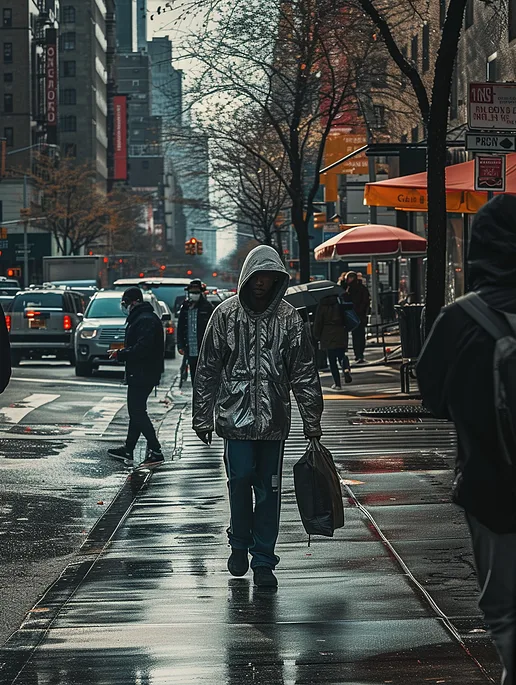
Street photography occupies a unique position in the photographic arts. It requires no studio, no props, no formal arrangement between photographer and subject. It asks only that you walk into the world with a camera and pay close attention. The reward — when it works — is an image of real human life that no posed session could produce.
In my experience working with clients across Boston and the South Shore, the biggest gains come from the simplest adjustments.
But that freedom comes with serious ethical obligations that are worth thinking through carefully. At Photography Shark Studios in Rockland, MA, we work primarily in controlled portrait environments — studio photo shoots, headshots, family sessions — where consent and context are established in advance. Street photography operates by different rules, and those differences matter. This post explores the ethical landscape that every photographer working in public spaces should understand.
What Makes Street Photography Ethically Distinct
In a formal portrait session, the relationship between photographer and subject is clear from the start. Both parties have agreed to be there. The subject has consented to being photographed, understands the general purpose of the images, and has some control over how they are presented. The photographer has obligations, but they are operating within a framework of mutual understanding.
Street photography removes most of that structure. The subject may be unaware they are being photographed. They have not consented. They do not know what the photographer intends to do with the image. They cannot review and approve the result. The photographer is exercising a creative and documentary impulse at the subject's expense — or, more generously, on the subject's behalf — without the subject's knowledge or agreement.
This does not make street photography inherently wrong. The tradition has produced some of the most important documentary and artistic work in the history of the medium — Vivian Maier's Chicago, Henri Cartier-Bresson's Paris, Garry Winogrand's New York. But it does mean that the ethical weight sits entirely with the photographer. There is no shared responsibility to lean on.
The Legal Baseline Is Not the Ethical Standard
The most common defense of street photography is a legal one: in the United States, photographing people in public spaces is generally legal. People in public have a reduced expectation of privacy, and a photographer on a public sidewalk in Boston, or on the waterfront in Scituate, or on Plymouth's downtown main street, is typically within their legal rights to photograph anyone they can see from that public vantage point.
This is accurate as a legal matter, but it is a low bar. Legal permission and ethical justification are not the same thing. The fact that you can do something does not answer whether you should, or under what conditions doing it is respectful and responsible.
The ethical questions begin where the legal questions end.
Consent: The Core Tension
The central tension in street photography ethics is around consent. Asking for consent before photographing someone transforms the interaction — and not always in ways that serve the work. The candid quality that gives street photography its documentary power often depends on subjects not knowing they are being photographed. Once they know, their behavior changes. The moment passes.
Street photographers have thought carefully about this tension and arrived at different positions:
The documentary position holds that public life is inherently documented and that the presence of a camera is no different in kind from the presence of any other observer. The photographer is recording what any passerby could see. The subject's anonymity in most published work provides a practical form of protection even without formal consent.
The relational position holds that photographing strangers without their knowledge, even in public, involves a power dynamic that deserves more active management. Practitioners of this approach often approach subjects after capturing an image, show them the photo, explain their project, and offer to share the image or delete it at the subject's request.
The consent-first position holds that photographs of identifiable individuals should only be made with their knowledge, even in public spaces. This approach produces fundamentally different work — more collaborative, more portrait-like — and resolves the consent tension by eliminating it.
None of these positions is unambiguously correct. Each involves trade-offs between artistic integrity, documentary value, individual dignity, and practical workability. What matters is that you have actually thought through your position and can articulate the reasoning behind it — not just defaulted to "it's legal."
Respecting Dignity in the Frame
Even when a photograph is technically legal and arguably ethical from a consent perspective, the question of how the subject is portrayed remains. This is where many street photographers, even experienced ones, fall short.
Dignity in framing means making choices that honor the humanity of your subject rather than reducing them to a symbol, a spectacle, or a prop in your visual argument. It means asking yourself what the image communicates about this person — not just what it communicates about the moment, the light, or your compositional skill.
The Problem with Vulnerability as Subject Matter
People in visible distress, poverty, or crisis are often photographed as documentary subjects, and the resulting images can be powerful — they document conditions that deserve attention and create the emotional response that spurs action. They can also exploit their subjects, reducing complex human beings to their worst moments for the aesthetic benefit of the photographer and the emotional response of the viewer.
The distinction between documentation and exploitation is not always clear, but some questions help: Is this image serving the subject's interests or using the subject to serve my interests? Would I be comfortable showing this image to this person? Is this person's dignity intact in the frame, or have I captured them in a way they would find humiliating?
If your honest answers to these questions make you uncomfortable, that discomfort is meaningful information.
Children as Subjects
Particular care is warranted when photographing children in public. Even where legally permissible, photographing children without parental awareness and consent deserves extra scrutiny. The risks of misuse are higher, the subjects are less capable of understanding and managing the implications of being photographed, and the parental relationship involves a form of surrogate consent that is worth respecting.
In practice, many street photographers avoid photographing children except in contexts where the child is clearly part of a larger scene (a street festival, a public event) and where the image does not focus on or identify the individual child.
The Digital Dimension: Sharing, Reach, and Permanence
Street photography existed for decades before digital sharing, and the ethical landscape was different then. An image published in a limited-circulation print magazine reached a different audience with different implications than the same image posted to Instagram or shared to Reddit.
Digital dissemination changes several things that matter ethically:
Reach and permanence. A photograph shared online can reach an effectively unlimited audience and persist indefinitely. The practical obscurity that once protected subjects of street photography — nobody outside a small art community was likely to see your image of a stranger on a Boston street corner — no longer applies.
Searchability and facial recognition. Images shared online can be reverse-searched and, increasingly, identified through facial recognition. A subject who expected to remain anonymous in a photograph may not be anonymous at all. The expectation that "no one will know who this is" is substantially less reliable than it was before these technologies existed.
Context collapse. When you photograph someone in a specific context and share that image to a general audience, the context collapses. An image that reads as documentary art to one audience reads as mockery or exploitation to another. You cannot fully control how an image is received and recontextualized once it leaves your hands.
These factors argue for a higher standard of care in deciding which street photographs to share publicly, and how. They also argue for thinking carefully about whether geographic or identifying details should be visible in shared images of private individuals who have not consented to public identification.
Practical Ethics in the Field
These are abstract principles, but they translate into concrete practices:
Be present and transparent. Operate openly when possible. If someone notices you photographing them and seems concerned, acknowledge it directly rather than retreating. Explain your project. Show them what you captured. This is not weakness; it is the behavior of a photographer who takes their ethical obligations seriously.
Know your subjects. If you are working in a specific community — documenting the Hingham waterfront, photographing South Shore fishing culture, spending time at Plymouth's summer festivals — invest time in that community before you start photographing it. When subjects know you and trust you, the dynamic changes in ways that produce better work and clearer conscience.
Review your motivations honestly. Why are you photographing this subject? The answer "because it makes a compelling image" is a complete answer artistically but an incomplete one ethically. The most enduring street photography tends to be made by photographers who are genuinely curious about and respectful of their subjects — not by photographers primarily interested in demonstrating their own aesthetic sensibility.
Be willing to delete. If someone objects to being photographed and asks you to delete the image, consider doing it even if you are not legally obligated to. The image matters less than the interaction, and treating people's discomfort with their own likeness as irrelevant because you have the legal right to photograph them is a posture that will corrode your relationship with your subjects and your community over time.
How This Connects to Portrait Photography
At Photography Shark Studios, the work we do is structurally different from street photography — every session involves explicit consent, a shared understanding of purpose, and a collaborative process where the subject has genuine input. But the underlying ethical questions about how we represent people, what we owe our subjects, and how we use the power that a camera confers are the same.
Whether you are photographing a stranger on a Boston street or a client in our Rockland studio for a family portrait session, the camera creates an asymmetry. The photographer makes choices about framing, timing, light, and ultimately what gets shared. The person in the frame lives with the result. Taking that responsibility seriously — in street photography and in every other context — is what separates photographers who deserve the trust of their subjects from those who simply have the legal permission to operate.
If you are developing your photographic practice and want to understand more about working professionally with portrait subjects, the discipline involved in building genuine comfort and trust in a controlled session applies directly to the street photography context. The photographer who can help a nervous client relax in front of a camera has developed the interpersonal skills and ethical instincts that make for more responsible and ultimately more powerful documentary work outside the studio as well.
Ready to Book Your Session?
If you are looking for professional portrait photography on the South Shore — from headshots to family photos to studio sessions — Photography Shark Studios in Rockland, MA brings 10+ years of experience and a commitment to work that truly serves its subjects.
Contact us to schedule your session and start creating portraits you will be proud of for decades.
Professional headshots in Rockland · Plymouth headshots
When You Need Consent Handled Cleanly
Street work lives with ambiguity about permission. Studio work does not — everyone present agreed to be there. For portrait projects where that matters, studio time in Rockland is $55/hour, two-hour minimum.
Frequently Asked Questions
Is it legal to photograph people in public in Massachusetts?
Generally yes. People in public spaces have a reduced expectation of privacy, and photographing from a public vantage point in Boston, Scituate, or Plymouth is typically within your legal rights — but legality and ethics are not the same standard.
Does Photography Shark offer street or documentary photography services?
Photography Shark's primary work is controlled portrait sessions — headshots, family sessions, seniors, and boudoir — at 83 E Water Street, Rockland MA. Street photography coverage can be discussed for specific event or editorial projects.
What is the difference between documentary and consent-first street photography?
Documentary photographers capture candid moments without prior consent, relying on public-space rights. Consent-first photographers approach subjects after capture or ask before shooting, producing more collaborative but less spontaneous images.
How does Photography Shark handle model releases and consent?
All formal portrait sessions at Photography Shark involve a signed release. Chris McCarthy works within a clear framework of mutual understanding — both parties know the purpose of the images before the session begins.
What are the ethics of sharing street photos on social media?
The post covers this in depth: digital dissemination extends reach far beyond the original public context, which raises ethical obligations around identifiability, context, and the potential impact on the subject.
Where is Photography Shark located?
83 E Water Street, Rockland MA 02370. Chris McCarthy serves clients across the South Shore and Greater Boston area.
Related Posts




You Might Also Like
About the Author
Chris McCarthy
Chris McCarthy has run Photography Shark Studios in Rockland, MA for over 10 years and 500+ sessions, with executive headshot work for Rockland Trust, Clean Harbors, M&T Bank, and McCarthy Planning; founder portraits for AI startups including Lowtouch.ai; product photography for South Shore brands like Lauren's Swim; and headshots across South Shore legal, medical, financial, and academic practices. Every session is personally shot and edited by Chris on Sony mirrorless and Godox strobe systems — no assistants, no outsourcing, no batch retouching. Galleries deliver in 3–5 business days. About the photographer →
Photography Shark · Boston & South Shore MA
Ready to Book a Session?
Professional headshots, senior portraits, boudoir, and model portfolios. Studio in Rockland, MA — 25 miles south of Boston. Sessions from $395.