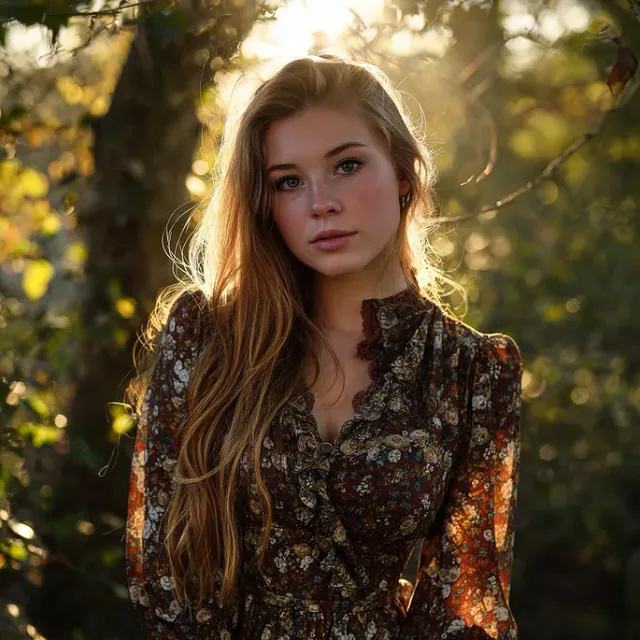
Senior Portraits
Senior Portraits for Musicians: Instruments, Reflections and Two Looks
Photographing a senior with an instrument without it becoming a product shot — reflections, scale, and why the instrument should not be in every frame.
Chris McCarthy
Professional Photographer, Photography Shark · February 8, 2025 · Updated September 12, 2026
An instrument makes a senior portrait specific in a way almost nothing else does. It also turns it into a product photograph if it is handled badly, and the difference is mostly about light and about restraint.
Two Looks, Instrument in One
The mistake is putting the instrument in every frame.
One look with it — playing position, hands where they go, the thing you have spent years on. This is the frame that says who you are.
One look without it — your own clothes, nothing in your hands. This is the yearbook image and the portrait that ends up framed, and it is stronger without an object competing for attention at thumbnail size.
Same logic as athletes and their gear. The specific frame dates the picture deliberately; the plain frame survives.
Reflections Are the Technical Problem
Brass, polished wood, lacquer, cymbals, chrome hardware — instruments are among the most reflective things anyone brings to a session.
Outdoors, a saxophone reflects the entire sky as one blown-out patch, and a cymbal becomes a mirror pointed at whatever is behind the camera. There is no posing around it.
In a studio the light is placed, so reflections can be shaped — a long soft highlight that follows the curve of a bell or the body of a guitar, describing the shape instead of erasing it. This is the clearest reason to shoot musicians indoors.
Matte instruments — most woodwinds, satin-finish guitars, drum shells — are easier, but they still benefit from directional light that gives them dimension rather than flattening them.
Posing: Play, Do Not Present
The frames that work look like playing.
- Hands where they actually go. Wrong fingering is visible to anyone who plays, and it is the first thing they notice.
- Playing position or close to it, even if no sound is being made.
- Eyes up, at least in some frames. Mid-playing with the gaze lifted is usually the strongest image of the set.
- A few genuinely playing. Expression while actually playing is different from expression while holding, and it shows.
What does not work: the instrument held up toward the lens, arranged symmetrically, or positioned so the brand faces the camera. If you would never stand that way, neither should the photograph.
Scale
Large instruments change the frame. A cello or double bass is nearly as tall as the person and pulls the composition wide; a full drum kit cannot realistically be assembled in a portrait session.
Practical approach for large instruments: mention it at booking so the space and lighting are set for it. For drums, a snare, a cymbal and sticks represent the kit better than an attempt at the whole thing, and photograph far better.
Small instruments have the opposite problem — a flute or a mouthpiece can disappear entirely at yearbook crop. These work better in a wider frame or held prominently rather than naturally.
Wardrobe
Keep it plain. An instrument is already visually busy, particularly anything brass or with a lot of hardware.
Solid mid-tones, nothing patterned, nothing with a logo. If you perform in concert dress and want that look, bring it as the second option rather than the first — concert black photographs well but reads formal, and it is not what most seniors want as their main image.
Sheet Music, Cases and Stands
Generally leave them out. A music stand puts a black pole through the middle of the frame, and an open case at the feet reads as clutter.
The exception is a case with genuine character — covered in stickers, visibly used, obviously yours. That is a story rather than an accessory.
If You Play More Than One
Pick one for the session. Two instruments produces two half-stories and consumes the time that would otherwise go to the non-instrument look, which is the more durable image.
If both genuinely matter, that is an argument for a longer package rather than for splitting a short one.
For what each package includes, see what senior portraits cost. For the parallel case with sports gear, see senior portraits for athletes.
Book a session or call (781) 312-8824. Studio at 83 E Water Street, Rockland MA.
Frequently Asked Questions
Should you bring your instrument to senior pictures?
For one look, yes. An instrument you actually play makes the photograph specific in a way nothing else does. It should not appear in every frame though — the yearbook image and the portrait that goes on the wall are usually stronger without it.
How do you photograph instruments without glare?
Controlled light. Brass, polished wood and cymbals act as mirrors, and outdoors they reflect the whole sky as one bright patch. In a studio the light is placed, so reflections can be shaped to follow the curve of the instrument instead of blowing out across it.
What is the best pose with an instrument?
Playing position, or close to it. Hands where they actually go, instrument held as you would hold it. Anything arranged for the camera reads as a catalogue photo. The strongest frames are usually mid-playing with the eyes up rather than posed and static.
Can you bring a large instrument to a studio session?
Yes — cello, double bass, drum kit pieces, tuba. Mention it at booking so the space and lighting are set for scale. A full kit is usually represented by a snare, a cymbal and sticks rather than assembled entirely.
Related Posts

You Might Also Like
About the Author
Chris McCarthy
Chris McCarthy has run Photography Shark Studios in Rockland, MA for over 10 years and 500+ sessions, with executive headshot work for Rockland Trust, Clean Harbors, M&T Bank, and McCarthy Planning; founder portraits for AI startups including Lowtouch.ai; product photography for South Shore brands like Lauren's Swim; and headshots across South Shore legal, medical, financial, and academic practices. Every session is personally shot and edited by Chris on Sony mirrorless and Godox strobe systems — no assistants, no outsourcing, no batch retouching. Galleries deliver in 3–5 business days. About photographer Chris McCarthy →
Photography Shark · Boston & South Shore MA
Ready to Book a Session?
Professional headshots, senior portraits, boudoir, and model portfolios. Studio in Rockland, MA — 25 miles south of Boston. Sessions from $395.