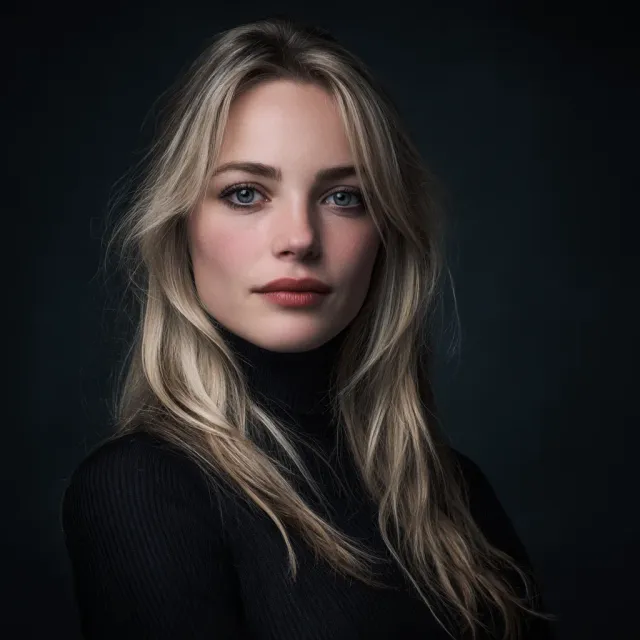
Actor Headshots
7 Things Casting Directors Actually Look for in an Actor Headshot
What makes casting directors stop scrolling — authenticity, expression, lighting, type clarity, and the specific signals that earn calls.
Chris McCarthy
Professional Photographer, Photography Shark · April 6, 2026 · Updated May 18, 2026
Casting directors make the keep-or-pass decision on a headshot in under three seconds. That's not a marketing exaggeration — it's a structural reality of casting platforms. An Actors Access breakdown for a single commercial role can pull 400–1,200 submissions; a major theatrical breakdown can pull 2,000+. The casting team scrolls a grid view at thumbnail size, and the headshot either pulls them in for a closer look or gets passed.
In my Rockland studio, I have built headshot sessions for actors submitting to every major Boston casting platform.
After ten years and hundreds of actor sessions at Photography Shark Studios in Rockland, the patterns of what works at that three-second decision are consistent across commercial casting, theatrical casting, and the Boston regional market specifically.
1. The eyes have to be alive
This is the non-negotiable. Eyes have to carry intention — the actor has to be thinking something real, not performing "thoughtful." Dead eyes, vacant eyes, or the slightly stunned look that comes from being told to "be natural" all communicate camera discomfort. Camera discomfort communicates set discomfort, and set discomfort is the single fastest pass.
Sony's Eye AF tracking handles the technical side — every frame is locked on the eye automatically — but the alive-ness is direction work. Conversation between frames, not pose direction. Real questions, real answers, real reactions. The unrepeatable frames in the gap between poses are usually the keepers.
2. The type has to be immediately clear
Casting directors are looking for actors who match a specific brief — "30s warm dad type for kitchen-set commercial," "harder edge for the cop in scene 14," "soft-spoken professor for the academic drama." If the headshot is type-ambiguous, the actor gets sorted into "interesting but not for this" instead of the shortlist for the role. Type clarity is wardrobe + expression + lighting working together, not any one of them alone.
For commercial casting, that usually means brighter lighting, lighter wardrobe register, more open and "approachable best friend" expression. For theatrical casting, that means slightly directional lighting, fuller emotional weight in the expression, wardrobe that suggests the dramatic register the actor plays best.
Most working actors need both registers. The standard actor headshots Boston two-look session is built around this — theatrical + commercial in one shoot, delivered as one set of 10 retouched files.
3. Authenticity over polish
Heavy retouching is the second-fastest casting director pass after dead eyes. Smoothed-skin, plastic-finish, "Instagram filter" headshots fail in the room because the actor who walks in doesn't match the headshot. The casting director's frustration at the mismatch outweighs any benefit of the polish. Photography Shark retouching keeps skin texture, lines, freckles, and the lived-in qualities that make a face castable. Removed: temporary blemishes, flyaway hairs, stray makeup. Kept: everything that's actually you.
4. Lighting that flatters without erasing
Boston casting offices know what their actors look like in the room. A headshot lit so flat that the face loses dimension reads as either an early-career portfolio or a cheap online tool. A headshot lit with dramatic precision but flattering shape — that's what working actor headshots look like in 2026.
The studio runs a full lighting kit: clamshell (top + fill) for clean commercial, Rembrandt (45° key, fall-off shadow) for dramatic theatrical, broad short lighting for character work. The lighting setup is chosen after discussing type and Boston casting targets — Huntington Theatre's commercial calls have different needs than SpeakEasy Stage's theatrical breakdowns, and both differ from the Boston-area commercial market (regional spots, healthcare, financial services).
5. Composition built for the platform
Actors Access, Casting Networks, and Backstage all crop differently. Actors Access defaults to a square-ish crop at thumbnail; CN defaults more vertical. A headshot framed loose enough to crop well across all three is more useful than a tightly framed shot that gets butchered by one platform's grid. Photography Shark frames with platform crops in mind and delivers files in standard 8x10 plus square + portrait variants so the actor isn't recropping on submission day.
6. Backgrounds that don't fight the face
Solid or near-solid backgrounds — white, light gray, charcoal, black, or a clean environmental wash — keep the eye on the face. Busy backgrounds, decorative locations, or backgrounds with text or branding pull the casting director's eye away from the only thing they're trying to evaluate. The Rockland studio has five seamless backdrops + multiple lighting setups specifically for this reason.
7. The expression has to be specific, not generic
"Smile" or "serious" is not direction. The best actor headshots come from a specific emotional starting point: the moment after hearing good news, the second before a sharp comeback, the still moment in a hard conversation. Casting directors recognize specific emotional textures and pass on generic ones. The session structure is built around finding 2–4 specific emotional textures per look — not "different smiles."
What the casting director's screen actually looks like
A lot of actor advice about headshots is written from the actor's side of the desk. The picture changes when you sit on the casting side. Here is roughly what the casting director's screen shows during a typical breakdown review:
- A grid of 60–120 thumbnails per page, each roughly 100–150 pixels wide.
- The thumbnail shows the headshot, name, age range, height, union status, and a one-line slug for type ("warm dad," "MBA-adjacent professional," "cop / military-adjacent").
- The casting director scrolls. Every 200–400 milliseconds the eye moves to the next thumbnail.
- A fast pass through 800 submissions takes 20–30 minutes. A second-pass on the "maybes" is slower and more deliberate.
At thumbnail size, every cosmetic detail disappears. What survives is shape — face shape against background, hair shape, the dark masses around the eyes, the line of the jaw, the white of teeth (or lack), and the broad emotional read. The headshots that survive the first pass are the ones whose shape and emotional read are legible at 100 pixels. Subtle is invisible. Dramatic is overcooked. The middle register — clear, present, type-signaling — is what gets clicked into for the closer look.
This is also why "interesting clothes" rarely help at the thumbnail level. A bold scarf, an unusual collar, an accessory — none of those register at 100 pixels except as a confusing shape. They can help at the full-size view in the second-pass, but only if the thumbnail-level photo earned the click in the first place.
The 6-second scan, expanded
When a casting director clicks INTO the full-size profile, the scan extends to roughly 6 seconds before the next decision. That window covers:
- First 2 seconds — full-size headshot, top-of-page. Same emotional read at higher resolution. Either it still works at full size or the actor falls back into the "maybe" pile.
- Seconds 3–4 — second headshot (commercial / theatrical alternate). Casting wants to see that the actor has range, not just one good frame.
- Seconds 5–6 — resume, reel link, agent info. Read at a glance. If the headshot earned the click, the resume gets read; if not, the click was already a write-off and the resume is skimmed for show.
The implication for the actor: the second headshot in the profile matters almost as much as the first. The two should not be variations of the same thing — they should establish range. Same actor, different register, both castable.
The biggest mistake actors make at the gallery-review stage
When the photographer delivers a gallery and the actor picks 10 selects, the most common mistake is picking the photos the actor LIKES instead of the photos that submit best. Liked photos tend to skew toward flattering — the most-attractive angle, the smile that the actor feels good about, the lighting that minimizes a perceived flaw. Submitting photos skew toward type-clear — the expression that matches casting briefs, the wardrobe that signals range, the look that reads at thumbnail.
The fix is to pick the headshot with a friend who works in the industry or with the photographer themselves. The actor's emotional response to their own image is unreliable. The audition-result response to a submission file is very reliable, but takes 3–6 months to accumulate, and by then 200 submissions have already gone out under the wrong selects.
Pricing and the session structure
The standard actor headshot session is $395 for a 30-minute studio booking with 10 fully retouched images. Two-look (theatrical + commercial) bookings run $495–$595 with the add-ons described above. On-location sessions are $495. Files come back in 3–5 business days, with full commercial use rights — Actors Access, Casting Networks, Backstage, agent submissions, personal site, all clear.
Book a session via the actor headshots service page or contact the studio at 83 E Water Street in Rockland to discuss type and casting targets before booking.
Frequently Asked Questions
What do casting directors look for in an actor headshot?
Casting directors make a keep-or-pass decision in under three seconds. They're looking for authentic presence, a castable type that's immediately clear, and something in the expression that makes them want to know more — not a technically perfect but personality-free image.
Why do eyes matter so much in actor headshots?
Eyes must be alive — not just sharp and open, but carrying direction and intention. Dead or vacant eyes communicate camera discomfort, which is the single worst impression in an actor headshot. Chris uses Eye AF tracking on Sony and directs subjects to be thinking something real, not performing.
What lighting does Photography Shark use for actor headshots?
The Rockland, MA studio offers a full range from soft broad lighting for commercial and approachable looks to harder, more directional short-lighting setups for dramatic roles. The right approach is chosen after discussing your type and Boston casting targets.
Is studio or natural light better for actor headshots?
Neither is universally better. Studio lighting gives precise control for consistent, type-specific results. Natural light often has a fresh, immediate quality that works well for commercial and young lead types. Photography Shark uses both depending on what serves each actor's goals.
How does Photography Shark approach getting genuine expressions?
Chris builds rapport before the camera comes out, keeps the session conversational, and watches for unrepeatable moments between poses. The goal is to capture the real expression rather than a performed one — casting directors can spot the difference instantly.
What packages does Photography Shark offer for actor headshots?
Actor headshot studio sessions are $395 for 30 minutes with 10 fully retouched images. On-location sessions are $495. For actors needing multiple looks (theatrical + commercial), stack add-ons: additional session time $100 (extra 30 min), outfit change $100. Typical two-look actor booking runs $495–$595. The studio is at 83 E Water Street, Rockland, MA. Pre-session consultation is included to discuss type, wardrobe, and casting targets.
Related Posts
You Might Also Like
About the Author
Chris McCarthy
Chris McCarthy has run Photography Shark Studios in Rockland, MA for over 10 years and 500+ sessions, with executive headshot work for Rockland Trust, Clean Harbors, M&T Bank, and McCarthy Planning; founder portraits for AI startups including Lowtouch.ai; product photography for South Shore brands like Lauren's Swim; and headshots across South Shore legal, medical, financial, and academic practices. Every session is personally shot and edited by Chris on Sony mirrorless and Godox strobe systems — no assistants, no outsourcing, no batch retouching. Galleries deliver in 3–5 business days. About photographer Chris McCarthy →
Photography Shark · Boston & South Shore MA
Ready to Book a Session?
Professional headshots, senior portraits, boudoir, and model portfolios. Studio in Rockland, MA — 25 miles south of Boston. Sessions from $395.