Headshots
EPK Photos: What Bookers and Press Actually Need From You
What images belong in a musician's electronic press kit, why resolution and crop variety matter more than one perfect hero shot, and how to package a press folder a venue or journalist can use without emailing you back.
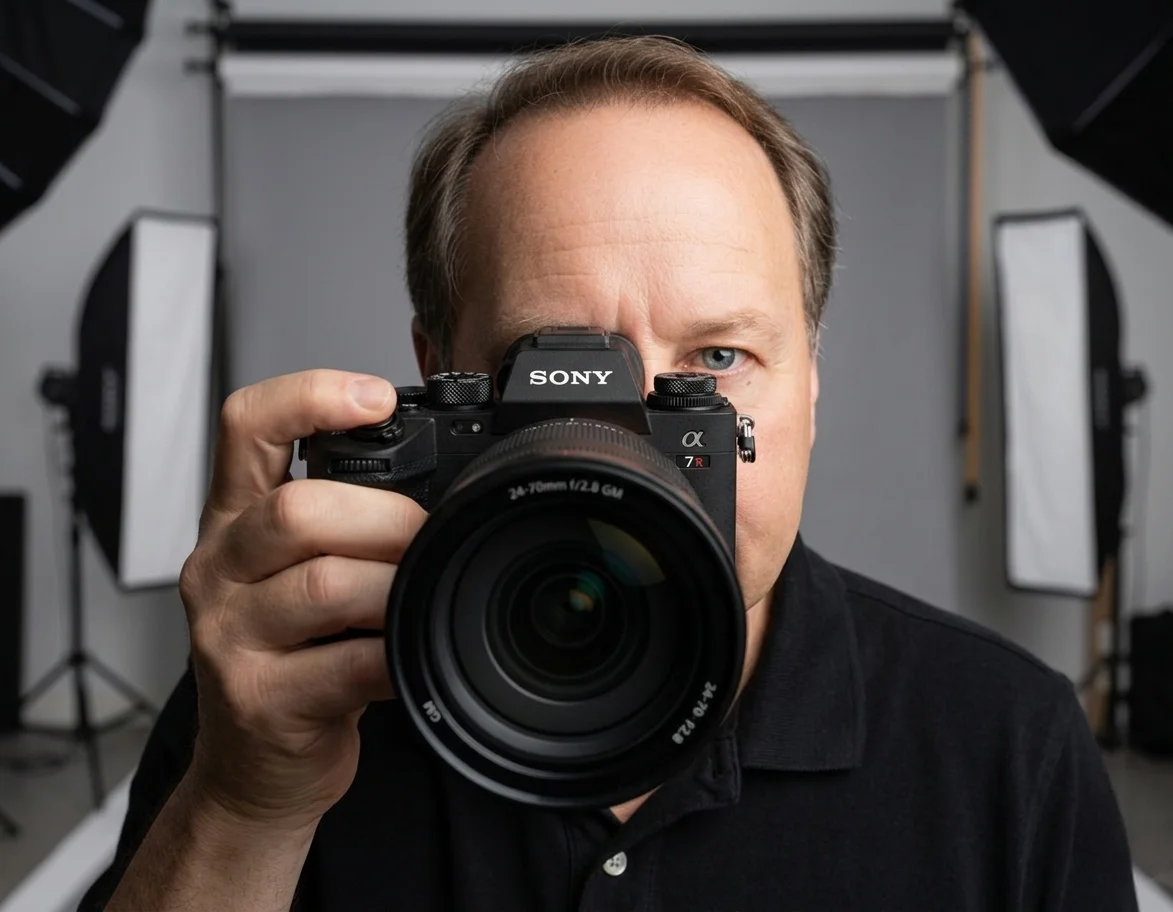
Chris McCarthy
Professional Photographer, Photography Shark · September 12, 2026
Your electronic press kit is read by someone in a hurry. A booker deciding on a support slot, a journalist filing tonight, a festival coordinator filling a lineup grid — they open the folder, look for something usable, and move on. Most press kits fail not because the photos are bad but because the person downloading them could not find the shape they needed and did not have time to ask.
This is about what belongs in the photo section of a press kit, and how to package it so it survives contact with a deadline.
The Job Is Coverage, Not a Hero Shot
Artists tend to build a press kit around their single favourite image. The people using it need something different: a small set that covers the shapes their layout might demand.
At minimum:
- A horizontal press photo. The workhorse. Features, article headers, venue listings, anything wider than it is tall.
- A vertical or square variant. Social posts, playlist tiles, story formats, phone-first listings. Increasingly the most-used shape and the one most often missing.
- A clean, face-forward headshot. Bios, artist listings, press contact pages, anywhere your face needs to be recognisable at small size. Distinct from the press photo — see the difference between a headshot and a press photo if that distinction is not yet obvious.
- Individual portraits, for bands. One per member, shot in the same session under the same light so they read as a set. The reasons are covered in band press photos.
Five to eight strong images across those shapes beats thirty variations of one frame. The person choosing is choosing fast, and a bloated gallery makes that harder rather than easier.
Resolution: Send the Big One
The most common avoidable failure in a press kit is supplying only web-sized images.
Anyone can size an image down. Nobody can size one up. A 1200-pixel JPEG that looks perfect on your site falls apart in a printed program, a large-format festival display, or a full-page feature — and at that point the publication either runs it badly or runs something else.
Supply both: the full-resolution original and a web copy. It costs nothing and removes the single most frequent reason someone comes back with a question.
Crops You Have Not Anticipated
However good your framing, someone will crop it. A festival grid wants square. A mobile listing wants vertical. A banner wants something extremely wide. If you supply one horizontal image, all of those crops get made by a stranger under time pressure, and the results range from acceptable to a photo with the top of your head cut off.
The practical answer is to supply the crops yourself, from frames shot with that in mind. Galleries from a musician or band session here are delivered that way by default — each selected image supplied as horizontal press, vertical, square, and a tight headshot crop, at print and web resolution — precisely so the decisions get made by someone who was in the room.
If a designer is laying out cover art or a poster, tell the photographer before the session. Leaving deliberate empty space for type is a framing decision at capture, not something to be rescued in cropping afterwards.
Live Photos Belong, But Not Alone
Live shots earn their place in a press kit. They show energy, prove you can fill a room, and give a booker a sense of what the show actually is.
What they cannot do is replace controlled portraits. Stage lighting is unpredictable and often unflattering, angles are dictated by where the photographer could stand, and the frames rarely crop cleanly to the shapes a listing needs. A kit built only from live photos looks like a kit that never got around to the portraits.
The working combination: a controlled portrait set that handles every layout demand, plus two or three strong live frames as supporting evidence.
Keep It Current
Press kit photos go stale faster than almost any other professional image, because they are tied to an era rather than a face. A photo from the previous lineup, the previous hair, the previous sound — press will use it, because you gave it to them, and it will sit next to coverage of the thing you are doing now.
Refresh around each major release. Update whenever the lineup changes. At minimum, refresh every couple of years so nothing in the folder contradicts what someone sees when they come to the show. The point of a session is to build a library, not to capture one image — which is why session formats here deliver a range of looks and crops rather than a single hero frame.
Packaging: The Real Test
Everything above is undone by bad packaging. The test is simple:
> Can a journalist on deadline get a usable file without emailing you a question?
That means:
- One folder or one link. Not images scattered across a website, a Dropbox, and an old email thread.
- Descriptive filenames. `bandname-press-horizontal-hires.jpg` beats `IMG_4471.jpg`.
- Both resolutions present, obviously labelled.
- A photo credit line included in the folder, so nobody has to ask who to credit.
- No password, or a password stated in the same place as the link.
None of this is glamorous, and all of it is the difference between being easy to feature and being slightly too much work on a Tuesday afternoon.
Building the Photo Half of a Press Kit
If you are starting from nothing, one session covers it. The Artist Press Kit session is built for this specifically — two or three wardrobe looks across multiple lighting setups, the clean headshot plus atmospheric press frames, 20 hand-retouched images delivered in every crop the shapes above require, at print and web resolution, with a full promotional license covering streaming platforms, your EPK, venue and festival listings, posters, press, and release artwork.
Bands should look at the band session instead, which adds group frames and an individual portrait for every member in the same visit.
The studio is at 83 E Water Street in Rockland, MA — 25 minutes south of Boston via Route 3, free parking, ground-floor load-in. Turnaround is 3–5 business days, with rush available when a release date will not move.
Ready to build the kit? Get in touch with your release timeline and what the folder currently has in it.
Related reading: Musician headshots and press photos — the complete guide · Band press photos: staging a group · Musician headshots and band press photos in Boston
Frequently Asked Questions
What photos do you need for an EPK?
At minimum a horizontal press photo, a vertical or square variant for social and playlist tiles, and a clean face-forward headshot for listings and bios — all at full resolution. Bands should add an individual portrait for each member. The reason to supply all three shapes rather than one favourite image is that bookers, press, and platforms will crop whatever you send to fit their own layout, and a crop someone else makes in a hurry is rarely the crop you would have chosen.
What resolution should EPK photos be?
Supply full-resolution files, and include both a print-ready version and a web-sized one. Press and venues size images down constantly, but nobody can size an image up — a low-resolution file that looks fine on your website falls apart in a printed program or a large festival display. Sending the high-resolution original alongside a web copy removes the most common reason a journalist emails back asking for something different.
How many photos should be in a press kit?
Fewer than most artists think. Five to eight strong images in a range of shapes beats thirty variations of the same frame, because the person downloading them is choosing quickly and a large gallery slows that down. What you want is coverage — horizontal, vertical, square, a clean headshot, and for bands an individual portrait per member — rather than volume within one look.
Do EPK photos need to be recent?
Yes, and this is where most press kits quietly fail. Photos tied to a previous era, a former lineup, or a look you have moved past undercut the material they are attached to, and press will use whatever you supply. A refresh around each major release keeps the kit accurate; at minimum, update every couple of years so your streaming profiles and press folder never contradict what someone sees at the show.
Can I use live show photos in my EPK?
Include them, but not instead of a portrait. Live photos show energy and prove you fill a room, which is genuinely useful to a booker — but they are shot in unpredictable light, often at awkward angles, and rarely crop to the shapes a listing or a feature needs. A press kit wants both: controlled portraits that work at any size, plus a couple of strong live frames as supporting evidence.
How should EPK photos be delivered to press?
As a single folder or link containing every shape and resolution, with simple descriptive filenames and a photo credit line included. The test is whether a journalist on deadline can get what they need without emailing you a question. Galleries from a session here are built that way — multiple crops, print and web resolution, ready to forward to a venue or publication as-is.
Related Posts
Headshots
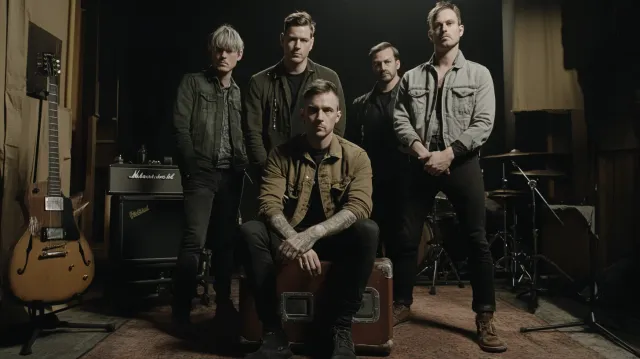
Band Press Photos: How to Stage a Group So It Reads as One Identity
Headshots
Cheer and Gymnastics Headshots: Tryouts, Recruiting, and Team Rosters
Headshots
Hockey Recruiting Photos: What Goes in the Profile Besides the Video
Headshots
The MBA Application Photo: What Committees See and What Trips People Up
Headshots
Ballet Headshots: What Classical Companies and Schools Expect
Headshots
Commercial Dance Headshots: What Agents and Casting Want
About the Author
Chris McCarthy
Chris McCarthy has run Photography Shark Studios in Rockland, MA for over 10 years and 500+ sessions, with executive headshot work for Rockland Trust, Clean Harbors, M&T Bank, and McCarthy Planning; founder portraits for AI startups including Lowtouch.ai; product photography for South Shore brands like Lauren's Swim; and headshots across South Shore legal, medical, financial, and academic practices. Every session is personally shot and edited by Chris on Sony mirrorless and Godox strobe systems — no assistants, no outsourcing, no batch retouching. Galleries deliver in 3–5 business days. About Chris McCarthy →
Photography Shark · Boston & South Shore MA
Ready to Book a Session?
Professional headshots, senior portraits, boudoir, and model portfolios. Studio in Rockland, MA — 25 miles south of Boston. Sessions from $395.