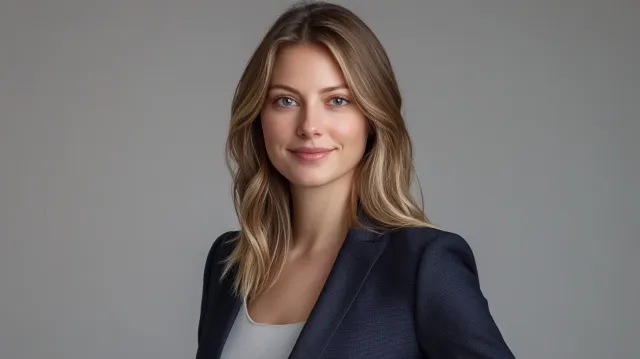
Headshots
Professional Headshots vs. Phone Selfies: Why the Difference Shows
A modern phone takes a sharp photo — so why does a selfie still read as a selfie on LinkedIn? The real differences between a professional headshot and a phone selfie: lens distortion, lighting, expression, and where each one is good enough.
Chris McCarthy
Professional Photographer, Photography Shark · May 27, 2026
I get asked some version of this constantly: "My phone takes great photos — do I really need a professional headshot?" It's a fair question. Modern phone cameras are genuinely impressive. They're sharp, they handle tricky light, and they retouch on the fly. So why does a phone selfie still read, instantly and unmistakably, as a selfie the moment it lands on a LinkedIn profile or a firm bio page?
I'm Chris McCarthy. I shoot headshots in a studio in Rockland, central to Boston's South Shore, and I've photographed people who showed up convinced their phone photos were "good enough" — and changed their minds the moment they saw the difference side by side. Here's what actually separates the two, and, just as importantly, when a selfie is perfectly fine.
The Short Answer
A selfie and a headshot are made by different physics and different intent. A phone makes a sharp photo of your face from arm's length with a wide lens and flat light. A headshot is built — with a flattering focal length, shaped light, directed expression, and consistent formatting. The sharpness was never the problem. Everything around the sharpness is.
The Five Differences That Show
1. Lens distortion (the big one)
Your phone's front camera is a wide-angle lens held about an arm's length from your face. At that short distance, whatever is closest to the lens — usually your nose and forehead — gets enlarged relative to your ears and jaw. The result is subtle but your brain reads it: the face looks slightly bulged, the proportions a little off, even when the image is razor sharp.
A professional headshot is shot with a longer lens (typically 85–135mm) from several feet back. That distance compresses your features into their true proportions. This single difference — focal length and shooting distance — is the reason a selfie looks "off" in a way most people can feel but can't name.
2. Lighting
A selfie uses whatever light is around you: an overhead office fixture, a window, a phone screen's glow. That light is usually flat and unflattering, casting shadows under the eyes or washing the face out. In a studio session, I shape the light deliberately — direction, softness, and ratio — so your face is modeled: dimensional, with the contours that make a photograph look intentional rather than incidental.
3. Expression and direction
This is the one people underestimate most. Holding your own phone, you're looking at yourself, which makes almost everyone self-conscious — the expression freezes or strains. A real session has someone on the other side of the camera directing you: cueing the genuine micro-expression, fixing the tense shoulder, catching the half-second where you actually look like the confident version of yourself. You can't direct yourself into that.
4. Retouching done right
Phone "beauty" filters smooth indiscriminately — they erase skin texture and produce that waxy, slightly inhuman look. Professional retouching is restrained and selective: it removes the temporary (a blemish, a stray hair, glare on glasses) while keeping the permanent (your actual skin, your actual face). The goal is you on a good day, not a different person.
5. Consistency and format
A professional session delivers your image in the crops and resolutions each platform needs — a tight square for LinkedIn and directories, a wider portrait for a firm bio, print-resolution files for press. A selfie is one crop, one resolution, often too low for anything but a small thumbnail. For anyone who needs the same face to look consistent across LinkedIn, a company site, and press, that consistency is itself a trust signal.
When a Selfie Is Actually Fine
I'm not going to pretend everyone needs a studio session for every photo. A well-lit selfie is perfectly adequate for:
- An internal Slack or Teams avatar
- A casual personal social account
- A throwaway placeholder you'll replace later
The deciding question isn't vanity — it's whether the photo has a job to do. If it's the first impression a prospective client, employer, casting director, or referral partner forms of you, that's when the gap between a selfie and a professional Boston headshot starts costing you something real.
The LinkedIn Reality
LinkedIn is where this matters most for the most people, because it's where a selfie and a headshot sit right next to each other in the same feed. Recruiters and prospects scroll past both. The selfie reads as "hasn't gotten around to it"; the headshot reads as "takes this seriously." Fair or not, that read happens in under a second. If LinkedIn is part of how you're evaluated — and for most professionals it is — that's the clearest case for a real session. A polished LinkedIn headshot in Boston is doing quiet work on your behalf every time someone looks you up. And a selfie isn't the only thing that reads wrong in that feed — even a "professional" photo can undercut you if it's poorly lit or badly cropped, so it's worth knowing the common headshot mistakes to avoid before you commit to one image.
What About AI?
There's now a third option between a free selfie and a studio session: AI headshot generators. They're cheaper than a session and better-lit than a selfie, but the output is inconsistent — likeness drift, strange hands and ears, and an artificial skin texture are common. I break down exactly where they hold up and where they fail in AI headshots vs. professional headshots. The short version: useful as a stopgap, not a substitute for anything client-facing.
The Cost Reframe
A selfie is free. A professional headshot in the Boston area runs $300–$550 — my sessions start at $395 with ten retouched images and commercial rights included (here's how that compares to headshot prices across other cities). The honest way to think about it: you're not buying a photo, you're buying a first impression that works for the next two or three years across every platform you appear on. Measured against what a single new client or job opportunity is worth, the math is rarely close.
Book Your Session
If your photo is doing a real job — and you've decided the selfie isn't cutting it — sessions at the Rockland studio start at $395 for a 30-minute session ($495 for 60 minutes and two looks), with images delivered fast. Book through the contact page, and tell me which platforms you need the images for so I can deliver the right crops.
Frequently Asked Questions
Can a phone selfie work as a professional headshot?
For low-stakes uses — an internal Slack avatar or a casual social profile — a well-lit phone selfie is usually fine. For client-facing roles where the photo is part of a trust decision (executives, advisors, attorneys, realtors, actors), a selfie almost always reads as a selfie because of lens distortion, flat lighting, and the limited angle a phone arm allows. The gap is most visible at larger sizes.
Why do selfies distort your face?
Phone front cameras use a wide-angle lens held about an arm's length away. At that short distance, features closest to the camera — usually the nose and forehead — appear enlarged relative to the ears and jaw. A professional headshot is shot with a longer focal length (85–135mm) from several feet back, which compresses features into natural proportion. This is the single biggest reason a selfie looks 'off' even when it's sharp.
Will a newer phone camera close the gap?
Newer phones improve sharpness, dynamic range, and computational retouching, but they can't change the physics of focal length and shooting distance, and they can't direct your expression or shape the light. A phone makes a better selfie; it does not make a headshot. The remaining gap is lens geometry, lighting control, and direction — none of which is a megapixel problem.
What does a professional photographer do that I can't replicate at home?
Three things mainly: shapes the light with studio strobes and modifiers so your face is modeled rather than flat, shoots at a flattering focal length and distance to avoid distortion, and directs your expression and posture in real time so you look confident rather than self-conscious. Retouching and consistent formatting across crops are added on top, but those three are the core.
How much more does a professional headshot cost than a free selfie?
A selfie is free; a professional studio session in the Boston area typically runs $300–$550, with Photography Shark sessions starting at $395 including ten retouched images and commercial rights. The relevant question isn't the absolute cost — it's whether the photo is doing a job. If it's the first impression a prospective client or employer forms of you, the session usually pays for itself.
Are AI headshots a middle ground between selfies and professional photos?
AI headshot generators sit between a selfie and a studio session on price, but the output is inconsistent — likeness drift, odd hands and ears, and an artificial skin texture are common, and there's no guarantee of an accurate result. For a deeper comparison, see our guide on AI headshots versus professional headshots. For anything client-facing, a real session remains the standard.
Related Posts
You Might Also Like
About the Author
Chris McCarthy
Chris McCarthy has run Photography Shark Studios in Rockland, MA for over 10 years and 500+ sessions, with executive headshot work for Rockland Trust, Clean Harbors, M&T Bank, and McCarthy Planning; founder portraits for AI startups including Lowtouch.ai; product photography for South Shore brands like Lauren's Swim; and headshots across South Shore legal, medical, financial, and academic practices. Every session is personally shot and edited by Chris on Sony mirrorless and Godox strobe systems — no assistants, no outsourcing, no batch retouching. Galleries deliver in 3–5 business days. About Photography Shark →
Photography Shark · Boston & South Shore MA
Ready to Book a Session?
Professional headshots, senior portraits, boudoir, and model portfolios. Studio in Rockland, MA — 25 miles south of Boston. Sessions from $395.