Dating Photography
Bumble Photographer in Boston: Photos That Get Replies
Working with a Bumble photographer in Boston — the six-slot lineup, Opening Moves, the match window, what to wear, and what a studio session costs.
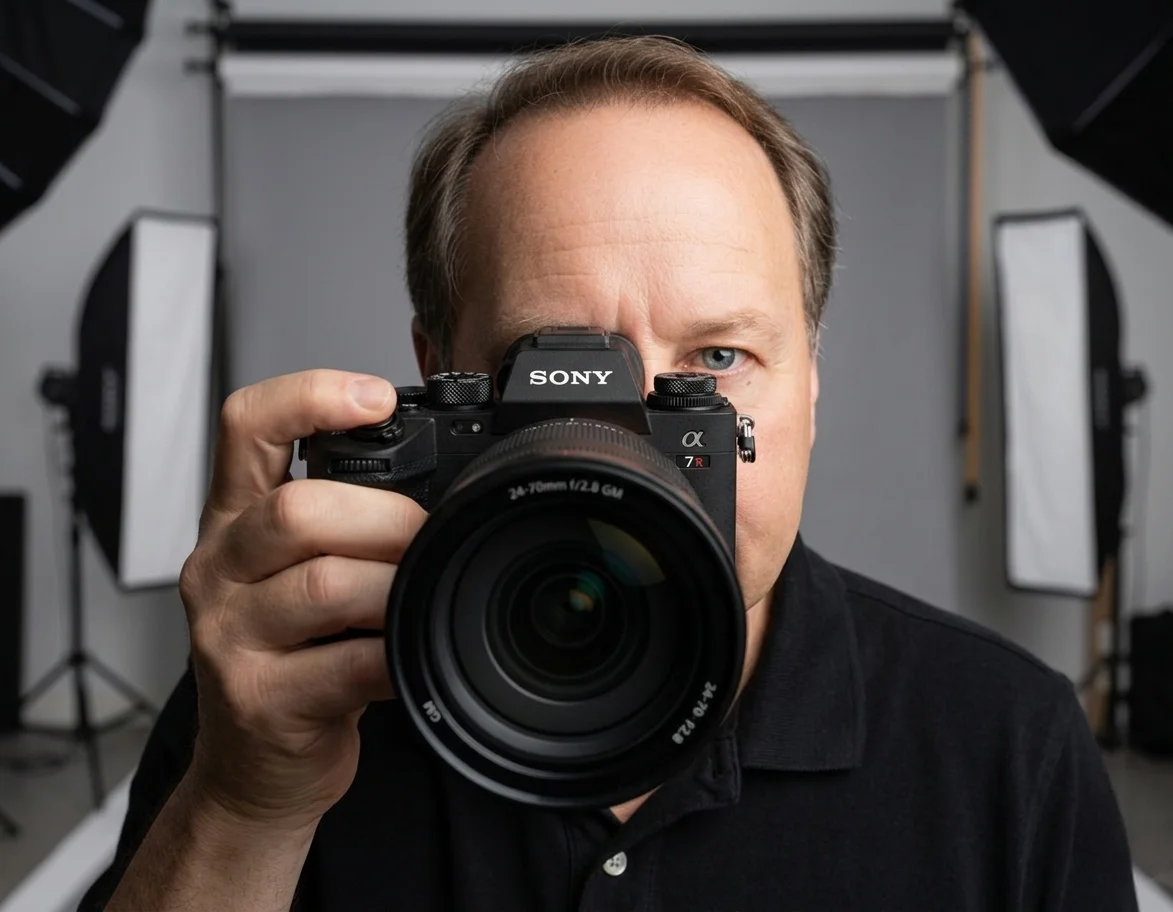
Chris McCarthy
Professional Photographer, Photography Shark · August 10, 2026
On most dating apps the photos only have to win the match. On Bumble they have to win the message too. That is the whole difference, and it is why a Bumble lineup that was built for swiping tends to underperform. The match is the halfway point — somebody still has to decide you are worth writing to, and Bumble has always put a clock on that decision. Photos that are attractive but give a person nothing to say produce matches that quietly expire.
I shoot dating-profile sessions out of a studio in Rockland, MA, 25 minutes south of Boston, and a recognizable share of clients arrive with the same complaint: matches are fine, conversations are not. Nine times out of ten the lineup is six good-looking portraits and nothing else. Here is what actually works on Bumble in 2026, and what a session built specifically for it involves.
What Bumble Asks Your Photos to Do
Bumble's product has shifted over the years — Opening Moves softened the pressure of composing a first message from scratch, and the match window has been adjusted more than once — but the underlying dynamic has stayed constant. Matching is cheap. Writing the first message is the expensive part, and the person doing it is looking for a reason.
That splits the job across your lineup:
- The lead photo wins the match. Same rules as anywhere: clear, front-facing, eyes visible, genuinely warm.
- Slots two through six earn the message. They are the raw material for whatever someone opens with. Every frame should answer "what could I say about this?"
- The overall impression decides whether it's worth the effort. Someone deciding whether to spend two minutes writing to you is reading consistency, effort, and whether you look like a real person with a real life.
Most people optimize entirely for the first job and ignore the second two. That is the single most common structural problem I see in Boston-area Bumble profiles.
The Six-Slot Bumble Lineup
You get six photo slots. Use all six. Profiles with full lineups outperform three- and four-photo profiles consistently, and the reason is mechanical rather than mysterious: more slots means more evidence and more openings.
A default mix that holds up:
- Strong solo head-and-shoulders portrait. Your single best frame. Front-facing, well lit, genuine smile, clean background.
- Full-body shot. Clear, well-lit, in clothes that fit. Its absence gets noticed.
- A real activity or interest. Cooking, climbing, playing something, on the water, at a trailhead. This is the slot people write about most.
- Social context. You with friends, unmistakably identifiable. Not a group of twelve at a wedding.
- A second portrait with a different mood. Composed, slight smile or none. Adds range and depth.
- A wild card. A pet, a place you go, a project. A conversation hook for someone who already likes you.
The failure mode is six versions of slot one. It reads as either vain or as someone with exactly one good photo, and it leaves your match with nothing to react to but your face — which is a hard thing to write a first message about without sounding like a line.
Photo One: Winning the Match
The lead frame is the one place where Bumble is not special. The rules are the same as everywhere else, and almost nobody clears all of them:
- Head-and-shoulders, close enough to read at thumbnail size.
- Front-facing, looking at the camera.
- Eyes visible — no sunglasses, no hat brim shadow.
- A genuine, eye-reaching smile, not a held one.
- A clean background that doesn't compete.
- Recent. You look like this when you walk into the bar.
Warmth is the specific trait to optimize for here. A moody, intense, beautifully-lit portrait can win a swipe on a stack-based app and still underperform on Bumble, because it makes writing to you feel like approaching someone across a room. Approachability converts. The importance of a perfect dating profile photo covers the small-thumbnail problem in more depth.
Opening Moves Need Somewhere to Land
An Opening Move is a question you set in advance so your match can answer something rather than invent a message. You can run a few of them. They measurably improve conversation rates, and they are still the most under-used feature on the app.
The part people miss: an Opening Move only works if your photos support it. If your question is "what's the best meal you've had this year" and your lineup is six studio portraits, the exchange starts from nothing shared. If one of your photos is unmistakably you in a kitchen, or at a specific restaurant, or on a boat — the answer writes itself and the conversation starts with a common reference.
So set the Opening Move and plan the shoot together. If you know your question in advance, we can build a frame that feeds it. That's a two-minute conversation before the session that changes what we shoot.
What to Wear
The rule is the same across every app: clothes that fit, in solid muted colors, matching the personality you actually want to project.
Colors. Navy, charcoal, deep green, burgundy, and warm earth tones render cleanly at thumbnail size. Bright reds and electric blues can dominate the frame. Pure white and pure black lose detail once the app compresses the image.
Patterns and logos. Skip them. Busy patterns become noise at profile size and a large logo becomes the first thing anyone notices.
Fit. The most under-rated variable in the whole wardrobe question. A well-fitted plain t-shirt photographs better than an ill-fitting expensive piece.
Range across the lineup. Three outfits is the practical number: one smart-casual for the lead portrait, one activity-appropriate, one slightly dressier. Stay inside the range of how you actually dress — a profile that swings from three-piece suit to tank top reads as performance.
The professional headshot wardrobe guide goes deeper on fabric, fit, and color, and most of it transfers directly to a dating lineup.
Get Verified
Bumble's photo verification takes a couple of minutes and matters more for people with professional photos than for anyone else. A polished, well-lit, consistent lineup is exactly what a cautious user has learned to associate with a fake profile. The verification badge resolves that instantly and turns the same lineup back into a signal of effort.
If you book a session, verify afterward. It is the cheapest single improvement available and people skip it constantly.
Why Phone Photos Underperform
The technical reason is consistent and worth understanding, because it explains the vague "something looks off" reaction that costs matches without anyone being able to name it.
Front-facing phone cameras use a very wide lens. Held at arm's length, that lens distorts facial proportions — noses enlarge, foreheads lengthen, the angle is almost always slightly too high or too low. Nobody consciously identifies barrel distortion. They just register that something is wrong and move on.
Lighting compounds it. Bathroom selfies are lit from overhead, which drops shadows under the eyes and nose. Midday sun outdoors does the same thing. Faces want soft, slightly elevated, frontal light — a window, or a controlled studio setup, and rarely anything a phone finds on its own.
Backgrounds finish the job. Bathrooms, dim car interiors, cluttered bedrooms, and parking lots are all working against you before you smile. If you are shooting yourself anyway, a blank wall with diffused window light to one side beats nearly any scenic backdrop you can reach with a phone. The how to take good dating profile pictures guide walks through the DIY version properly.
The Mistakes That Cost Replies
Recurring problems on otherwise solid Bumble profiles:
- A group photo in slot one. Making someone guess which one is you is an immediate pass.
- Sunglasses or a hat across the eyes. Eyes are the photo. Hide them and there isn't one.
- The distant shot. If your face isn't readable at display size, it functionally isn't a photo of you.
- Mirror selfies. Reads as low effort and puts a phone in the frame instead of a person.
- Heavy filters. Creates a trust gap that surfaces on the first date.
- The cropped-out ex. A disembodied shoulder is loud and everyone reads it instantly.
- Six near-identical portraits. Five wasted slots.
- No context anywhere in the lineup. The Bumble-specific one. Attractive photos with zero information about your life produce matches that never get written to.
Each is a small avoidable negative. Two or three stacked will hold back a profile regardless of how good the lead photo is.
One Session, Every App
A single session covers Bumble, Hinge, Tinder, Match, and anywhere else you keep a profile. What changes between them is the edit, not the shoot:
- Bumble leads with the warmest portrait and weights the lineup toward context and conversation hooks.
- Hinge distributes attention across all six, because the interaction is comment-on-a-specific-photo. The Hinge profile photo breakdown covers that lineup in full.
- Tinder front-loads harder — the first image carries most of the early weight in a swipe stack. See what performs on Tinder for that variant.
If you also run Bumble Bizz, the same session yields a usable professional frame — the composed, neutral-expression portrait from slot five is generally the right one, and it doubles as a LinkedIn headshot with a different crop.
What a Bumble Session in Boston Involves
A dating session at Photography Shark runs about 60 minutes in the Rockland studio. We start with the lead portrait and spend real time on expression — the genuine smile is directed and reactive, not requested, which is the single hardest thing to produce alone with a phone. From there we build range: a full-body frame, a composed second portrait, and wardrobe changes across two or three looks.
For the context slots, there are two paths. Some clients bring props or gear that reflect an actual interest and we shoot it in studio. Others add an on-location block in Boston — the Public Garden, Beacon Hill, the Seaport, Back Bay — for outdoor lifestyle frames that fill slots three and six. Plenty of people do the studio primary first and add location images later.
Galleries deliver in about a week with honest retouching. You leave with eight to ten usable images, which is a full Bumble lineup plus spares, and the set stays current for twelve to eighteen months. The session walkthrough covers the shoot itself step by step.
What It Costs
Studio sessions start at $395 — 60 minutes, 10 fully retouched high-resolution images, roughly a week's turnaround. On-location Boston sessions are $495. A combined dating-profile and LinkedIn session is $495, which is the option most people take when they want the professional frame too.
For an active dater the arithmetic is straightforward: one session covers every app you use, holds up for over a year, and removes the specific defects that were costing replies. Book a session or call (781) 312-8824.
Local dating photo sessions: Boston · Quincy · Hingham · Braintree · Plymouth · South Shore
Related reading: Hinge photo lineup guide · What works on Tinder · Dating profile photos for men · Profile photos for women over 50 · Dating after 40: do's and don'ts · Boston dating profile photographer
Frequently Asked Questions
What does a Bumble photographer actually do differently?
A Bumble photographer builds a lineup around replies, not just matches. On most dating apps the photos only have to win the initial yes. On Bumble the match is the halfway point — someone still has to decide you are worth writing to, inside a limited window. That changes the brief: the lead portrait has to carry warmth rather than just attractiveness, and the remaining slots have to hand the other person something concrete to open with. In practice it means more expression coaching, more visible context, and fewer near-identical portraits than a standard headshot session produces.
How many photos should you have on Bumble?
Use all six slots. Bumble profiles with a full six-photo lineup consistently outperform three- and four-photo profiles, because every additional image is another piece of evidence and another possible opening line. The mix that works is one strong solo portrait first, then a full-body frame, two real-activity or interest photos, a social-context shot, and one wild card. Six variations of the same head-and-shoulders angle wastes five slots.
What is the best first photo on Bumble?
A well-lit, front-facing, head-and-shoulders photo of you alone, with your eyes clearly visible and a genuine smile. No sunglasses, no hat brim shadowing your face, nothing competing for attention behind you. The first photo is what someone sees before they read a single word, and on Bumble it also sets the tone for whether writing to you feels easy or effortful. Warmth outperforms intensity in that slot almost every time.
Do your photos matter for Bumble Opening Moves?
Yes, more than people expect. An Opening Move is a question you set in advance so a match can reply to something instead of composing a message from nothing. That only works if your photos give the reply somewhere to land. A lineup of six studio portraits leaves your match answering in a vacuum; a lineup with a visible interest, a real location, and a clear sense of how you spend your time gives them material. Set the Opening Move and shoot the photos as one exercise, not two.
Should you get Bumble photo verification?
Yes. Verification takes a couple of minutes and it signals that the person in the photos is the person on the profile — which matters most for people whose photos look professionally made. A polished lineup without verification can read as a stock profile to a cautious user. A polished lineup with the badge reads as someone who put effort in. If you invest in a session, verify afterward.
Are professional photos worth it for Bumble?
For an active dater, usually yes, and for a boring reason rather than a magical one. A session removes the specific things that quietly cost replies — phone-lens distortion, overhead lighting, forced smiles, cluttered backgrounds, missing slots — and replaces them with frames that clear the bar on each. A $395 studio session produces eight to ten usable images, which fills Bumble's six slots with frames to spare and covers Hinge and anywhere else you keep a profile from the same shoot.
How is a Bumble lineup different from a Hinge or Tinder lineup?
Same photos, different edit. Tinder loads the first image in a swipe stack, so the lead frame carries nearly all the weight. Hinge is comment-driven, so every slot should be a hook someone can react to. Bumble sits between the two — the lead portrait still has to win the match, but the rest of the lineup has to make writing the first message feel easy inside a limited window. One good session covers all three; the difference is which frames you lead with on each app.
What Bumble photos hurt your profile the most?
A group photo as the lead image, sunglasses or a hat hiding your eyes, distant shots where your face is not readable at thumbnail size, mirror selfies, heavy filters that create a gap between the photos and the real you, and six slots of the same pose. On Bumble there is one more: a lineup with no visible context at all. If nothing in your photos suggests what you do, where you go, or what you care about, you have given your match nothing to write about.
Related Posts
You Might Also Like
About the Author
Chris McCarthy
Chris McCarthy has run Photography Shark Studios in Rockland, MA for over 10 years and 500+ sessions, with executive headshot work for Rockland Trust, Clean Harbors, M&T Bank, and McCarthy Planning; founder portraits for AI startups including Lowtouch.ai; product photography for South Shore brands like Lauren's Swim; and headshots across South Shore legal, medical, financial, and academic practices. Every session is personally shot and edited by Chris on Sony mirrorless and Godox strobe systems — no assistants, no outsourcing, no batch retouching. Galleries deliver in 3–5 business days. About Chris McCarthy →
Photography Shark · Boston & South Shore MA
Ready to Book a Session?
Professional headshots, senior portraits, boudoir, and model portfolios. Studio in Rockland, MA — 25 miles south of Boston. Sessions from $395.