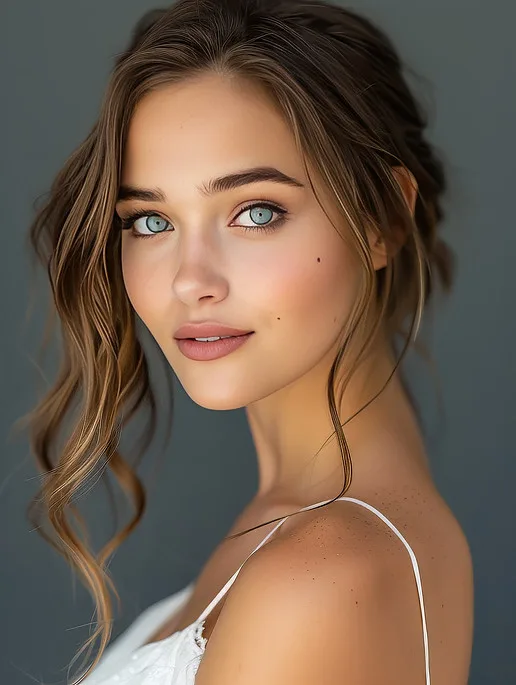
Headshots
Unveiling the Art of Capturing the Perfect Miss Headshot
Pageant headshot guide for Miss America and Miss Massachusetts contestants: submission specs, posing direction, and studio sessions in Rockland, MA.
Chris McCarthy
Professional Photographer, Photography Shark · March 7, 2024 · Updated November 22, 2025
Pageant headshots are a specific and demanding category of portrait photography. They operate within constraints that standard headshots don't face — submission requirements with specific dimensions, lighting standards, and compositional expectations — while also needing to accomplish something that purely technical photography cannot: communicating the personality, confidence, and presence of the subject in a single frame.
The "Miss headshot" that contestants submit for Miss America, Miss Massachusetts, Miss Teen USA, and affiliated state and local pageants is often the first impression a contestant makes on preliminary judges. Before a contestant walks the stage, before an interview, before any live interaction, the headshot speaks for her. Getting it right is not a minor detail.
Photography Shark works with pageant contestants across the South Shore and Boston area. This post is a detailed guide to what makes a Miss headshot work — technically, visually, and strategically.
Understanding the Purpose
A Miss headshot serves two simultaneous functions that are sometimes in tension with each other.
The first is submission compliance. Most pageant systems have specific headshot requirements: pixel dimensions, file format, background color or neutrality, and sometimes restrictions on wardrobe, accessories, or retouching. These requirements vary by organization, and it's essential to obtain the current specifications from the specific pageant you're entering before the session. Submitting a technically non-compliant headshot, no matter how beautiful, can result in disqualification or required resubmission.
The second function is differentiation. Judges reviewing 50 or 100 headshots need to be able to distinguish contestants from each other at a glance. A headshot that's technically compliant but visually generic disappears into the stack. A headshot that's technically compliant and also vivid, confident, and distinctive stays with the viewer.
The goal is to satisfy both functions fully. This is achievable, but it requires intentional planning.
Choosing the Right Photographer
Pageant headshots require a photographer with specific experience. The technical elements — studio lighting that produces clean, flattering results on a neutral background; retouching that meets pageant standards without over-processing; understanding of submission specifications — are not universally available among portrait photographers.
More importantly, a Miss headshot requires a photographer who can direct subjects to authentic, compelling expression. Pageant contestants are often experienced performers comfortable on stage, but the camera close-up is a different environment. A photographer who can bridge that gap — who understands what makes a pageant headshot read as confident and genuine rather than staged and forced — is doing something specific and skilled.
At Photography Shark, we've worked with contestants at the local, state, and national pageant levels. We understand the submission requirements for major systems and have a clear process for producing headshots that satisfy both technical compliance and visual impact.
Before the Session: Preparation Matters
Research Your Submission Requirements
Before anything else, obtain the current headshot specifications from the pageant organization. Requirements change. A specification sheet from last year's cycle may not be accurate for this year. Confirm:
- Pixel dimensions and aspect ratio
- File format (JPEG, PNG, etc.) and file size limits
- Background requirements (typically white or neutral, but not always)
- Any restrictions on wardrobe colors, necklines, or accessories
- Retouching restrictions (some pageant systems limit digital alteration)
Bring this specification sheet to your session planning conversation with the photographer. This shapes every decision from backdrop choice to shooting format.
Understand Your Brand
In pageant contexts, "brand" refers to the consistent visual and personal identity a contestant presents. This includes the qualities she wants to project — warmth, intelligence, athleticism, artistry, leadership — and the visual language that communicates those qualities.
Before your session, spend time thinking through questions like: What qualities define how I'm presenting myself in this pageant? What are the core elements of my platform? How do I want to be remembered after judges have reviewed 100 other headshots?
The answers to those questions should inform every wardrobe, styling, and expression decision in the session.
Wardrobe and Styling
Colors that Photograph Well Against Neutral Backgrounds
Most pageant headshots are photographed against white or light gray backgrounds. In that context, certain wardrobe colors work consistently well:
Deep solids — navy, royal blue, emerald green, deep burgundy — register with presence against neutral backgrounds and tend to complement a wide range of skin tones. They convey confidence and polish.
Classic black reads as authoritative and sophisticated but can feel generic when many contestants make the same choice. It's a safe default that doesn't differentiate.
Coral, terracotta, and warm red are among the most flattering colors for a wide range of skin tones and photograph with warmth that cooler colors don't provide. They're less commonly chosen, which provides visual differentiation.
Avoid: Pure white (disappears against light backgrounds), busy patterns that distract from the face, and colors that closely match the background in tone.
Neckline and Structure
Necklines in pageant headshots should create a clean line from shoulder to chin. V-necks, scoop necks, and off-shoulder styles elongate the neck and create natural focus on the face. Very high necklines or heavily structured collars can create visual compression between chin and collar.
The garment doesn't need to be elaborate — it's a headshot, which means most of the wardrobe won't be visible. What matters is the neckline, the color, and how the fabric sits at the shoulders.
Hair
Hair in a pageant headshot should be intentional. Whether down, half-up, or pulled back, the choice should be consistent with how the contestant presents herself publicly and should complement the face shape. Hair that falls across the face, that reads as unstyled, or that creates asymmetry the contestant doesn't want will be a permanent element of every submitted image.
For contestants with longer hair, the option to bring two styling variations — one down and one partially pulled back — creates options during the session and in the final selection.
Makeup
Professional makeup is worth the investment for a pageant headshot. Studio lighting, even when it's soft and flattering, requires more deliberate makeup than everyday application to read correctly in the final images. A professional makeup artist with experience in photographic work knows how to apply foundation, define the brows, and set the lips in a way that holds under lights and photographs without looking overdone.
If self-applying makeup for the session, the key adjustment is going slightly heavier than everyday application — particularly in brow definition, mascara depth, and lip color. These are the elements that drop out most visibly in studio lighting.
Lighting for Miss Headshots
The lighting setup for a pageant headshot has a specific goal: produce clean, even, flattering illumination that reveals the subject's features without harsh shadows and without the artificial shimmer that heavy beauty lighting creates.
The Standard Approach
For most pageant headshots, a clamshell lighting setup — a large softbox above and slightly in front of the subject, with a reflector or second light below the lens to fill shadows — produces the most consistently compliant and flattering results. It creates even light across the face, defines the eyes clearly, and minimizes the unflattering under-chin shadow that a single overhead source creates.
The key variables are light modifier size (larger is softer), light-to-subject distance (closer is softer), and the power ratio between the upper and lower light sources. A 2:1 ratio between main and fill produces modeling with depth; a 1:1 ratio produces a flatter result that's sometimes required for very specific submission standards.
Studio vs. Natural Light
Natural light can work for Miss headshots in the right conditions — north-facing window light, overcast outdoor light — but it's less controllable and less consistent than studio lighting. A session that starts in good natural light can shift as clouds move or the sun angle changes. Studio lighting is constant and predictable.
For submission headshots where the stakes are high and consistency matters, studio lighting is the right choice.
Posing and Expression
The Technical Foundation
Standard pageant headshot posing principles are straightforward:
Body angle: Turn the body 15 to 30 degrees from the camera. This creates subtle dimension and prevents the square-on, slightly confrontational quality of a straight-on pose.
Chin position: Bring the chin slightly forward and hold it slightly down. This creates a cleaner jawline, more defined features, and a slightly wider, more open eye — all characteristics that read as confident and attractive in the final image.
Shoulders: Keep them down and relaxed. Tension in the shoulders reads immediately in close-up photography.
Eye direction: Looking directly into the lens is the standard for submission headshots. The eyes in a pageant headshot should feel engaged, present, and confident.
Expression: The Decisive Variable
Technical compliance and good lighting are table stakes. Every technically compliant, well-lit headshot passes the same baseline bar. What differentiates a memorable Miss headshot from a forgettable one is expression.
The expression that works in a pageant headshot is not a broad smile and not a flat, neutral face. It's something in between: a confident, slightly warm, engaged quality that reads as approachable but serious — the expression of someone who knows why she's there and is comfortable with it.
Finding that expression is the hardest part of the session. It requires the contestant to be genuinely relaxed and confident, which means the session needs to be structured to build toward it rather than expect it in the first frames.
The process: begin with technically exploratory frames while having a real conversation with the subject. Talk about her platform, her goals, what excites her about the competition. Let the expression develop organically from that conversation rather than directing it explicitly. When the genuine version of the expression appears, stay with it.
Multiple Variations
Even for standard submission headshots, capturing multiple expression variations gives the contestant and her team options in final selection. A slightly warmer version, a more serious version, a variant with hair positioned differently — a well-structured session produces 10 to 20 genuinely usable frames rather than a single technically compliant image with minor variations.
After the Session: Selection and Submission
The Selection Process
When reviewing headshots for pageant submission, the criteria should be:
- Technical compliance with the submission specifications
- Clarity and sharpness of the image (confirm at 100% zoom)
- Expression quality — genuinely confident and present, not strained
- Background cleanliness and separation from the subject
- Overall visual impact — does this image communicate the contestant's brand?
It can help to have a trusted advisor — a parent, a coach, a friend with an objective eye — review the options with you. We see our own image with bias, sometimes favoring the frame where we look thinnest rather than the frame where our expression is most genuine.
Retouching Standards
Retouching for pageant headshots should be conservative. Most pageant organizations allow basic retouching — skin smoothing, blemish correction, minor color correction — but prohibit or discourage significant digital alteration of features, body shape, or color of eyes, hair, or skin.
At Photography Shark, our standard retouching removes temporary skin concerns (blemishes, redness), corrects any color balance issues, and refines the overall polish of the image without altering the fundamental appearance of the subject. The final image should look like the contestant — polished and at her best, but recognizably her.
Beyond the Headshot: Full Pageant Portfolios
Many contestants benefit from a session that goes beyond the single submission headshot to build a broader portfolio for personal use, social media presence, and team use. A portfolio session with Photography Shark might include:
- The compliant submission headshot
- A lifestyle or personality image in a relevant setting
- A wardrobe option that showcases a different facet of the contestant's brand
- A casual, relaxed image that humanizes the portfolio
This kind of comprehensive session functions both as pageant preparation and as the beginning of a personal branding portfolio that continues to be useful after the competition season ends.
For contestants who also need professional headshots for non-pageant purposes — acting, modeling, professional networking — combining both purposes in a single session is efficient and cost-effective.
Ready to Book Your Session?
Photography Shark is in Rockland, MA, serving Boston and the full South Shore. We work with Miss contestants at every level — local, state, and national — and bring 10+ years of portrait experience to every session. Whether you need a compliant submission headshot or a full portfolio session, we're ready to help you put your best image forward.
Contact us to book your Miss headshot session.
Headshot pricing See also: print-ready headshot for business cards.
Related: professional pageant headshot sessions.
Frequently Asked Questions
Does Photography Shark have experience with pageant headshots?
Yes. Chris McCarthy has worked with contestants at local, state, and national pageant levels, including Miss Massachusetts and Miss America affiliated systems. We understand submission requirements and produce compliant, visually distinctive headshots.
Where is the studio for pageant headshot sessions?
Sessions take place at 83 E Water Street, Rockland, MA 02370, with easy access from across the South Shore and greater Boston area — no city parking hassle.
What should I bring to a pageant headshot session?
Bring the current submission specifications from your pageant organization, multiple wardrobe options, and any reference images. Requirements vary by pageant cycle, so confirm specs before your session.
How much does a pageant headshot session cost?
Headshot Studio sessions start at $395 for a 30-minute session with 10 images. More extensive sessions are available at Studio headshot sessions are $395 for 30 minutes with 10 fully retouched images. On-location sessions are $495. Add-ons: additional session time $100 (extra 30 min), outfit change $100, additional person $200, group shot $100. Turnaround is 3-5 business days..
How quickly will I receive my images after the session?
Gallery turnaround is 3–5 business days, giving you time to review, select, and submit before pageant deadlines.
Can you produce a compliant background and format for pageant submission?
Yes. We shoot on neutral backgrounds and can provide the pixel dimensions and file formats required by most major pageant organizations. Confirm your specific requirements before booking.
Related Posts
You Might Also Like
About the Author
Chris McCarthy
Chris McCarthy has run Photography Shark Studios in Rockland, MA for over 10 years and 500+ sessions, with executive headshot work for Rockland Trust, Clean Harbors, M&T Bank, and McCarthy Planning; founder portraits for AI startups including Lowtouch.ai; product photography for South Shore brands like Lauren's Swim; and headshots across South Shore legal, medical, financial, and academic practices. Every session is personally shot and edited by Chris on Sony mirrorless and Godox strobe systems — no assistants, no outsourcing, no batch retouching. Galleries deliver in 3–5 business days. About Chris McCarthy →
Photography Shark · Boston & South Shore MA
Ready to Book a Session?
Professional headshots, senior portraits, boudoir, and model portfolios. Studio in Rockland, MA — 25 miles south of Boston. Sessions from $395.