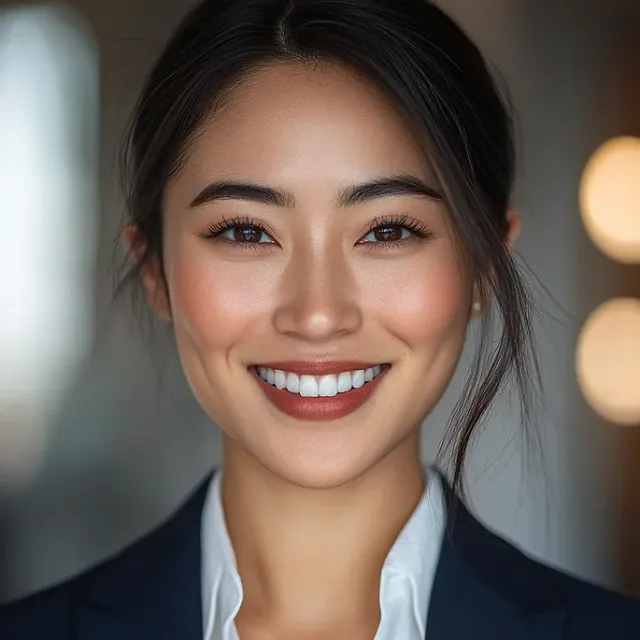
Headshots
What Your Headshot Says About You
What your professional headshot communicates before you say a word — outdated photos, poor expression, and technical quality all send signals.
Chris McCarthy
Professional Photographer, Photography Shark · November 5, 2025 · Updated December 9, 2025
Before you send an email, walk into a meeting, or make a phone call, your headshot has already introduced you. On LinkedIn, on your company website, in a conference program, on a real estate yard sign, in a media kit — your professional image is working ahead of you constantly, shaping the impressions of people who may never meet you in person.
The question is not whether your headshot says something about you. It does, whether you intended it to or not. The question is whether what it says is what you want it to say.
At Photography Shark, we work with professionals from across the Boston and South Shore area who are building their personal brand, updating a dated image, or investing in a professional presence for the first time. Understanding what headshots actually communicate — and what goes wrong when they fail — is essential context for making the investment worthwhile.
Your Headshot Is a Visual Handshake
Think about the last time you met someone professionally and they gave you a genuinely confident, warm, appropriate handshake. In that moment — before they said a word — you formed an impression: this person is capable, they are comfortable, they are someone I can take seriously.
A strong headshot does exactly this work. It extends your professional presence into every digital space where your name appears and creates a positive first impression before any actual conversation happens. A weak headshot does the opposite — it creates friction, doubt, or simply a forgettable impression that does not invite engagement.
Research on online professional networking consistently shows that profiles with professional, high-quality photos receive dramatically more connection requests, profile views, and messages than those with poor photos or no photo at all. The headshot is not an optional accessory of your professional brand. It is the first impression you have no ability to control in real time, which is exactly why it deserves intentional attention.
The Signals Your Current Headshot May Be Sending
Let's be direct about what different types of headshots communicate, because most people have not thought about this analytically.
An Outdated Photo
An old headshot — one taken five or more years ago that no longer accurately reflects your appearance — communicates several things, none of them good. It says you have not invested in yourself professionally recently. It creates a disconnect when someone who has formed an impression based on your photo meets you in person and finds a different person. It signals that your digital presence is not a priority.
The mismatch between headshot and reality is particularly damaging in industries built on trust — financial services, real estate, law, therapy. If a client is expecting the person in your photo and gets someone noticeably different, they feel misled before the relationship has even started.
The rule: Update your headshot whenever your appearance changes meaningfully — new hairstyle, significant weight change, aging naturally beyond what your current photo reflects — and as a baseline every two to three years regardless.
A Cropped Social Photo or Smartphone Selfie
Using a casual social photo — a cropped shot from a wedding, a beach selfie, a group photo with someone blurred out beside you — as your professional headshot communicates that you do not take your professional image seriously enough to invest in it properly.
This may not be the message you intend. You may simply have not gotten around to scheduling a session yet. But from the viewer's perspective, the image they see is the effort level you applied. A casual snapshot as a professional image suggests casual standards.
This is a particularly common issue for people early in their careers, new to their industry, or transitioning from a field where professional images were not important to one where they are. The cost of a professional headshot session is modest relative to the career value it creates.
Poor Technical Quality
A blurry, poorly lit, or low-resolution headshot communicates incompetence even when the subject themselves projects competence. Technical quality in your professional image functions as a proxy in the viewer's mind — if you do not care enough to have a proper photo taken, what else do you not care enough to do well?
This is not fair, but it is consistent across how humans process visual information. Technical quality signals intention and standards.
An Expressionless or Forced Smile
The expression in your headshot is doing more communicative work than any other single element. An expressionless, flat, "I am tolerating this photo session" face communicates emotional unavailability — not a quality that invites professional engagement. A visibly forced or performative smile communicates that you are not at ease, which creates a subtle distrust response in viewers.
The expression that works — and that we spend real time in every session creating the conditions for — is genuine ease combined with intentional presence. The look of someone who is comfortable, confident, and genuinely engaged. This is not something you can force. It has to emerge from actually being at ease, which is partly about the environment and partly about the skill of the photographer in creating conditions for it.
What Different Expression Choices Communicate
Beyond simply "smiling or not smiling," the specifics of your expression communicate with real precision.
Direct Eye Contact
Looking directly into the lens — making eye contact with the viewer — communicates confidence and directness. It is the appropriate choice for most professional headshots because it establishes a sense of connection and engagement. In industries where authority and confidence are the primary values you want to convey (law, finance, executive leadership), direct and serious eye contact communicates exactly that.
A Genuine, Relaxed Smile
A genuine smile — the kind that starts in the eyes and reaches the mouth — communicates warmth, approachability, and trustworthiness. It is the right primary expression for anyone whose profession depends on building relationships quickly: therapists, educators, real estate agents, healthcare providers, client-facing service professionals. It says: I am someone you can talk to, trust with something personal, and enjoy working with.
The difference between a genuine smile and a posed one is immediately legible to most viewers, even when they cannot articulate why one feels more authentic. A genuine smile involves the muscles around the eyes — the Duchenne marker — in a way that a forced smile does not. Creating the conditions for a genuine smile is part of the photographer's job.
Confident Seriousness
For certain professional contexts — a senior executive headshot, a legal professional's image, a profile for a high-stakes financial practice — a controlled, serious expression without a smile communicates authority, gravitas, and professional weight. This is not appropriate for every industry, and it is important to pair it with strong, confident body language and impeccable clothing choices. Without those supporting elements, a serious expression can read as cold or unfriendly rather than authoritative.
What Your Clothing Communicates
We cover wardrobe in detail elsewhere, but from the perspective of "what does this say about you," a few high-level points:
Fit quality: Clothing that fits well communicates that you pay attention to details and take your presentation seriously. Ill-fitting clothing — regardless of how expensive it is — communicates the opposite.
Industry appropriateness: Clothing that accurately reflects your professional context demonstrates self-awareness and understanding of norms. A creative director who looks like a corporate attorney, or a financial advisor who looks like they are heading to a barbecue, both create a disconnect between image and reality.
Color choices: As discussed in more depth in our headshot wardrobe guide, darker colors communicate authority and formality; lighter and warmer tones communicate approachability. Bright colors communicate energy and personality — useful in moderation, potentially overwhelming as the dominant element.
What Your Background Communicates
The background of your headshot — even when blurred — communicates context.
A clean, neutral studio background: The most controlled professional option. It says: this image exists to show you the subject, and nothing in the environment is meant to distract from that. Studio backgrounds in gray, off-white, or dark tones are the standard for professional headshots for exactly this reason.
An environmental or location background: Shooting in a specific environment — an office, a city street, a natural setting — communicates context and specificity. For real estate agents, an urban backdrop communicates market context. For outdoor-oriented lifestyle brands, a natural setting communicates values. The risk of environmental backgrounds is that an identifiable location can date the image, and a busy background can compete with the subject.
The generic corporate headshot background: A very bright white or pale gray background with flat lighting has become visually associated with HR department stock photos. This is not necessarily a problem, but it is a neutral choice that communicates nothing distinctive about your personal brand.
The Personal Brand Dimension
Your headshot is not just a photo. It is a component of your personal brand — the set of associations, expectations, and qualities that other people attach to your name and professional identity.
If you are building a personal brand that emphasizes expertise and authority (a consultant, a subject matter expert, a speaker), your headshot should communicate those qualities. If you are building a brand around warmth and accessibility (a coach, a therapist, a community-oriented service provider), your headshot should communicate those qualities instead.
The most common failure mode is a headshot that communicates nothing distinctive — a generic professional image that conveys "I exist and I have a job" without saying anything about who you specifically are and what makes you worth working with. In a competitive market, generic is not neutral. Generic is forgettable, and forgettable is a missed opportunity.
When and Why to Update Your Headshot
After a significant appearance change: New haircut, color, beard grown or removed, significant weight change — any change that makes your current photo look materially different from you is reason enough.
After a career transition: Moving from one industry to another, or from one level of seniority to another, often warrants a different style of headshot. The image that served you as a junior associate may not serve you as a partner. The image that worked for your technical role may not work for the leadership position you have moved into.
After your current photo is more than two to three years old: As a baseline update cadence, regardless of visible appearance changes.
When you are launching something new: A new business, a new website, a new speaking or media presence — these are occasions where your professional image should be current and intentional.
When your current photo is not working: If you are active on LinkedIn and not getting the engagement you expect, or if you regularly notice that people seem surprised by your appearance in person (versus your photo), these are signals that your headshot needs attention.
Working with Photography Shark on the South Shore
Our approach to professional headshots at Photography Shark is built around a simple idea: the technical quality of the photography should serve your professional goals, not the other way around.
Every session begins with a conversation about who you are, who your audience is, what you want the image to communicate, and what you will use it for. That context shapes every decision: the lighting approach, the background choice, the direction during the session, and the editing after.
We shoot on Sony mirrorless cameras with professional lighting at our studio in Rockland, MA — and for clients who want an on-location session, we know the South Shore's available shooting environments well enough to recommend specific spots based on your industry, your brand, and your goals.
Boston headshot sessions at Photography Shark are available as standard single-look sessions or as expanded multi-look sessions for professionals who need a portfolio of images for multiple uses. We also offer studio photo shoots for creative and personal branding photography beyond standard headshots.
Ready to Book Your Session?
Your professional headshot is working for you — or against you — every day. If it is time to make it work harder, Photography Shark is ready to help.
Contact Photography Shark today to schedule your headshot session at our Rockland, MA studio. We serve professionals from across the South Shore and Greater Boston area, including Hingham, Scituate, Quincy, Braintree, Weymouth, Norwell, Duxbury, Plymouth, Hanover, Pembroke, Abington, Milton, Cohasset, Marshfield, Kingston, and Hull.
Workplace portraiture · Session pricing & packages · Studio headshots near Rockland, MA
Frequently Asked Questions
What does an outdated headshot communicate to potential clients?
An old headshot signals you haven't invested in yourself professionally and creates a disconnect when someone meets you in person. In trust-dependent industries like real estate, law, and finance, this mismatch can damage a relationship before it starts.
Is using a cropped social photo as a professional headshot a problem?
Yes. A casual snapshot as your professional image communicates casual standards, whether that was your intention or not. The cost of a Photography Shark session starts at $395 — modest relative to the career value a genuinely professional image creates.
How much does poor lighting or blur affect my professional image?
Technical quality functions as a proxy in viewers' minds. A blurry, poorly lit headshot signals incompetence even when the subject projects competence in person. Viewers process visual quality as a stand-in for professional standards.
How often should I update my professional headshot?
Update whenever your appearance changes meaningfully — new hairstyle, significant weight change, natural aging — and as a baseline every two to three years regardless. Photography Shark Studio sessions start at $395 at 83 E Water Street, Rockland, MA.
What expression works best in a professional headshot?
Genuine ease combined with intentional presence — not forced, not stiff, not a performative smile. Chris McCarthy builds Photography Shark sessions specifically to create the conditions for this expression to emerge naturally rather than be performed.
Does Photography Shark work with professionals outside of acting?
Yes. Photography Shark works with Boston and South Shore professionals across all industries — executives, attorneys, real estate agents, healthcare workers, entrepreneurs, and anyone building or refreshing their professional digital presence.
Related Posts


You Might Also Like
About the Author
Chris McCarthy
Chris McCarthy has run Photography Shark Studios in Rockland, MA for over 10 years and 500+ sessions, with executive headshot work for Rockland Trust, Clean Harbors, M&T Bank, and McCarthy Planning; founder portraits for AI startups including Lowtouch.ai; product photography for South Shore brands like Lauren's Swim; and headshots across South Shore legal, medical, financial, and academic practices. Every session is personally shot and edited by Chris on Sony mirrorless and Godox strobe systems — no assistants, no outsourcing, no batch retouching. Galleries deliver in 3–5 business days. About the photographer →
Photography Shark · Boston & South Shore MA
Ready to Book a Session?
Professional headshots, senior portraits, boudoir, and model portfolios. Studio in Rockland, MA — 25 miles south of Boston. Sessions from $395.