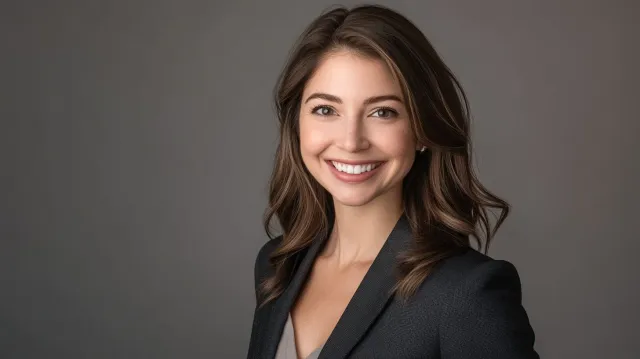
Headshots
Headshot Poses for Women: A Practical Guide
Posing guidance for women in professional headshots — body angle, posture and the S-curve, head tilt, neckline and shoulders, hands, hair, and expression by use case.
Chris McCarthy
Professional Photographer, Photography Shark · May 28, 2026
The most flattering headshot pose for a woman is built from a body angled off-camera, a long spine leaning subtly toward the lens, a slightly dropped front shoulder, the chin pushed forward and down, a small head tilt, and a genuine expression. Everything else is a variation on that foundation, adjusted for the use case and the individual. The good news: you do not need to memorize any of it. In a well-run studio session, the photographer coaches each element in real time, so your only job is to relax and respond. This guide explains what actually works for women in front of the camera and why — useful whether you're preparing for a session or just want to understand the mechanics.
I have photographed headshots for women across every industry on the South Shore, and the questions are consistent enough that a clear framework helps.
The Foundation: Body Angled, Face Forward
The single most important rule is to turn your body away from the camera while keeping your face toward it.
Facing the lens square-on flattens the body, widens the shoulders, and reads as stiff and ID-like. Instead, rotate roughly 20 to 30 degrees off-camera. This narrows the visible shoulder line, creates a more dynamic angle, and is naturally slimming. Once the body is angled, you bring your face back toward the lens so your eyes still meet the viewer directly.
That body-angled, face-forward combination is the basis of nearly every flattering frame. From there, small adjustments to posture, shoulders, chin, tilt, and expression dial in the result.
This differs slightly from the male default, where the angle is usually kept tighter and the head stays straighter. If you're comparing notes for a couple or a team shoot, the companion headshot poses for men guide covers the male-specific adjustments.
Pose Examples
A few of the most reliable poses, shown side by side. Each is a small variation on the body-angled, face-forward foundation.
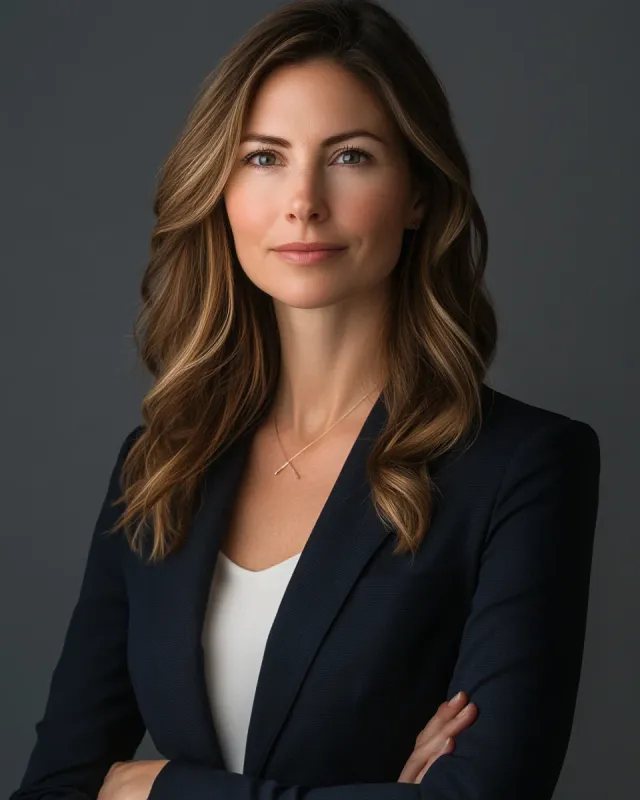 Body angled ~25 degrees, face returned to the lens — the foundation almost every flattering frame is built from.
 Subtle tilt toward the lower shoulder with a warm smile — the approachable LinkedIn and client-facing default.
 A relaxed hand near the collarbone for a wider crop — soft fingers, never tense, drawing the eye back to the face.
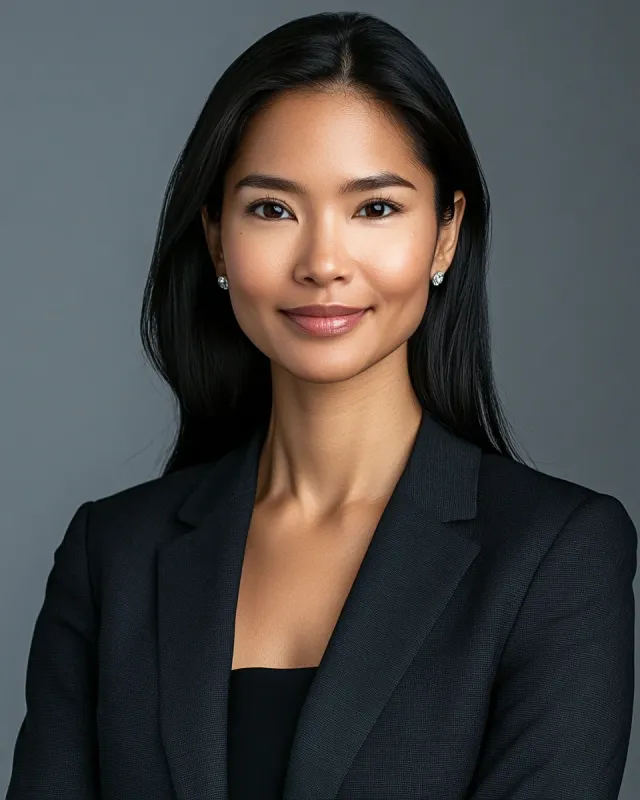 Near-neutral tilt and a poised, confident expression — the authoritative look for legal, finance, and executive use.
Posture and the S-Curve
Posture is where women's headshots are most often won or lost.
- Lengthen the spine. Imagine a string pulling up through the crown of your head. A long neck and lifted sternum read as confident and photograph slimmer.
- Lean in slightly. A subtle forward lean from the waist — bringing your head a few inches toward the camera — creates engagement and definition along the jaw. It's counterintuitive but powerful.
- Drop the front shoulder. With your body angled, letting the near shoulder fall slightly lower than the far shoulder creates a gentle diagonal that's far more flattering than two level shoulders.
For three-quarter or seated portraits, photographers often introduce a soft S-curve — a slight shift of the hips and a counter-lean of the upper body — to avoid the rigid, blocky look of a straight-on posture. It doesn't need to be dramatic; even a small weight shift onto the back foot loosens the whole frame.
The Chin and Jawline
The most common request I hear is some version of "make my jaw look defined" or "I don't want a double chin." The fix is the same one that works for everyone, and it feels strange the first time:
- Push your forehead and chin slightly toward the camera — extend the jaw forward.
- Then bring the chin down just a touch.
This stretches the skin under the jaw, separates the chin from the neck, and defines the jawline without the unflattering effects of simply lifting or dropping the chin. Lifting exposes the nostrils and reads as aloof; dropping shortens the neck and creates exactly the shadow you're trying to avoid. The forward-and-down combination threads the needle. It's worth its own deep dive, which is why I wrote a dedicated guide on how to avoid a double chin in photos.
Shoulders, Neckline, and Crop
For women, the shoulder line and neckline interact with the crop more than they do for men, so they're worth thinking about together.
- Shoulders: angled and relaxed, with the front one dropped. Avoid pulling the shoulders back hard (it creates tension) or hunching them forward (it shortens the neck).
- Neckline: a clean neckline — a simple V, a crew, or an open collar — keeps the visual focus on your face. Very high necklines can shorten the neck in tight crops, while very low ones can pull attention; a moderate neckline is the safe default. Wardrobe and posing reinforce each other here, and the wardrobe guide for women's headshots covers fabric, color, and neckline choices that hold up under studio light.
- Crop: most professional headshots crop around the upper chest. Knowing the crop in advance lets you ignore everything below it and concentrate the energy in your face and shoulders.
Head Tilt
Women have more latitude with head tilt than men do, and a small tilt is one of the easiest ways to soften a portrait.
- Subtle tilt toward the lower (front) shoulder — warm, approachable, widely flattering. This is the default for LinkedIn, healthcare, real estate, and most client-facing roles.
- Near-neutral, minimal tilt — confident and authoritative. The default for legal, finance, and executive contexts.
- Strong tilt — reads as posed or coy; use sparingly, mostly for personal-brand or creative looks.
Keep tilts small. The difference between flattering and posed is often just a few degrees, which is precisely the kind of thing a photographer monitors so you don't have to.
Hands (When They're in Frame)
Most true headshots crop above the hands, but many women want a wider three-quarter option, and hands change the whole feel of those frames. Flattering placements:
- Hand near the collarbone or jaw — soft, editorial, draws the eye to the face. Keep the hand relaxed and the fingers slightly separated, never flat or tense.
- Arms loosely crossed — confident and grounded; keep them low and relaxed rather than high and defensive.
- One hand resting on the opposite forearm — natural and self-contained.
- Hands in the lap (seated) — relaxed and approachable; rest one hand lightly over the other rather than interlacing tightly.
Avoid clenched fists, tightly interlaced fingers, hands pressed flat against the body, or hands that look forgotten and stiff at the sides. The rule is the same throughout: soft, intentional, relaxed.
Hair
Hair is a variable that's unique enough to call out. A few practical notes:
- Decide on a side. Most people have a preferred side; angling so your "better side" is slightly forward is a small, effective choice the photographer can help identify.
- Hair in front of or behind the shoulder changes the balance of the frame dramatically — it's worth shooting both. One side forward, one side back is a classic flattering arrangement.
- Flyaways photograph more visibly than they look in the mirror. A quick smoothing between frames is normal; good retouching handles the rest conservatively.
- Avoid hair covering an eye for primary professional frames — eyes are the anchor of a headshot.
Expression by Use Case
Expression is what separates a technically correct photo from one that actually represents you. The right one depends on the audience.
LinkedIn, Sales, Real Estate, Hospitality
- Warm, genuine smile that reaches the eyes
- Approachable and confident
- The most universally effective look for client-facing professionals — and the strongest default for a LinkedIn headshot
Healthcare and Education
- Open, trust-building smile
- Approachability is the primary signal
- Soft eyes, relaxed jaw
Law, Finance, Executive
- Composed and confident, with a softer smile or a poised neutral
- Engagement in the eyes is essential — neutral should never read as blank
- Authority without coldness
Actor and Creative
- A range across the session, from composed to expressive
- See the professional headshot poses overview for how casting-format expression differs from corporate
The strongest expressions are slightly asymmetric and caught in motion, not held. That's why photographers talk and joke through a session — the best frame is usually the half-second after a real reaction, not the posed smile you hold on command.
Common Failure Modes (and the Fixes)
Recurring patterns I correct in real time for female subjects:
- Square shoulders — angle the body 20-30 degrees.
- Chin lifted or dropped — forward and down instead.
- Held breath and frozen smile — breathe; let expressions move.
- Tense, raised shoulders — drop them before each frame.
- Tilt too strong — dial it back to a few degrees.
- Stiff hands — soften the fingers, relax the wrists.
- Leaning back, away from the camera — lean subtly in instead.
You don't need to track any of this yourself during the shoot. Monitoring posture, tilt, and expression frame by frame is the photographer's job; your job is to stay relaxed and responsive. If you want to walk in prepared, the how-to-prepare guide covers the night-before and day-of details.
What the Direction Sounds Like
To give a sense of how a session actually runs:
- "Angle your body to the window, then bring just your face back to me."
- "Long spine — grow an inch taller. Now lean in toward the lens, just your head."
- "Drop the front shoulder. A little more. There."
- "Chin out toward me, then down a touch. Yes — hold that."
- "Tiny tilt toward your low shoulder. Smaller. Perfect."
- "Big breath out, and smile like you just saw someone you love."
- "Don't hold it — let it go and bring it back."
That last cue is the most important. The most flattering, natural headshots come from reacting, not posing.
Ready to Book?
Get in touch to schedule a session. Photography Shark is in Rockland, MA — about 35 minutes south of Boston. Sessions start at $395 with 10 fully retouched images, multiple crops, and full commercial use included.
Free download: free headshot guide with the squinch and jawline technique — what to wear, posing, the squinch and LinkedIn sizes in one PDF.
Related reading: Headshot poses for men · Professional headshot poses · How to avoid a double chin in photos · Wardrobe guide for women's headshots
Frequently Asked Questions
How should women pose for a professional headshot?
The reliable default for women is a body angled 20-30 degrees off-camera, a long spine with a subtle lean toward the lens, the front shoulder dropped slightly, the chin pushed forward and down to define the jawline, a small head tilt, and a relaxed, genuine expression. Weight shifts to the back foot so the posture looks natural rather than locked. The photographer cues all of this in real time during the session.
Should women smile in headshots?
Usually yes — a warm, genuine smile that reaches the eyes is the strongest default for LinkedIn, healthcare, real estate, sales, and most modern professional contexts. Law, finance, and executive roles sometimes call for a more composed, confident expression with a softer smile or none. A good session captures both ranges so you can match the image to each use.
What should women do with their hands in a headshot?
Most true headshots crop above the hands. When hands are included in a wider portrait crop, flattering options for women are a hand resting near the collarbone or jaw, arms loosely crossed, one hand on the opposite arm, or hands relaxed in the lap when seated. The goal is soft, intentional hands — avoid stiff fists, tightly interlaced fingers, or hands that look forgotten at the sides.
How should women angle their body for a headshot?
Turn your body 20-30 degrees away from the camera rather than facing it square-on, which flattens the figure and reads stiff. Bringing the far shoulder back and the near shoulder slightly forward and down creates a natural, slimming line. Then return your face toward the lens. This body-angled, face-forward combination is the foundation of nearly every flattering headshot pose for women.
What is the most flattering head tilt for women?
A subtle tilt toward the lower (front) shoulder generally reads as warm and approachable and is widely flattering for women — more head tilt is acceptable here than in male headshots. Keep it small; an exaggerated tilt looks posed. For authoritative, executive looks, reduce the tilt toward neutral. The right amount depends on your face and the impression you want.
How can women look confident instead of stiff in headshots?
Stiffness comes from held tension — locked shoulders, a held breath, a frozen smile. The fixes that work: breathe normally, drop the shoulders before each frame, push the chin slightly forward and down, and let real expressions come and go rather than holding one. Strong direction from the photographer does most of the work, so you can stay relaxed and responsive instead of managing your own pose.
Related Posts



You Might Also Like
About the Author
Chris McCarthy
Chris McCarthy has run Photography Shark Studios in Rockland, MA for over 10 years and 500+ sessions, with executive headshot work for Rockland Trust, Clean Harbors, M&T Bank, and McCarthy Planning; founder portraits for AI startups including Lowtouch.ai; product photography for South Shore brands like Lauren's Swim; and headshots across South Shore legal, medical, financial, and academic practices. Every session is personally shot and edited by Chris on Sony mirrorless and Godox strobe systems — no assistants, no outsourcing, no batch retouching. Galleries deliver in 3–5 business days. About Photography Shark →
Photography Shark · Boston & South Shore MA
Ready to Book a Session?
Professional headshots, senior portraits, boudoir, and model portfolios. Studio in Rockland, MA — 25 miles south of Boston. Sessions from $395.