Headshots
Dance Audition Headshots: What to Submit and What Panels Actually Do With It
What to submit for a dance audition headshot — file specs, print vs digital, how it gets paired with your resume and dance photos, and what the panel is using it for.
Chris McCarthy
Professional Photographer, Photography Shark · August 22, 2026
Almost every guide to dance audition headshots explains how to take one. Very few explain what happens to it after you hand it over — which is the part that determines what you should submit. This page covers the submission side: file specs, print versus digital, how the headshot gets paired with your resume and dance photos, and what the panel is physically doing with the image during a long audition day.
I photograph dancers at a studio in Rockland, MA, 35 minutes south of Boston — company auditions, agency submissions, BFA and summer intensive applications. The general craft of the image is covered in the main dance headshots guide. This one is about getting it accepted.
If you already know what your panel wants and need the photos taken, dance headshots and audition photos in Boston has the formats and pricing — studio sessions and competition team days. Otherwise, read on.
What the Panel Is Actually Using It For
This is worth understanding first, because it explains every convention that follows.
At a cattle-call audition, forty to two hundred dancers move through a combination in groups. The panel cannot learn names. You get a number pinned to your leotard, and the panel takes notes against that number — 142, strong turns, weak in the adagio, call back. At the end of the day, or the end of the week, they sit down with a stack of headshots and resumes and reconstruct who those numbers were.
So the headshot has one primary job: it lets someone who watched you for ninety seconds three days ago recognize you.
That single fact drives all of it. It is why the photo has to be current, why it has to be front-facing, why your hair has to match how you wore it in the room, and why heavy retouching actively hurts you. A beautiful image of someone the panel cannot connect to dancer 142 is a failed headshot, however good it looks.
The secondary job is the one people focus on — conveying that you are professional, coachable, and someone they would want in a studio for eight hours a day. That matters. But it is secondary, and when the two goals conflict, recognition wins.
Digital and Print: You Need Both
Most auditions now involve two separate submissions, and dancers routinely prepare only one.
The digital submission goes through an online form, an agency portal, a convention registration, or an email. It happens days or weeks before the audition and is often what determines whether you get an audition slot at all.
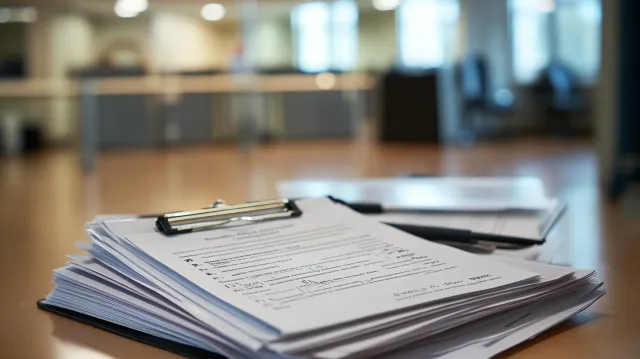
The print submission happens at the check-in table on the day. You hand over a printed headshot with a resume, and that physical object is what the panel annotates and sorts.
Submit the same image in both places. This sounds obvious and is violated constantly — a dancer uses one photo on the online form, prints a different one, and the panel's paper stack no longer matches the digital shortlist someone else built. Pick your strongest frame and use it everywhere, including your agency profile and social bio.
File Specs That Cover Almost Everything
| Use | Spec |
|---|---|
| Printed headshot (US standard) | 8×10 in, 300 dpi, color, borderless |
| Online audition form | JPEG, 1000–2000 px long edge, under 5 MB |
| Casting database / convention portal | 800×800 px square crop |
| Agency profile | 1200 px+ long edge, vertical 4:5 crop |
| Email attachment | Under 2 MB, named `Firstname-Lastname-Headshot.jpg` |
Two details that cause the most avoidable rejections:
Name your files properly. `IMG_4471.jpg` arriving in an inbox alongside three hundred others is a genuine problem for the person processing submissions. `Maya-Ortiz-Headshot.jpg` is not. Do the same for your resume and dance photos.
Keep the square crop ready. Convention and database platforms ask for square far more often than dancers expect, and an automatic centre-crop of a vertical portrait usually lands somewhere between your chin and your forehead. Crop it yourself, deliberately, in advance. The headshot sizes and dimensions guide covers the full set of crops and why they differ.
How It Pairs With Your Resume
In the United States the convention is an 8×10 headshot with the dance resume attached to the back, and there are two accepted ways to do it:
- Printed on the reverse. Cleaner, cannot be separated, and increasingly the norm. It requires that your resume is finalised before you print, which is the main drawback.
- Stapled. Staple all four corners, resume trimmed to 8×10 so nothing overhangs. Two staples at the top is the common shortcut and it is how headshots and resumes get separated.
Never use a paper clip. They come off in a stack, and a headshot that arrives at the sorting table unattached to a resume is close to useless. Whichever method you use, write your name and phone number on the back of the print as well — the belt-and-braces version costs nothing and saves the one photo that comes loose.
Your resume itself should lead with training and companies, not with a list of every competition you have entered. Panels read the top third and skim the rest.
Headshot Versus Dance Photos
A complete dance submission is usually three things, and conflating them is the most common structural mistake:
- The headshot. Face and shoulders, front-facing, clean background. Identification.
- A first-arabesque or technical photo. Full body, showing line and extension. Classical submissions almost always ask for this specifically.
- A movement or performance photo. In motion, in costume or in class, showing quality and range.
Some programs ask for all three, some ask for one and accept the others as supporting material, and a handful of contemporary companies now ask for a short video reel instead of stills. Read the posting carefully — the requirements are stated and they are not negotiable.
What does not work is submitting only category 2 and 3. A panel that asked for a headshot and received two full-body shots at twenty feet has not received a headshot, and depending on how the submission is processed that can be an automatic incomplete.
If you need all three, shoot them together. A single studio session that produces the headshot and the full-body technical images in one visit is both cheaper and more coherent than assembling a submission from photos taken two years apart in different lighting.
Audition-Day Logistics
Small things that go wrong on the day:
- Bring more copies than you need. Five to ten printed headshot-and-resume sets. Some auditions collect them at multiple stages, and running out at a callback table is a bad way to be memorable.
- Transport them flat. A hard folder or portfolio envelope. A creased headshot pulled out of a dance bag communicates something you did not intend.
- Match your hair to the photo. If your headshot has your hair down and you arrive with a slicked bun, you have partly defeated the purpose. For classical auditions, shoot the headshot with the bun — see the ballet headshots guide for why classical conventions differ here.
- Do not laminate anything. Panels write on these.
- Check the posting one more time the night before. Requirements change between seasons, and the version of the PDF you downloaded in November may not be the current one.
When to Reshoot
Reshoot when any of these are true:
- Your hair length or color has changed meaningfully.
- You are under eighteen and it has been more than six months.
- You are over eighteen and it has been more than eighteen months.
- You have shifted focus — a dancer moving from classical into commercial work usually needs a different image, not just a newer one. The commercial dance headshots guide covers what changes.
- Someone at a check-in table has looked at the photo, looked at you, and looked at the photo again.
That last one is the real test, and it is worth taking seriously the first time it happens.
Booking a Session
A dance audition session at Photography Shark runs efficiently: a clean classic look first, then a second look matched to the genre you are submitting for, with expression and carriage directed in real time. You leave with fully retouched images, multiple crops sized for print, online forms, and square database fields, and full personal use. Sessions start at $395, and if you need full-body technical images alongside the headshot we build a longer block so it all happens in one visit.
Once you know what you are submitting, dance audition photo pricing covers the session formats — including the full-length frame most forms ask for. The studio is in Rockland, MA — an easy drive from Boston, Quincy, Hingham, Braintree, Weymouth, and the wider South Shore. Get in touch or call (781) 312-8824.
Free download: free dance audition photo guide (PDF) — what auditions ask for, dancewear, hair and makeup, and submission sizes in one PDF.
Related reading: Dance headshots: the full guide · Dance headshot examples · Ballet headshots · Commercial dance headshots · Headshot sizes and dimensions · Actor headshot and resume guide
Frequently Asked Questions
What headshot do you need for a dance audition?
A clean, current, front-facing headshot of your face and shoulders, in color, with your hair worn the way you will wear it in the room. Most auditions want it as a digital file for the online form and a printed copy stapled or printed on the back of your resume for the check-in table. Submit the same image in both places — the printed copy is what the panel writes on, and it needs to match the face in front of them.
What size should a dance audition headshot be?
For print, 8x10 inches at 300 dpi is the standard in the United States, because it matches the resume it gets attached to. For online submission forms, a JPEG between 1000 and 2000 pixels on the long edge under 5 MB covers nearly every platform. Keep an 800x800 square crop as well — casting databases and convention registration systems frequently ask for one, and cropping a horizontal image down to square at the last minute usually cuts your head off.
Do you need a headshot and dance photos for an audition?
Usually both, and they do different jobs. The headshot identifies you — it tells the panel who the number pinned to your leotard belongs to. The dance photos show line, extension, technique, and range. A submission with only dance photos often gets flagged as incomplete, because a full-body arabesque at a distance does not let anyone recognize your face at the check-in table.
Should a dance audition headshot be printed in color or black and white?
Color. Black and white was standard for theatrical headshots decades ago and still turns up in old advice, but every current dance audition convention is color. Color carries hair color and skin tone accurately, which is precisely the recognition information the panel needs.
How recent does a dance audition headshot need to be?
Within the last twelve to eighteen months for adults, and within six months for dancers under eighteen who are still growing or changing quickly. The functional test is simpler than the calendar one — if the panel would have to look twice to match the photo to your face, it is out of date, regardless of when it was taken.
Can you use a phone photo for a dance audition headshot?
You can submit one, but it costs you. Phone cameras use a wide lens held close, which enlarges the nose and narrows the ears, and the resulting distortion is exactly the thing that makes a photo not match the face in the room. Uneven light and low resolution compound it. For a first regional audition it will pass; for company, agency, and BFA submissions it reads as unprepared next to a room of professional images.
What do you write on the back of a dance audition headshot?
Your full name and phone number at minimum, plus email and agency if you have one, even when your resume is already attached. Photos and resumes separate constantly in a room handling three hundred dancers, and an unlabelled headshot that comes loose from its paperwork is a photo of a stranger. Print the details if you can rather than handwriting them.
Related Posts
You Might Also Like
About the Author
Chris McCarthy
Chris McCarthy has run Photography Shark Studios in Rockland, MA for over 10 years and 500+ sessions, with executive headshot work for Rockland Trust, Clean Harbors, M&T Bank, and McCarthy Planning; founder portraits for AI startups including Lowtouch.ai; product photography for South Shore brands like Lauren's Swim; and headshots across South Shore legal, medical, financial, and academic practices. Every session is personally shot and edited by Chris on Sony mirrorless and Godox strobe systems — no assistants, no outsourcing, no batch retouching. Galleries deliver in 3–5 business days. About Chris McCarthy →
Photography Shark · Boston & South Shore MA
Ready to Book a Session?
Professional headshots, senior portraits, boudoir, and model portfolios. Studio in Rockland, MA — 25 miles south of Boston. Sessions from $395.