Headshots
Ballet Headshots: What Classical Companies and Schools Expect
Ballet headshot conventions for company auditions, summer intensives, and school applications — hair, neckline, the accompanying photos, and how classical expectations differ from commercial dance.
Chris McCarthy
Professional Photographer, Photography Shark · August 22, 2026
A ballet headshot is one of the few portraits where restraint is the entire brief. Almost everything that makes a commercial headshot work — personality, movement in the hair, a wide warm smile, a pop of wardrobe color — actively works against a classical submission. This page covers what classical companies, schools, and summer intensives expect, and why the conventions are what they are.
I photograph dancers at a studio in Rockland, MA, 35 minutes south of Boston. The general dance headshots guide covers the craft across all genres; this one is specifically about classical.
If you already know what your company or school requires and want session details, dance headshots and audition photos in Boston has the formats and pricing — including the full-length and first-position frames classical panels ask for. Otherwise, read on.
What a Classical Panel Is Reading
Artistic staff looking at a ballet headshot are assessing something quite specific, and it is not charisma.
They are reading the head and neck as a structure — the length of the neck, the set of the shoulders, the shape of the jaw and skull, the proportion of head to shoulders. In classical ballet these things carry into line, and the headshot is often the first place they are visible. It is also, frankly, a check that the photograph is honest: that the dancer they invite is the dancer who arrives.
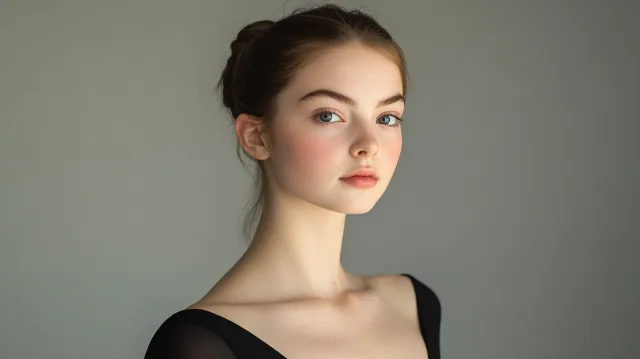
This is why the conventions look so austere. Hair up so the neck is visible. Clean neckline so the shoulders are readable. Even lighting so bone structure is described rather than sculpted away. Still expression so nothing distorts the face. The image is closer to a well-made documentary portrait than to a marketing photograph, and that is deliberate.
It is also why heavy retouching is a genuine liability here. Smoothing that softens a jawline or narrows a neck is removing exactly the information the panel opened the file to see.
Hair, Wardrobe, and Makeup
Hair. A clean classical bun, secured, with the hairline tidy. Not a messy bun, not a low ponytail, and not down. If you have flyaways they can be handled in retouching, but a bun that is genuinely well set on the day photographs better than one rescued afterwards. Wear it the way you would for class, because that is the point of reference.
Wardrobe. A simple leotard or a fitted top with a clean neckline. Black is the default and it is the default for a good reason — it recedes almost completely at a tight crop and leaves nothing but face and neck. Other solid dark colors work. What does not work:
- Patterns, logos, mesh panels, or anything with texture that draws the eye
- Halter and high necks, which crop strangely at head-and-shoulders framing
- Visible bra straps or an ill-fitting strap line
- Collars of any kind
- Jewelry beyond small studs; no dangling earrings, no necklaces
Makeup. Natural and matte. Enough to even skin tone and define the eyes under studio light, considerably less than stage makeup. The test is whether you would be recognizable walking into a studio the next morning. Heavy contouring, strong lip color, and dramatic liner all push the image toward performance and away from identification.
Expression
This is the part dancers find hardest, because the instruction sounds like "do nothing."
A classical headshot expression is calm, still, and present. Eyes to the lens, chin level or fractionally down, a very slight softness at the mouth — not a broad smile, not a blank stare, and not the composed neutrality of a passport photograph. What you are aiming for is the expression of someone waiting attentively at the front of class: focused, at ease, unhurried.
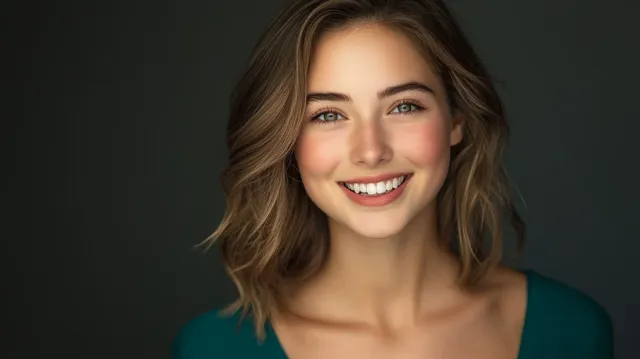
Some companies accept a gentle closed-mouth smile and it can read well. A full open smile almost never does on a classical submission — it changes the shape of the eyes and cheeks enough to make the photo less useful for recognition, and it sits oddly against the formality of everything else in the frame.
Getting there is a directing problem more than a performing one. Trying to hold a still expression produces tension around the mouth and eyes that a camera picks up immediately. It works better when the photographer keeps you talking and shoots through the settled moments in between.
The Technical Photographs
Almost no classical submission is a headshot alone. Standard accompanying photographs:
| Photo | What it shows |
|---|---|
| First arabesque | Line, extension, back, placement — the single most requested image |
| Tendu à la seconde or first position | Turnout, foot articulation, alignment |
| Passé or attitude | Hip placement, retiré position, stability |
| Full body, standing, front | Overall proportion, honest presentation |
Shoot these in the same session as the headshot. They need consistent lighting and a consistent background to read as a coherent submission, and assembling them from different sources months apart is visible immediately.
Practical requirements for the technical shots: plain background, clean practice wear rather than costume unless asked otherwise, pointe shoes if you are a pointe dancer, and full body in frame with a little air above the head and below the feet. Shoot each position on both sides — postings sometimes specify.
Requirements genuinely vary between companies. Read the posting. A submission missing a specifically requested photograph is often filtered before anyone looks at the headshot at all.
Summer Intensives, Schools, and Timing
Application deadlines for summer intensives cluster in autumn and winter, months before the programs run. Company contract auditions run on their own annual cycle. Both mean the same thing in practice:
Shoot in late summer or early autumn. That puts finished images in your hands before the portals open, and it leaves room to reshoot if the bun was untidy or the arabesque photograph did not land. Dancers who book in the week before a deadline have no such room, and it is a stressful way to produce a photograph whose whole purpose is composure.
For students, shoot more often than adults do — every six months while you are still changing. It feels excessive and it is not. An application photograph that is a year old on a fifteen-year-old is misrepresenting the applicant.
Common Mistakes
- Hair down. The most frequent one, usually because a dancer likes the photo better. The panel is not assessing whether you look good with your hair down.
- Stage makeup. Reads as a performance still, not a headshot.
- A performance photograph used as a headshot. In costume, in stage light, mid-phrase. It is not a headshot, however beautiful it is.
- Over-retouching. Removes the structural information the image exists to convey.
- Cropping too tight. Include the shoulders. A face floating without a neck defeats the point.
- A commercial image on a classical application. See the commercial dance headshots guide — the two genres want opposite things, and using the wrong one signals that you have not read the room.
- Missing the requested technical photographs. The most avoidable rejection of all.
For a visual walk-through of what separates a working ballet headshot from one that misses, the dance headshot examples post breaks down specific frames.
Booking a Session
A classical session at Photography Shark starts with the headshot — bun, clean neckline, even light, expression directed in real time — and then moves to the technical photographs against the same background so the whole submission is consistent. You leave with fully retouched images at conservative, honest levels, multiple crops for print and application portals, and full personal use. Sessions start at $395; a headshot-plus-technical-photographs block runs longer and is booked as a studio session.
Session details are on the classical audition headshots page, which covers the full-length and line frames classical submissions usually want alongside the headshot. The studio is in Rockland, MA — an easy drive from Boston, Quincy, Hingham, Braintree, Weymouth, and the wider South Shore. Get in touch or call (781) 312-8824.
Free download: free guide to ballet and commercial dance looks — what auditions ask for, dancewear, hair and makeup, and submission sizes in one PDF.
Related reading: Dance headshots: the full guide · Dance audition headshots: what to submit · Dance headshot examples · Commercial dance headshots · Headshot sizes and dimensions
Frequently Asked Questions
What should you wear for a ballet headshot?
A simple leotard or a fitted top with a clean neckline — scoop, boat, or a modest V. Black is the safest and most common choice because it recedes and puts the attention on the face and the line of the neck. Avoid patterns, halter necks that read oddly at a tight crop, visible bra straps, and anything with a collar. No jewelry beyond small studs. The whole wardrobe decision comes down to one question: does it show the neck and shoulders cleanly without adding information.
Should hair be in a bun for a ballet headshot?
Yes, in almost every case. A clean classical bun is how you will present at the audition, and the headshot's job is to match that. It also exposes the neck, the jaw, and the shape of the head, which is precisely what a classical panel is reading. Some dancers shoot a second look with hair down for non-classical submissions, but the bun version is the one that goes on a ballet application.
How is a ballet headshot different from a commercial dance headshot?
Ballet headshots are composed and restrained — hair up, clean neckline, a calm, still expression, symmetrical framing, and lighting that describes bone structure honestly. Commercial dance headshots are personality-first, with looser hair, more wardrobe color, a wider expression range, and framing that reads as approachable rather than formal. Submitting a commercial image to a classical company reads as a category error, and the reverse reads as stiff.
What photos do ballet companies ask for besides a headshot?
Nearly always a first arabesque, and very often a tendu or first position in profile, sometimes a passé or attitude. These are technical photographs with a specific purpose — they let the artistic staff assess line, extension, foot articulation, and proportion before deciding whether to invite you. Requirements vary by company and are stated explicitly in the audition posting. Read it rather than assuming.
Do ballet headshots need to be in color?
Yes. Color is the current convention across classical companies, schools, and summer intensives. Black and white persists in old advice inherited from theatrical headshots, but a modern ballet application submitted in black and white looks dated and withholds information the panel wants.
What do summer intensives and YAGP-style programs want?
Typically a headshot plus a defined set of technical photographs, submitted digitally through an application portal with a deadline months ahead of the program. Because those deadlines cluster in the autumn and winter, the practical advice is to shoot in late summer or early autumn, before the application window opens and while you still have time to reshoot if something is wrong.
How old can a ballet headshot be?
For students still growing, no more than six months — appearance changes quickly and an outdated photo misrepresents you. For professional dancers, twelve to eighteen months is reasonable if nothing about your look has changed. Any change in hair color or length resets the clock regardless of the date.
Related Posts
You Might Also Like
About the Author
Chris McCarthy
Chris McCarthy has run Photography Shark Studios in Rockland, MA for over 10 years and 500+ sessions, with executive headshot work for Rockland Trust, Clean Harbors, M&T Bank, and McCarthy Planning; founder portraits for AI startups including Lowtouch.ai; product photography for South Shore brands like Lauren's Swim; and headshots across South Shore legal, medical, financial, and academic practices. Every session is personally shot and edited by Chris on Sony mirrorless and Godox strobe systems — no assistants, no outsourcing, no batch retouching. Galleries deliver in 3–5 business days. About Chris McCarthy →
Photography Shark · Boston & South Shore MA
Ready to Book a Session?
Professional headshots, senior portraits, boudoir, and model portfolios. Studio in Rockland, MA — 25 miles south of Boston. Sessions from $395.